
Environment
Scientists Predict Massive Die-Off of Exceptionally Rare Trees on California Wildlife Oasis

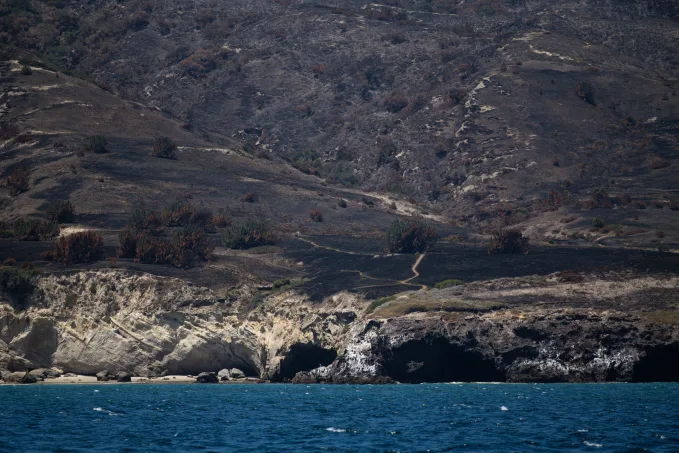
Scientists are warning that one of the world’s rarest pine populations could suffer a catastrophic decline after a human-caused wildfire swept across California’s remote Santa Rosa Island earlier this year, leaving conservationists racing to protect a species already teetering on the brink of extinction.


The fire, which erupted in May, burned more than one-third of Santa Rosa Island, part of Channel Islands National Park off Southern California’s coast. It became the largest wildfire ever recorded on the island and scorched habitat that supports the Santa Rosa Island Torrey pine, a critically rare tree found nowhere else on Earth. Federal assessments now indicate the damage is far worse than initially feared.
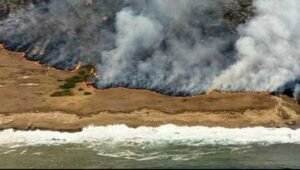
According to the U.S. National Park Service, between 60% and 80% of the remaining Torrey pines are now expected to die over time because of the fire. Although some trees were killed immediately, experts say many more are likely to succumb in the months and years ahead due to internal damage caused by the intense heat. Only about 2% of the grove escaped the flames entirely.
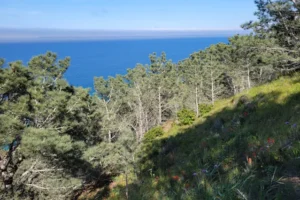
Researchers explain that Torrey pines are poorly adapted to wildfire, unlike many other California tree species. Even low- to moderate-intensity burns can trigger delayed mortality, making it difficult to determine the full extent of the destruction until at least a year after the blaze. The loss could have far-reaching ecological consequences because the windswept trees capture moisture from coastal fog, helping supply water to surrounding plants and wildlife in the island’s dry environment.
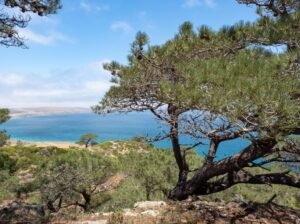
Beyond the immediate destruction, conservationists warn that the species’ limited genetic diversity makes recovery especially difficult. With such a small and isolated population, every mature tree lost represents irreplaceable genetic material that cannot be recreated. Scientists say this leaves the species increasingly vulnerable to future threats such as disease, prolonged drought and climate change.
Despite the grim outlook, researchers have identified a few reasons for optimism. Before the wildfire, the Santa Barbara Botanic Garden had already collected seeds from dozens of Santa Rosa Island Torrey pines and successfully cultivated young trees at a mainland conservation grove. Additional seeds have also been preserved in seed banks, providing a vital safeguard should large-scale restoration become necessary.
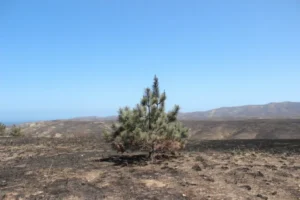
Scientists are also hopeful that some cones still attached to damaged trees may contain viable seeds capable of naturally regenerating parts of the forest. However, they caution that changing climate conditions; including rising temperatures, drier weather and an increasing risk of wildfires, could make it far more difficult for new seedlings to survive long enough to replace the aging population.
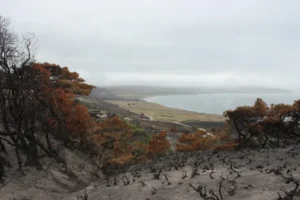
Conservation teams will continue monitoring the island over the coming months to determine how many trees ultimately survive and whether human intervention will be required to prevent one of the planet’s rarest pine species from slipping closer to extinction.