
International
South Korea’s Education Minister Resigns After Chaos Over AI-Assisted Exam Cheating

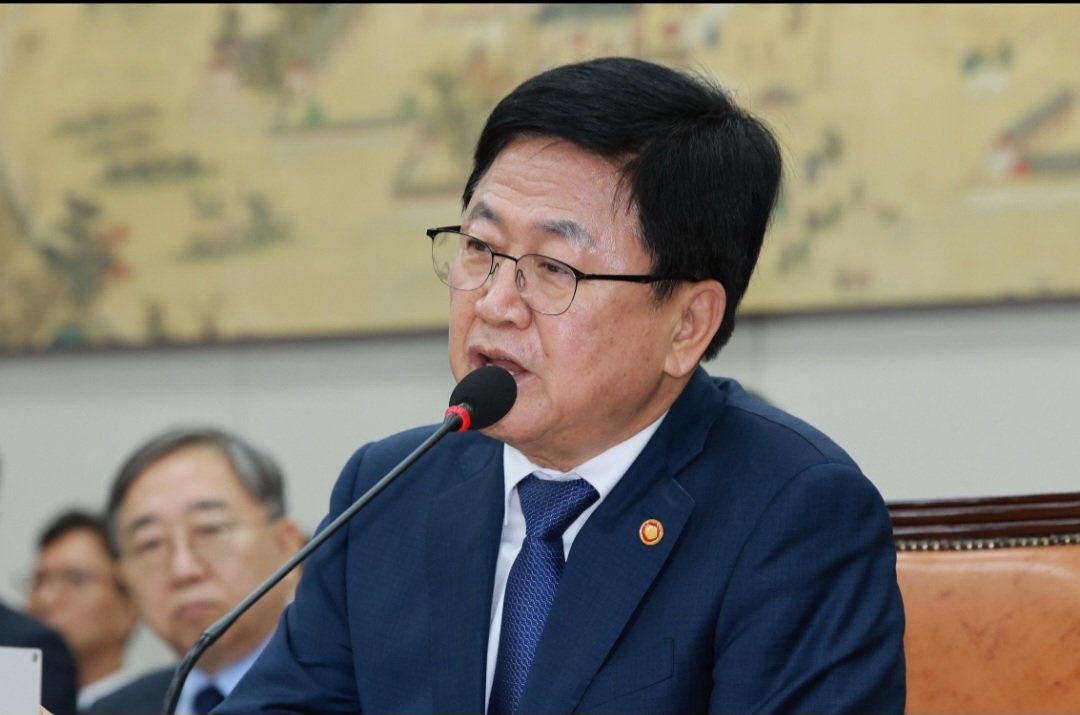
South Korea’s Education Minister, Choi Kyo-jin, has resigned following widespread criticism over the government’s handling of suspected artificial intelligence-assisted cheating ahead of the country’s highly competitive university entrance examination.
President Lee Jae Myung accepted Choi’s resignation on Sunday, November 22, 2026, after the minister took responsibility for confusion caused by last-minute changes to examination security regulations.
The controversy centred on the College Scholastic Ability Test (CSAT), popularly known as Suneung, which was conducted on November 19 and determines admission into universities across South Korea.
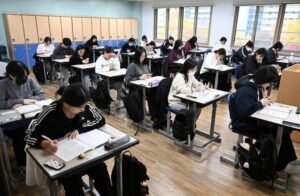
The examination is regarded as one of the most important events in the country’s education system, with university placements significantly influencing students’ future employment and career opportunities.
The crisis erupted after a top scorer in South Korea’s national tax accountant examination admitted to using a miniature camera, a smartphone and generative artificial intelligence to obtain answers during the test.
The revelation on November 15 triggered widespread concerns about the growing use of advanced technology to cheat in high-stakes examinations.
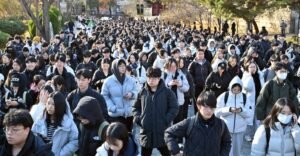
In response, the Education Ministry introduced additional security measures shortly before the university entrance examination, including inspections of candidates’ glasses and clothing buttons for concealed cameras.
Authorities also restricted access to public Wi-Fi around examination centres, while candidates were instructed to surrender their mobile phones before entering examination halls.
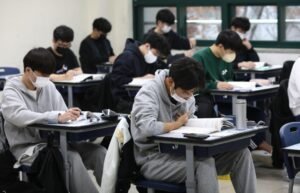
In another unusual measure, officials sent three nationwide emergency mobile phone alerts during the examination to identify candidates who might have secretly retained their devices.
The ministry also changed rules governing permitted stationery shortly before the examination, with candidates facing restrictions on items such as erasers and correction tape.
The repeated changes triggered complaints from students, teachers and examination supervisors, who said the late announcements created unnecessary confusion and anxiety ahead of an examination that already places enormous pressure on candidates.
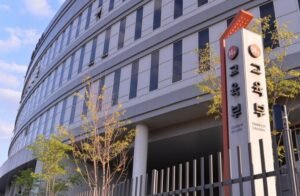
According to the Education Ministry, 111 suspected violations involving electronic devices were detected during the examination, although the discovery of a prohibited device did not necessarily establish that a candidate had used it to cheat.
The minister faced additional criticism following comments he made during a parliamentary hearing when questioned about whether authorities could guarantee detecting every instance of AI-assisted cheating.
Choi, 72, responded that he did not believe he could guarantee this, citing his age, remarks that further intensified calls for his resignation.
In his resignation statement, Choi acknowledged that the government had failed to prepare adequately for the emerging threat of AI-assisted examination fraud.
He said the last-minute changes had inconvenienced the public, particularly students sitting the examination, and accepted responsibility for the ministry’s handling of the situation.
President Lee accepted the resignation and directed Prime Minister Han Seong-sook to take responsibility for follow-up measures, including a comprehensive review of examination management and relevant regulations.
The Education Ministry is expected to continue addressing suspected examination violations and related appeals, while the government prepares to appoint a replacement for Choi.
The scandal has also renewed debate about the challenges artificial intelligence presents to traditional examination systems, particularly in countries where university entrance tests play a major role in determining young people’s academic and professional futures.
With hundreds of thousands of students competing for places at prestigious universities, the incident has exposed the difficulties education authorities face in maintaining examination integrity as increasingly sophisticated technologies become accessible.