
Analysis
Trade Wars Threaten Global Growth as APEC Leaders Push for Open Markets

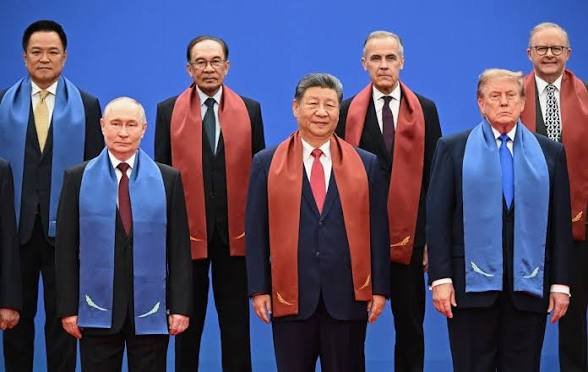
From Shenzhen, China, world leaders and business executives are warning that rising protectionism, tariffs and trade restrictions could undermine global economic growth, urging countries to strengthen cooperation, protect supply chains and keep international markets open.
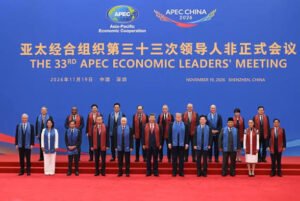
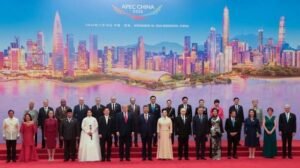
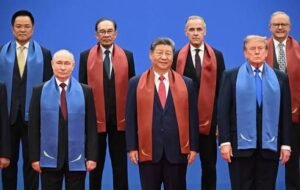
The warning emerged from the 33rd Asia-Pacific Economic Cooperation (APEC) Economic Leaders’ Meeting, held in Shenzhen, China, where leaders of participating economies identified growing trade barriers and economic fragmentation as major threats to global prosperity.
The meeting, which concluded on November 19, came amid increasing uncertainty in international commerce, disruptions to supply chains and growing geopolitical tensions affecting economic relationships between countries.
Participants argued that imposing additional barriers on international trade would increase business costs, discourage investment and make it more difficult for countries to address shared economic challenges.
The discussions also highlighted the need for stronger regional integration, technological collaboration and inclusive economic development as countries navigate an increasingly complex global business environment.
Chinese President Xi Jinping, who chaired the meeting, called for the construction of an Asia-Pacific community anchored on solidarity, openness, integration, innovation and inclusive development.
He stressed that countries should strengthen cooperation and pursue shared opportunities rather than allow differences to undermine economic progress.

The position reflects China’s broader push for a more integrated regional trading environment and greater cooperation among economies facing common development challenges.
Businesses Count the Cost of Trade Barriers
The concerns expressed by political leaders were echoed by business executives at the APEC CEO Summit, which attracted more than 2,000 representatives from 21 APEC economies and 13 non-APEC economies.
Business leaders warned that tariffs, regulatory restrictions and other trade barriers were creating additional costs for companies operating across international markets.
Malaysia-China Business Council Chairman, Low Kian Chuan, said the restrictions were making business operations more expensive.
“All these barriers add to our costs. That is why we advocate openness,” he said.
American economist Jeffrey Sachs also argued that countries should move away from viewing international trade as a competition in which one economy must lose for another to benefit.
He maintained that peaceful cooperation and mutually beneficial economic relationships could create opportunities for all participating countries.
“It’s not that we have to choose who wins and who loses. Everybody can win through peaceful cooperation,” Sachs said.
His argument reflects a growing concern among advocates of international economic cooperation that protectionist policies could weaken the benefits of globalisation and limit opportunities for developing economies.
The summit also examined the role of emerging technologies in reshaping international commerce.
WPIC Chief Executive Officer Jacob Cooke highlighted China’s progress in artificial intelligence, particularly the development of affordable and open-source models, describing them as opportunities for businesses seeking to improve efficiency and productivity.
Similarly, Rosario Navarro, president of Chile’s business federation, expressed interest in expanding partnerships with Chinese companies in high-technology industries.
These discussions underscored the growing importance of technology partnerships, digital innovation and knowledge exchange in determining the competitiveness of economies.
APEC Sets New Direction for Regional Integration
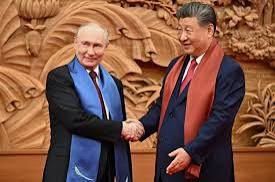
At the conclusion of the meeting, participating economies adopted the 2026 APEC Leaders’ Declaration, titled Shenzhen Outlook: Building an Asia-Pacific Community to Prosper Together.
The declaration reaffirmed commitments to economic cooperation, trade facilitation, investment and the development of resilient supply chains.
It also renewed attention on the proposed Free Trade Area of the Asia-Pacific (FTAAP), which seeks to advance wider economic integration among participating economies.
On digital commerce, leaders welcomed the APEC Trade Digitalization Cooperation Framework for 2027 to 2030.
The framework is expected to guide cooperation on paperless trade, cross-border electronic commerce and the application of digital technologies to international business transactions.
The leaders also emphasised the importance of improving regional connectivity through infrastructure development, institutional cooperation and people-to-people exchanges.
On supply chains, they reaffirmed the need to maintain open and reliable trade corridors, particularly for essential goods and energy supplies.
The declaration further recognised the potential of digital technologies and innovation to improve productivity, strengthen trade processes and create new opportunities for businesses.
However, the effectiveness of these commitments will depend on how participating economies translate them into policies and practical agreements.
China Deepens Economic Engagement
The summit also provided an opportunity for China to strengthen its economic and diplomatic relationships with other participating economies.
President Xi held bilateral meetings with Australian Prime Minister Anthony Albanese and Malaysian Prime Minister Anwar Ibrahim on November 20.
During his meeting with Albanese, Xi described China and Australia as partners that should maintain mutual trust and cooperation.
He said stable bilateral relations would provide a foundation for stronger engagement between the two countries.
In his discussion with Anwar, Xi expressed China’s willingness to deepen cooperation with Malaysia and deliver greater benefits to their populations.
Chinese Foreign Minister Wang Yi subsequently described the Shenzhen meeting as a new peak in Asia-Pacific economic cooperation, noting its significance in China’s diplomatic engagements in 2026.
Why Nigeria and Africa Should Pay Attention
Although Nigeria is not a member of APEC, the outcome of the discussions in Shenzhen carries important implications for African economies.
The Asia-Pacific region accounts for a substantial share of global economic activity, manufacturing and international trade. Changes in its trading relationships can therefore affect commodity markets, investment decisions, production costs and the movement of goods across other regions.
For Nigeria, whose economy remains significantly connected to international markets through crude oil, gas, agricultural products and manufactured imports, the direction of global trade policy is particularly important.
Increasing protectionism could make it more difficult for Nigerian exporters to access foreign markets, while disruptions to international supply chains could raise the cost of imported machinery, industrial inputs and essential production materials.
The country’s ambition to diversify its economy and expand non-oil exports also depends on access to competitive international markets.
However, the renewed emphasis on economic cooperation presents opportunities.
Stronger trade relationships with Asian economies could help Nigeria attract investments in manufacturing, agriculture, infrastructure, renewable energy and digital technology.
China, in particular, remains an important economic partner for Nigeria, with existing relationships spanning construction, transportation, manufacturing, telecommunications and trade.
The growing attention to artificial intelligence and digital commerce at APEC also raises questions about how Nigeria can participate in the next phase of global economic transformation.
Rather than remain predominantly a consumer of imported technologies, Nigeria has an opportunity to strengthen its domestic innovation ecosystem through investment in research, skills development, technology transfer and partnerships with international companies.
For the wider African continent, the African Continental Free Trade Area (AfCFTA) provides an important platform for building stronger regional markets and reducing dependence on external trading relationships.
By expanding intra-African commerce, improving infrastructure and strengthening regional manufacturing networks, African countries could increase their capacity to compete in international markets.
But achieving this would require more than trade agreements. Governments must address infrastructure deficits, improve customs administration, harmonise standards and remove regulatory obstacles that make cross-border commerce expensive.
The Bigger Global Economic Question
The discussions in Shenzhen have brought renewed attention to a fundamental question confronting the international economy: can countries sustain economic growth while increasingly restricting trade and investment relationships?
For business operators, the answer has practical consequences involving production costs, market access, investment confidence and the reliability of supply chains.
For developing countries, the stakes are even higher because access to international markets and technology remains essential to industrialisation and economic diversification.
The APEC declaration provides a framework for cooperation among its participating economies, but its wider significance lies in the message that economic challenges increasingly require collective solutions.
As countries navigate geopolitical tensions, technological disruption and changing patterns of international commerce, the challenge will be to balance national economic interests with the benefits of global cooperation.
For Nigeria and Africa, the developments offer both a warning and an opportunity: a more restrictive global trading environment could deepen existing economic difficulties, but stronger partnerships and regional integration could open new pathways for growth.
The debate in Shenzhen may have centred on the Asia-Pacific, but its implications extend far beyond the region.