
World News
US Cancels Major Marine Drill With South Korea Over Iran War Force Constraints

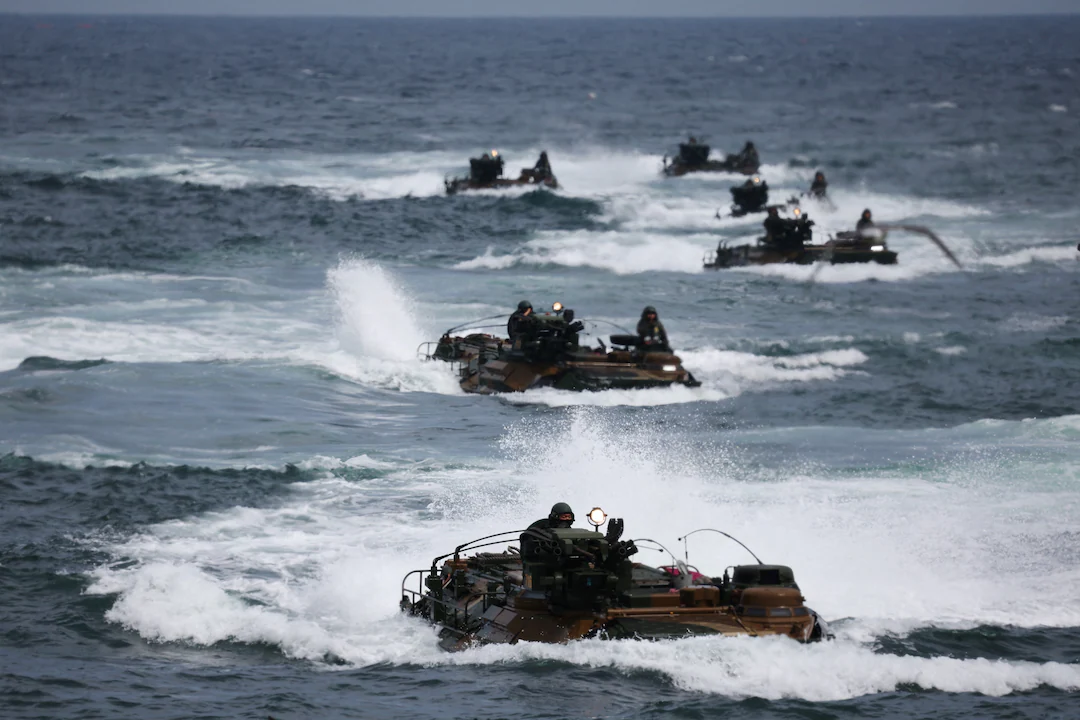
The United States has cancelled a major joint amphibious exercise with South Korea scheduled for next month, citing constraints on the availability of American forces because of the ongoing war with Iran.
South Korea’s Marine Corps confirmed Monday that Washington had called off the Ssangyong (Double Dragon) exercise, a division-level drill involving US and South Korean Marines.
The US Marine Corps formally notified its South Korean counterpart in June that the availability of American forces would be limited because of the demands of the Iran conflict, according to a South Korean Marine Corps spokesperson.
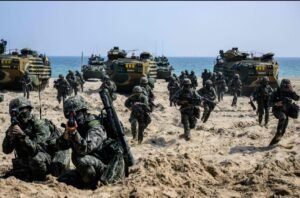
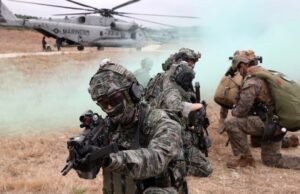
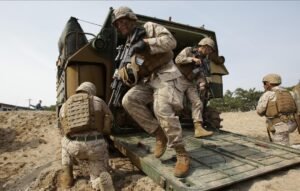
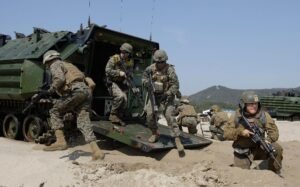
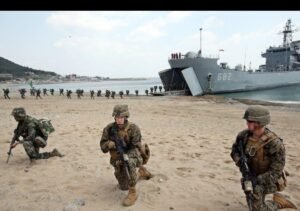
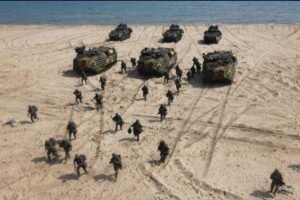
The Ssangyong exercise is held every two years and is designed to strengthen the two allies’ ability to conduct combined amphibious operations. Such exercises typically involve warships, aircraft and ground forces rehearsing amphibious landings and other battlefield scenarios.
South Korean officials said the two countries remain in discussions over the possibility of resuming the exercise, although no new date has been announced.
The cancellation comes just days after US President Donald Trump ordered a separate annual US-South Korea military exercise to be significantly scaled back.
The latest cancellation follows Trump’s decision to reduce the scale of the Ulchi Freedom Shield exercise, which began earlier this month.
The exercise was originally scheduled to run for 11 days but ended six days early after Trump directed the Pentagon to cut it back. Some live-training activities were cancelled or converted into simulations.
Trump cited the cost of the exercises and South Korea’s decision not to participate in the US-led war against Iran. He has also pointed to his relationship with North Korean leader Kim Jong Un and argued that the drills send an inappropriate and hostile signal to Pyongyang.
The decision has generated concern in South Korea and among analysts who say the exercises are an important part of maintaining military readiness against North Korea.
The reduction in US-South Korean military activities has not immediately produced a reduction in tensions with Pyongyang.
North Korea fired 10 short-range ballistic missiles last week and has repeatedly condemned the US-South Korean exercises as preparations for an invasion.
The latest developments have therefore created a complicated situation for Washington and Seoul: while the United States is reducing some military activities partly because of operational demands in the Middle East and Trump’s desire to improve relations with North Korea, Pyongyang continues to develop its military capabilities and conduct weapons tests.
The cancellation also comes at a sensitive moment for the US-South Korea security relationship.
American military resources have been increasingly focused on the Middle East amid the Iran conflict, while Washington is simultaneously trying to maintain its security commitments in the Indo-Pacific.
Analysts have warned that repeated reductions or cancellations of joint exercises could raise questions about the readiness and reliability of the US military presence on the Korean Peninsula. Reuters reported that the developments are already prompting wider concerns among US allies in Asia about Washington’s long-term security commitments.
South Korean officials, however, continue to stress the importance of the alliance and have indicated that consultations with Washington remain ongoing.
The cancellation of Ssangyong does not mean the US-South Korea military alliance has been suspended, but it represents another significant reduction in joint training at a time of heightened tensions with North Korea.