
International
US Supreme Court Rules States Can Restrict Transgender Girls from Women’s School Athletics

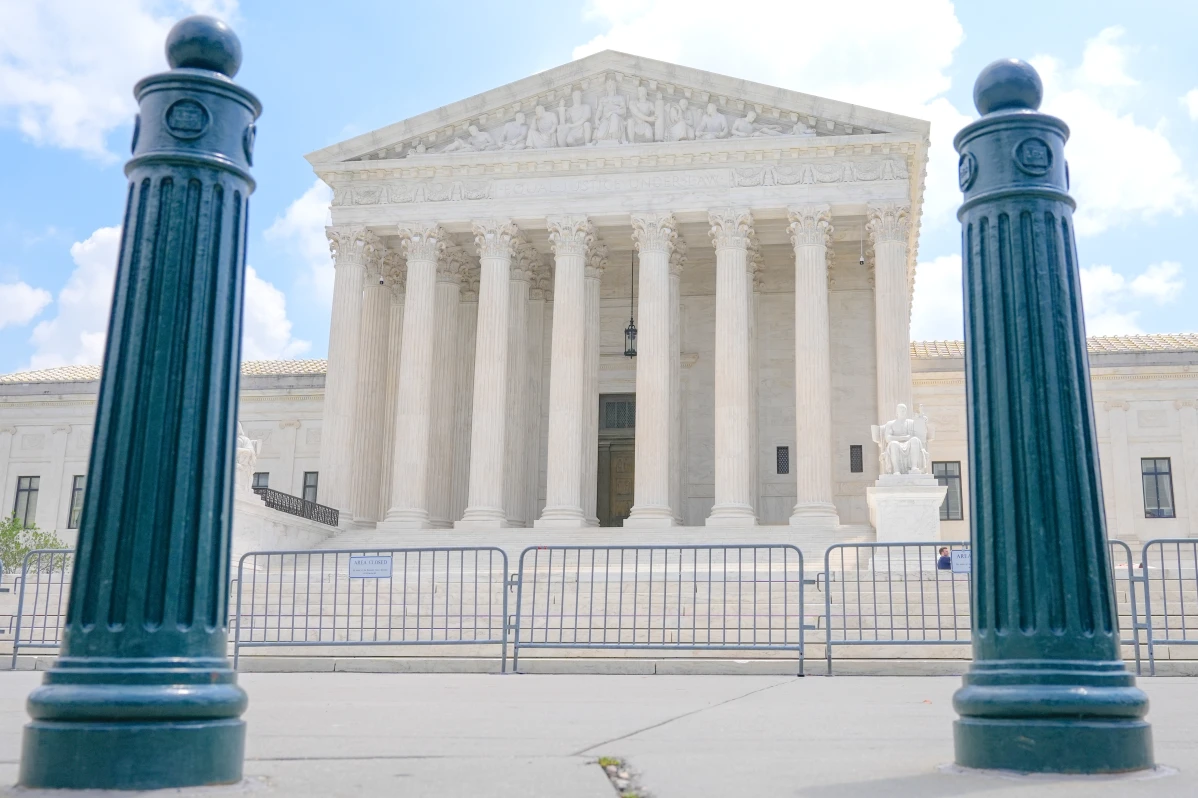
The United States Supreme Court has ruled that states may enforce laws prohibiting transgender girls and women from competing on female school athletic teams, delivering a landmark decision in one of the country’s most closely watched legal battles over transgender rights, education and women’s sports. The ruling upholds laws enacted in Idaho and West Virginia and is expected to strengthen similar policies already in place across more than two dozen U.S. states.
In a decision issued on Tuesday, the Court unanimously held that the state laws do not violate Title IX, the federal law that prohibits sex discrimination in education. On the separate constitutional question, however, the Court split 6-3, with the conservative majority ruling that the bans also do not violate the Equal Protection Clause of the Fourteenth Amendment. Justice Brett Kavanaugh wrote the majority opinion.

Writing for the Court, Kavanaugh said that Title IX permits schools to maintain separate athletic teams for males and females based on biological sex. He argued that states have legitimate interests in promoting fairness and safety in girls’ and women’s sports and therefore may restrict participation accordingly. The opinion stated that biological differences between males and females can justify separate athletic competitions.
The ruling arose from challenges brought by two transgender students: Lindsay Hecox in Idaho and Becky Pepper-Jackson in West Virginia. Both argued that the state laws discriminated against them because of their gender identity and denied them equal educational opportunities. Their legal teams maintained that the bans violated both the Constitution and Title IX by excluding transgender students from participating in sports consistent with their gender identity.
The Court’s three liberal justices dissented on the constitutional issue. Justice Sonia Sotomayor, joined by Justices Elena Kagan and Ketanji Brown Jackson, argued that the majority’s decision permits discrimination against transgender students without sufficient evidence that blanket bans are necessary. The dissent also questioned whether states had demonstrated that transgender participation posed widespread fairness or safety concerns requiring such broad restrictions.

The decision represents another significant setback for transgender rights advocates following a series of recent Supreme Court rulings involving transgender issues. Legal experts say the judgment establishes a major precedent that will likely influence pending lawsuits challenging similar laws in states including California and Connecticut, where policies allowing transgender athletes to compete according to their gender identity remain under legal scrutiny.
Supporters of the ruling, including many Republican lawmakers and women’s sports advocacy groups, welcomed the decision as a victory for competitive fairness and the protection of female athletes. They argued that biological differences can create competitive advantages in certain sports and that states should have the authority to establish eligibility rules for school athletics.

LGBTQ+ organizations and civil rights advocates sharply criticized the judgment, describing it as a setback for transgender students’ rights and warning that it could lead to broader exclusion from school activities. They pledged to continue challenging restrictive policies through future litigation and legislative advocacy while urging schools to provide safe and supportive environments for transgender students.
The ruling does not impose a nationwide ban on transgender athletes. Instead, it confirms that individual states may choose to enforce such restrictions if they enact them into law. As a result, policies governing transgender participation in school sports are expected to continue varying across the United States depending on state legislation, ensuring that the broader national debate over transgender rights and athletics remains far from settled.