
Sports
WNBA to Continue Discussions on Transgender Participation as Debate Intensifies

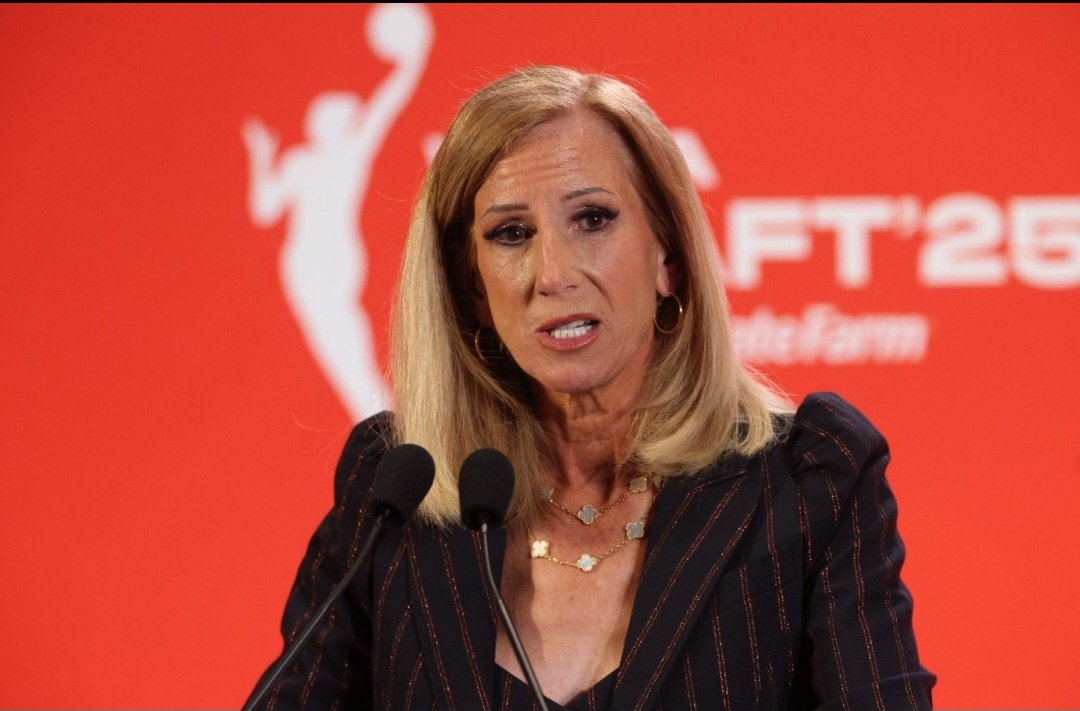
The WNBA will continue examining its rules governing transgender participation in women’s basketball, Commissioner Cathy Engelbert has told teams, as a growing debate over eligibility, fairness and inclusion puts new pressure on the league.
In a memo sent to WNBA teams on Friday and obtained by ESPN and The Associated Press, Engelbert said the issue would receive further attention at a previously scheduled meeting of team presidents and general managers next week.
She stressed that the league intends to approach the subject carefully while balancing inclusion, the integrity of the sport and competitive fairness.
Engelbert’s memo represents the league’s most significant public response so far to a controversy that has intensified in recent weeks.
The commissioner said she was aware that players, teams and league officials had been receiving questions about transgender participation and expected the issue to continue attracting significant attention.
She said the WNBA would approach the discussions “thoughtfully” and “respectfully”, while stressing that its player eligibility rules are collectively bargained rather than determined solely by the league office.
Engelbert also identified two priorities that she said would remain central to the discussions: protecting the integrity of the game and ensuring fair competition.
The league plans to hold additional discussions and listening sessions for team leaders who want to participate, while also engaging with the Women’s National Basketball Players Association.
At the centre of the controversy is the language in the WNBA’s collective bargaining agreement.
The agreement states that only players who are women are eligible to play in the WNBA. However, it does not provide more detailed language defining whether eligibility is based on gender identity, sex assigned at birth or other specific criteria.

That lack of detailed wording has become particularly important as the league faces questions about how the provision would apply to transgender athletes.
Engelbert’s comments do not announce a new policy or a ban. Instead, they signal that the league is entering a process of further discussion with team executives and the players’ union.
The debate intensified dramatically on Friday when two former NBA players, Enes Kanter Freedom and Royce White, announced that they intended to enter the 2027 WNBA Draft and said they identify as women.
Kanter Freedom, a former NBA center who played 11 seasons in the league, announced his plans in a video posted online.
He argued that he had reviewed the WNBA’s eligibility rules and believed the current framework allowed him to declare himself eligible. He said his move was intended to challenge the consistency with which the league applies its rules rather than to mock transgender people.
The announcements immediately placed additional pressure on the WNBA to clarify what its eligibility rules actually mean.
Importantly, declaring for the draft does not mean either player has been accepted into the WNBA. The league has not said that either man is eligible to play, and Engelbert’s memo did not announce that either player had been accepted.
The controversy had already been growing following comments from Indiana Fever guard Sophie Cunningham.
Cunningham said she believed transgender women should not participate in women’s sports, while insisting that her position was not motivated by hatred toward transgender people.
She said she wanted to protect what she described as the rights of biological women and girls in sport. Cunningham subsequently reaffirmed her position, saying she would not back away from her views.

Her comments triggered significant reaction online and led to demonstrations surrounding some Fever games.
Small rallies both supporting and opposing Cunningham’s position were held around WNBA games in Seattle and Portland.
The controversy has also attracted political attention, with conservative figures highlighting Cunningham’s comments as part of the broader U.S. debate over transgender participation in women’s sports.
The WNBA Players Association has taken a different emphasis from some of the voices calling for restrictions.
In a statement released Friday, the union reaffirmed its commitment to justice, equity, diversity and inclusion, while also saying that protecting women’s sports remains among its priorities.
The union condemned hatred, abuse and the demonisation of transgender people and said it would continue having difficult conversations without allowing the organisation to be used as a political tool.
The WNBPA represents more than 200 players with different backgrounds and viewpoints. Its position therefore reflects an effort to emphasise both diversity within the membership and opposition to harassment or discrimination.
The union’s broader public materials also state that it champions members regardless of gender identity or expression, among other characteristics.
The debate has not produced a uniform position among players and coaches.
Seattle Storm center Stefanie Dolson has expressed support for transgender athletes, while Minnesota Lynx coach Cheryl Reeve has also spoken in favour of inclusion.
Reeve said earlier this month that transgender children should be protected and argued that every child should have access to sports. She acknowledged, however, that questions surrounding participation in elite sports after puberty are more complicated.
Those comments illustrate the complexity facing the league: discussions about children’s access to sport, elite competition, eligibility standards and competitive fairness are often being treated as part of the same debate even though they involve different policy questions.
The controversy has moved beyond social media and into WNBA venues.
At a July 28 game between the Seattle Storm and Indiana Fever, a spectator was photographed holding a sign reading “trans people belong in sports.”
Other demonstrations have been held in connection with Cunningham’s comments, creating an increasingly visible political and social backdrop around games.

The league has consequently had to navigate not only the question of eligibility but also concerns about fan behaviour, protests and potential harassment of players.
In late July, the WNBA suspended a Seattle Storm minority owner for five home games and fined the team after an incident involving fans attending a rally supporting Cunningham’s position on transgender athletes.
The league is attempting to balance several competing considerations.
One involves competitive fairness: opponents of transgender participation in women’s elite sport argue that sex-based physical differences can affect athletic performance and that women’s competitions require clear eligibility boundaries.
Supporters of transgender inclusion, meanwhile, argue that transgender athletes should not be excluded simply because of their gender identity and that policies should avoid discrimination.

The WNBA must also consider its collective bargaining agreement. Because eligibility rules are collectively negotiated with the players’ union, Engelbert cannot simply impose a new policy without considering the contractual framework and the role of the WNBPA.
That makes the upcoming discussions potentially significant.
Despite the growing controversy, the WNBA has not announced a new transgender eligibility policy.
Engelbert’s memo instead indicates that the league is beginning a more formal discussion process.
The commissioner said the league would continue consulting team leaders and the players’ association in the coming weeks and months, suggesting that any eventual change could take time.
For now, the existing CBA language remains the key eligibility provision.
The WNBA’s internal discussion is taking place against a much broader U.S. political and legal debate over transgender participation in women’s and girls’ sports.
The issue has become particularly contentious following policy changes and legal battles involving school and collegiate sports, as well as competing interpretations of Title IX.
The WNBA’s situation is somewhat different because it is a professional league whose player eligibility rules are collectively bargained.
That means the league’s eventual decision could have implications beyond a handful of prospective players. It could establish a policy that influences how other professional women’s sports leagues approach similar questions.
The next major step is expected to be the meeting of WNBA team presidents and general managers, where transgender participation is scheduled to receive further discussion.
The league is also expected to consult with the WNBPA and potentially hold additional listening sessions with team leaders.
For now, Engelbert has stopped short of endorsing either a restriction or an expansion of eligibility.
Her message instead signals that the WNBA intends to take time to examine the issue while trying to preserve both its stated commitment to inclusion and its responsibility to maintain competitive fairness.
The controversy is therefore unlikely to disappear soon.
With players expressing sharply different views, protests appearing around games and former NBA players challenging the league’s eligibility language, the WNBA faces a potentially consequential decision over how it defines eligibility in women’s professional basketball.