Connect with us

Featured

THE UNCOMMON FEAT: WHY TINUBU’S STATE POLICE REFORM IS THE ANTIDOTE TO DECADES OF INSECURITY

Published

on

Share

By Oto’ Drama, PhD.

FOR decades, the discourse on Nigeria’s security architecture has been trapped in a centralized bottleneck—a stranger-policing model where officers are often deployed to terrains they do not understand and cultures they do not share.


Today, that cycle is breaking. By activating the transition to State Police, President Bola Ahmed Tinubu is not merely fulfilling a campaign promise; he is steering the nation toward a techno-sovereign reality where security is as local as the threats it seeks to eliminate.
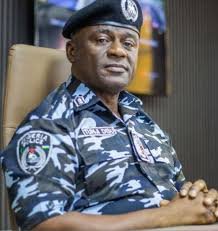
This uncommon feat by the President and the Inspector General of Police (IGP), Tunji Disu, deserves more than just applause—it requires a rigorous intellectual and technological blueprint to ensure it becomes the cornerstone of a new Nigerian regionalism.

The Logic of the Local: Why State Police is the Only Way Forward
The fundamental maxim of modern governance is that all politics is local, but security is even more so. In every hamlet, village, and urban ward, the residents know the visitors, the anomalies, and the shadows. A federal officer from a thousand miles away cannot navigate the intricate social fabric of a community as effectively as a son or daughter of that soil.

While critics fear the political manipulation of state police by governors, this concern—though valid—is outweighed by the catastrophic cost of the status quo. Centralization has not prevented abuse; it has only facilitated inefficiency. By shifting to a subnational model, we introduce proximity as a deterrent. When the police are part of the community, the social contract is renewed, and the wall of silence that often protects bandits and kidnappers begins to crumble.

See also  Friday Lines (39) With

To transition from a “force” to a “service,” Nigeria must adopt the tactics of the world’s most efficiently policed nations. These countries balance local autonomy with high-technology integration. For President Tinubu and IGP Disu to truly “reclaim the killing fields,” the new state police must not just be “men in uniforms” but nodes in a digital security grid.

Here are three world-class tactics to curtail insecurity.
Nigeria’s forests have become “blind spots.” State police should be equipped with long-range thermal drones integrated with geotagging software. This allows local units to map “heat signatures” in dense foliage, identifying kidnappers’ camps with surgical precision before a single boot hits the ground.

Secondly, is Bio-Digital Border & Community DNA.
Instead of static checkpoints, state police should utilize biometric mobile units. By enrolling local populations into a decentralized database, “strangers” or “infiltrators” in a locality are immediately flagged during routine community patrols. This is the ultimate Bio-Digital Bastion.

Thirdly, is Professional Neutrality via Federal Oversight. To prevent the feared “governor’s militia” syndrome, Nigeria should adopt the German Model:
State Operational Autonomy: States control recruitment, localized patrolling, and community intelligence. A “National Police Service Commission” (NPSC) must set the bar for training, weapon handling, and forensic standards, with the power to decertify any state unit that violates human rights or democratic norms.

The inauguration of the 8-member steering committee by IGP Disu is the first step in a marathon. We must encourage this administration to remain indomitable. The transition to state police is not just a return to regionalism; it is a return to common sense.

See also  TINUBU TO ATTEND GHANA'S JOHN MAHAMA INAUGURATION ON JANUARY 7

By empowering the states to secure their own lands, President Tinubu is providing the antidote to insecurity. It is time to move past the fear of abuse and embrace the power of localized, intelligent, and technologically-driven protection. Nigeria’s sovereignty starts at the grassroots.

Dr. Drama, PhD Counterterrorism contributed this piece via: Nigeriandrama@gmail.com
Continue Reading
Click to comment

Leave a Reply

Your email address will not be published. Required fields are marked *

Featured

DANIEL BWALA’S AL JAZEERA HUMILIATION +(VIDEO)

Published

on

Share

By Farooq A. Kperogi

I barely know Daniel Bwala. He came to the forefront of national media attention in 2022 because of his impassioned opposition to the choice of Kashim Shettima as Bola Ahmed Tinubu’s running mate. But beyond his public break from the APC, he came across to me as a voluble, ignorant and opportunistic careerist, not because of his stance on Tinubu’s choice of a Muslim running mate, but because of what struck me as his facileness and self-seeking obsessions.

His dramatic volte-face from being a virulent Tinubu critic to a fawning, vicious Tinubu battering ram has proven that my hunch about him was accurate.

Yet I felt sorry watching him eaten alive by Mehdi Hassan on Al Jazeera on Friday, March 6. He willingly participated in the detonation of what remained of his credibility before the world. In the process, he did incalculable reputational damage to the Tinubu government he is paid to protect.

What viewers saw on Mehdi Hasan’s Head to Head was the spectacle of a presidential spokesman arriving unarmed to a firefight he should have anticipated, then trying to fight back with nervous laughter, evasions, amnesia and the old Nigerian official fallback of whataboutery.

His evasiveness and prevarications were so unnervingly apparent that Hasan was compelled to say, “At the weekend, you put out a video to music of you and your team researching and prepping for this show and…now every time I ask you say you are not aware of that….what were you researching in that video…?”

The most striking thing about Bwala’s performance was not that he was challenged hard. Anyone who agrees to sit opposite Mehdi Hasan knows the interview will not be a tea party. The disgrace was that Bwala looked startled by facts he should have mastered before stepping into the studio.

On insecurity, on corruption, on Tinubu’s own words and even on his own prior statements, he oscillated between denial, deflection and the sort of desperate verbal stalling that makes a government look smaller than its critics claim it is.

The problem was not that Daniel Bwala appeared lazy or obviously unprepared. In fact, he looked prepared, even thoroughly rehearsed and robotic. He had the posture, the confidence and the choreographed mannerisms of a man who believed he had done his homework. But his carefully planned performances collapsed pitifully when they collided with Hasan’s hard, cold, indisputable facts.

See also  GOVERNOR OKPEBHOLO HAILS PRESIDENT TINUBU AS FATHER OF MODERN NIGERIA ON HIS BIRTHDAY

Political wordplay can sometimes survive on friendly platforms or on Nigeria’s tame media spaces where assertion is mistaken for argument. It cannot survive a fact-driven, scorched-earthed, bare-knuckle, no-holds-barred interrogation.

Facts are facts. And Mehdi Hasan is a man of facts. He has the rare gift of making heavy, devastating facts sound almost light in conversation. That quality made Bwala’s evasions even more painful to watch.

The exchange over “context” illustrated this perfectly. When confronted with evidence that insecurity had worsened under the current administration, Bwala retreated to the mantra that “context matters.” Yet the context he invoked was little more than semantic fog and intentional, self-impressed verbal obfuscation.

Hasan, by contrast, used numbers and reports that any government spokesman worth the title should already know. The moment became absurd when Bwala insisted that the context of worsening statistics was that things were not getting worse. The dialogue is worth reproducing:

Hasan: You are failing. Amnesty International says you are failing at security. The numbers don’t lie.

Bwala: It’s unfortunate and as a government working day and night that situation. I don’t agree to [sic] the fact that it’s getting worse.

Hasan: How can it not get worse if more people die in one year than the previous year?

Bwala: Context matters.

Hasan: What’s the context?

Bwala: The context is not getting worse.

Hasan: What!

Bwala: Yes.

Hasan: The context is not getting worse?

Bwala: The context is that it is not getting worse, because you, you see this is a water [sic], right?….

Forget, for now, Bwala’s inexcusably horrible grammar, especially for a lawyer, his tortured logic and his buffoonish articulation. That was some cringeworthy self-own.


The numbers he tried to wave away are not inventions of hostile foreigners with an anti-Nigerian agenda. Nigeria’s own National Human Rights Commission reported that at least 2,266 people were killed by bandits or insurgents in the first half of 2025 alone.

See also  10 PRACTICAL LESSONS FROM "ANIMAL FARM" BY GEORGE ORWELL. (A great Classic fable)

Conflict monitoring groups have recorded even higher totals for the full year. Amnesty International has repeatedly warned that violence has intensified since Tinubu assumed office. In other words, Hasan’s central point was merely a summary of documented reality.

This is what made Bwala’s performance so damaging. He was not merely disputing interpretations. He was disputing arithmetic. When a spokesman tells the world that things are not getting worse while credible datasets show that they are, he is insulting the intelligence of everyone listening, especially Nigerians who bury the dead, pay ransoms, withdraw their children from schools and avoid highways after dark.

But the interview’s most morally satisfying feature was Hasan’s methodical dismantling of Bwala’s denials about his own past words. Bwala tried the trite and tired Nigerian political trick of pretending that statements made in opposition exist in a separate moral universe from statements made in office. Hasan did not let him get away with it.

Bwala denied on air having said Tinubu and his camp created a militia and threatened him. Yet those remarks were widely reported during the 2023 campaign. He also denied saying that bullion vans seen at Tinubu’s Bourdillon residence were ostensibly for vote buying, despite the fact that the comments were carried by multiple Nigerian outlets at the time. So, when Bwala asked who said such things, the answer was brutally simple. Daniel Bwala said them.

The same pattern appeared on corruption. Tinubu did in fact proclaim at a public event that Nigeria had “no more corruption,” a line that was widely reported and widely mocked and that provoked Omoyele Sowore to call Tinubu a “criminal” for which he is being tried now.

Bwala’s attempt to rescue the statement by retroactively inventing a narrower meaning was not the contextual clarification he wanted it to be. It was out-and-out mendacity.

On the appointment of Abubakar Bagudu as minister of budget and economic planning, Bwala again reached for evasion. Yet the record is clear that Bagudu returned about $163 million linked to the Abacha loot investigations in a settlement with authorities. Whether or not one calls that a conviction, the public controversy around his appointment cannot honestly be dismissed as drunken rumor.

Then there is the overarching irony that electrified the interview. Bwala was confronted with the fossil record of his own mouth. Before joining Tinubu’s camp, he publicly attacked the same man over allegations of corruption, the drug forfeiture case in the United States and the bullion van episode. What Hasan exposed was the speed with which partisan appetite can digest prior conviction and call the indigestion growth.

See also  CUSTOMS REVENUE HITS ₦1.3 TRILLION IN Q1 2025 UNDER PRESIDENT TINUBU'S REFORMS

Bwala’s performance mattered for a reason larger than one man’s embarrassment. It showed in concentrated form the disease afflicting Nigerian political communication.

Too many spokesmen believe their job is not to illuminate but to survive the segment. So, they deny what is documented, nervously laugh when cornered, compare Nigeria with unrelated countries, abuse the word “context” and hope that shamelessness can do the work preparation cannot.

Daniel Bwala went to London to defend the government. Instead, he displayed its worst habits: contempt for evidence, indifference to contradiction and the assumption that public memory is so short that a man can disown his own recorded words without consequence.

Mehdi Hasan did not disgrace him. Bwala did that himself. Hasan merely kept the receipts.

Kperogi holds a Ph.D. in Public Communication from Georgia State University (2011), an M.Sc. in Communication from the University of Louisiana at Lafayette, and a B.A. in Mass Communication from Bayero University, Kano . He began his career as a journalist and news editor for Nigerian newspapers including the Daily Trust and the now-defunct New Nigerian . He also worked as a researcher and speechwriter in President Olusegun Obasanjo’s administration from 2002 to 2004 . Kperogi writes a popular weekly political column, “Notes from Atlanta,” which currently appears in the Nigerian Tribune, and a language column, “Politics of Grammar” . He has authored several academic books, including “Glocal English: The Changing Face and Forms of Nigerian English in a Global World” (2015) and “Nigeria’s Digital Diaspora: Citizen Media, Democracy, and Participation” (2020), which won the 2021 CHOICE Outstanding Academic Title Award

Continue Reading

Featured

DSS, THE WALIDA ABDULLAHI EPISODE, AND THE QUIET LEADERSHIP OF DG ADEOLA OLUWATOSIN AJAYI- OLUMIDE BAJULAIYE

Published

on

Share

The Department of State Services (DSS), also known as the State Security Service (SSS), remains one of the most misunderstood institutions within Nigeria’s security architecture.

For many Nigerians, the agency only comes into public focus during dramatic arrests or when politics dominates the conversation. Yet intelligence work is far deeper and far more complex than the moments that make the headlines.
At its core, the DSS is Nigeria’s primary domestic intelligence service. Its duty is not simply to arrest suspects but to prevent threats before they escalate into national crises. Terror networks, espionage activities, sabotage against government institutions, and plots capable of destabilising the country all fall within its operational radar.

Like many institutions in Nigeria, the DSS has faced its share of criticism. There have been allegations of political interference, controversial arrests and occasional heavy-handed operations. Such scrutiny is normal in a democracy where powerful institutions are expected to remain accountable.

However, the other side of the story—often overlooked—is the critical role intelligence plays in keeping the country stable.
Intelligence successes rarely trend on social media because when intelligence works, crises are prevented before they occur. And “nothing happened today” rarely qualifies as breaking news.

Over the years, the DSS has helped disrupt terror financing networks, track extremist recruiters and intercept plots that could have resulted in major national security incidents. The agency has also provided intelligence support in the fight against insurgent groups such as Boko Haram, assisting security forces in anticipating threats.

Under the leadership of the current Director-General, Adeola Oluwatosin Ajayi, observers say the agency has focused increasingly on preventive intelligence, institutional reforms and improved collaboration with other security agencies.
Ajayi’s tenure has been associated with strengthening intelligence coordination among security institutions and placing greater emphasis on professionalism and lawful operations. Security analysts say the DSS has intensified efforts against kidnapping networks, arms trafficking rings and organised criminal syndicates threatening national security.

See also  PRESIDENT TINUBU'S STATE OF EMERGENCY DECLARATION: A CASE OF POLITICAL DOUBLE STANDARDS?

Another area where the current leadership has drawn attention is the effort to rebuild public confidence in the agency. In recent years, the DSS has demonstrated a willingness to review controversial cases, comply with court processes and engage more openly with stakeholders, including the media.
The recent episode involving Walida Abdullahi also illustrates the delicate balance intelligence agencies must maintain between national security responsibilities and public perception.

While details surrounding the matter sparked debate in public spaces, it also underscored how intelligence operations—often conducted quietly and based on sensitive information—can quickly become subjects of political or social interpretation once they enter the public domain.
For the DSS leadership, such situations represent the difficult terrain intelligence institutions must navigate: acting decisively when national security concerns arise while ensuring that operations remain within legal and professional boundaries.
Observers argue that the measured handling of such sensitive matters reflects the broader leadership approach of Ajayi—one that prioritises caution, institutional discipline and strategic restraint rather than dramatic publicity.

Beyond operational issues, the DSS under Ajayi has also sought to improve engagement with the media and civil society, a move many believe is necessary in building transparency without compromising intelligence confidentiality.
Ultimately, intelligence work remains one of the most paradoxical professions in public service.
When intelligence agencies succeed, the public rarely notices because crises are prevented before they happen. But when something goes wrong—or even appears controversial—everyone suddenly becomes an expert.

The DSS, like every intelligence service in the world, will continue to face criticism and scrutiny. That is part of democratic accountability.
Yet beyond the noise of politics and public perception, the agency remains a critical pillar in Nigeria’s internal security structure—often working quietly while the public sees only fragments of its work.

See also  ENOUGH IS ENOUGH: WHEN BROADCASTERS BECOME THE STORY

And if the current trajectory continues, the story of the DSS under DG Oluwatosin Ajayi may ultimately be defined not by the controversies that occasionally make headlines, but by the threats that never materialise.

Olumide Bajulaiye is the Publisher, Daily Dispatch Newspaper, writes from Abuja.

Continue Reading

Featured

‘Help! My Uncle Is Kidnapped in Nigeria’ – Haruna Mohammed Salisu Cries Out

Published

on

Share

By Haruna Mohammed Salisu


Three weeks ago, my uncle left home at dawn, as he always did. He never returned.

Gunmen abducted him along a route that cuts across Taraba, Plateau and Bauchi states. Since then, he has been held in a forest stretching across those regions. As I write, he is still alive. And time is slipping away.

My uncle is not wealthy. He holds no public office. He owns no property beyond what feeds his family. He is a subsistence farmer a man who has lived by the discipline of hard work and modest expectations. He asks for nothing but the right to return home safely at the end of each day.

But safety is no longer guaranteed.

Ransom Raised to ₦100 Million

When the kidnappers first contacted us, their demand was calculated. They had studied him what he owned, what he earned, what his family might reasonably gather.

Then, after weeks in captivity, they escalated their demand to ₦100 million.

That figure is staggering. At Nigeria’s minimum wage, ₦100 million represents over a century of earnings. A smallholder farmer earning roughly ₦400,000 in a good year would need 250 uninterrupted years of harvest to raise such a sum.

We do not have 250 years. We barely have days.

Silence, Then Exposure

Initially, the family chose silence. In Nigeria’s kidnapping economy, the perception of wealth can inflate ransom demands. As someone currently in the United States completing a graduate degree, my location alone was enough to create that perception.

We feared publicity would worsen the situation.

See also  NLC CONSULTS WITH PRESIDENT TINUBU OVER INSECURITY, PROTEST DECISION PENDING

Eventually, the abductors learned of my presence abroad. They told him they knew his nephew was in America. The ransom did not decrease.

According to Nigeria’s National Bureau of Statistics, about $1.42 billion was paid in ransoms between May 2023 and April 2024. Thousands of families across northern Nigeria face similar anguish  negotiating quietly, often alone.

This crisis is no longer exceptional. It is systemic.

A Personal and Professional Reckoning

I am a journalist. I document cases like this. I understand the mechanics of ransom negotiations, the patterns of armed groups, the silence that often surrounds rural victims.

Now, I am living the story I once reported.

My uncle is one of ten captives currently held. He is not famous. His name has not appeared in headlines. He is simply a man who worked every day of his life and harmed no one.

A Public Appeal

This is why I am going public.

If you have connections within Nigeria’s security services, community leaders, religious authorities or anyone operating near these forested areas, please act. Please intervene.

My uncle and the others deserve to return home  not because of who I am, but because of who he is: a decent man who sought nothing more than peace and survival.

Tonight, he sits in a forest, waiting. We are asking the world not to look away.

Haruna Mohammed Salisu publishes WikkiTimes and writes from the United States. He can be reached at harunababale@wikkitimes.com.

Continue Reading