
Health
Congo Outbreak Sparks Urgent Vaccine Effort by Oxford Scientists


Scientists at University of Oxford are working urgently to develop a vaccine targeting the Bundibugyo strain of Ebola, with plans to begin clinical trials within two to three months as the Democratic Republic of Congo confronts a growing outbreak.


The effort comes as health authorities warn that the current outbreak involves a less common strain of the virus for which there is no widely approved vaccine, raising concerns about containment and mortality rates.
The Bundibugyo strain of Ebola virus disease is one of several variants of the virus, but unlike the more common Zaire strain, it has received less attention in vaccine development.
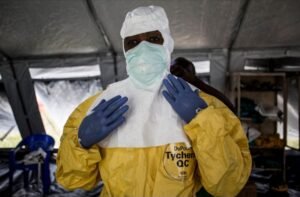
Researchers say this gap has left health systems vulnerable during outbreaks involving the Bundibugyo variant, which has now been confirmed in parts of the Democratic Republic of Congo.
Oxford scientists are aiming to adapt existing vaccine technology to target the strain, potentially accelerating the development timeline driven by the urgency of the outbreak.
According to reports, the research team hopes to move into early-stage human trials within weeks, an unusually rapid timeline driven by the urgency of the outbreak.
The approach builds on previous Ebola vaccine platforms, allowing scientists to modify components rather than start from scratch; an advantage that could save critical time in responding to the crisis.

Health officials in the Democratic Republic of Congo have reported new cases linked to the outbreak, prompting emergency responses from both local authorities and international health agencies.
Ebola outbreaks are notoriously difficult to contain due to their high fatality rates and the need for strict infection control measures, including isolation, contact tracing, and safe burial practices.
Experts say the development of a Bundibugyo-specific vaccine could mark a major breakthrough in global health preparedness, especially for regions prone to recurring Ebola outbreaks.
If successful, the vaccine could not only help control the current situation in Congo but also strengthen long-term defenses against future outbreaks involving less common Ebola strains.