
Opinion
HOW CURRENCY CRISIS IS FUELLING INTRACTABLE INSECURITY ACROSS THE WORLD: THE CASE OF NIGERIA MISMANAGED CURRENCY DEVALUATION

By AVM RTD AKUGBE IYAMU MNSA fsi
Currency crisis represents a sudden, steep decline in a nation’s currency value, causing economic instability. There are numerous examples of currency crises in recent history.
For example, Mexico’s currency crises historically marked by the 1994 Tequila Crisis, and ongoing cartel-driven insecurity are deeply intertwined leading to pervasive violence, extortion, and organized crime that severely undermine investor confidence, disrupt supply chains, and increase the risk premium on the Mexican peso.
Additionally, Colombia faces a compounding economic and security crisis in 2026, driven by high inflation (projected at 6.5%), shrinking foreign direct investment, and territorial violence. This has resulted in rival armed factions, including dissident guerrillas and drug-trafficking cartels, continued clash over illicit economies like cocaine smuggling and illegal mining.
Also, Haiti’s simultaneous currency and insecurity crises are driven by armed gangs controlling large parts of Port-au-Prince, which has caused the economy to contract for consecutive years, pushed inflation to an estimated 28.3%, and left nearly half the population living on under $3 a day.
Drawing from the global broad spectrum of currency crisis and insecurity, it is obvious that
there are combinations of factors that trigger currency crisis and insecurity such as poor economic reforms and poor central bank decision leading to the devaluation of countries currencies.
The situation is always aggressively escalated by high foreign debt and deteriorating investor confidence. On the otherhand, terrorism stems from complex social, psychological, and systemic issues rather than a single source.
In the case of Nigeria,
terrorism is primarily driven by a combination of socio-economic hardships, weak governance, and religious extremism, most notably seen in the activities of Boko Haram and the Islamic State West Africa (ISWA).
terrorism resulting in widespread loss of life and physical injury, severe psychological trauma and PTSD, significant economic disruption and property destruction. It also lead to the restriction of civil liberties and increased government surveillance, and the fracturing of societal trust and social cohesion.
From the foregoing, it is obvious that the interrelated factors of currency crisis and terrorism create a fertile environment for instability and radicalization which is sustained by economic hardship and rising poverty levels creating environments of frustration, making unemployed youth highly susceptible to recruitment by extremist and criminal networks.
Terrorism has escalated in
Nigeria due to her persistent currency crisis marked by severe naira volatility, high inflation, and cash shortages significantly fuelling terrorists groups actions by driving vulnerable populations into poverty and forcing groups like Boko Haram and ISWAP to rely on cash based extortion, kidnapping-for-ransom, and digital/cryptocurrency networks to finance operations outside formal banking oversight.
Further examinations has clearly showed that
currency crises fuel insecurity by destroying purchasing power, spiking unemployment, and causing hyperinflation. The overall effect is that as the cost of living particularly for imported food and fuel skyrockets, vulnerable populations face severe economic distress, which forces people into illicit activities, heightening social unrest, and overstretches state security resources.
While considering the impact of currency crisis on terrorism, it is expedient to take a closer view of the
severe foreign exchange (FX) illiquidity that causes capital flight and forces businesses to source funds from unregulated parallel or black markets. The unregulated dark economy could help criminal cartels to frequently exploit weak currency vulnerabilities through trafficking, racketeering, and ransom kidnappings. This substantially supported by analyst from the
academics and policymakers by clearly emphasising that there is a nexus between currency crisis and terrorism that stems from institutional and governance failures, meaning standard military responses alone cannot resolve the complex issues and the impacts on unemployment and regional conflict which is substantiated by tracking specific, localized safety incidents and warnings through the Nigeria Security ecosystems.
In the case of Nigeria,
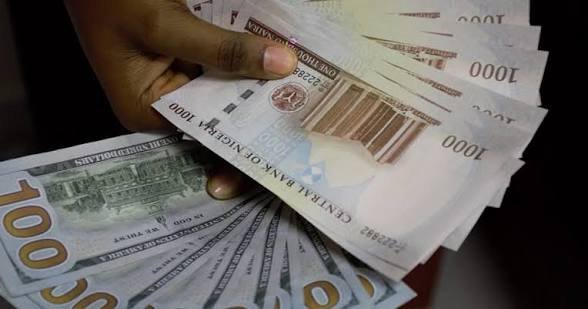
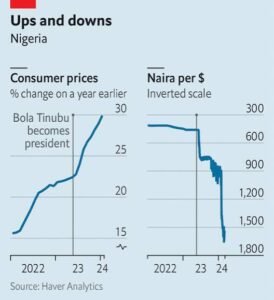
the liberalization of the foreign exchange market where the naira fell sharply trading past N1,600 to the US dollar was considerably pivotal to escalating terrorism as rural farmers abandon their lands due to armed violence and terrorism, which restricts food supply and drives catastrophic food inflation.
The situation encouraged criminal elements to utilize the ease of moving large physical cash sums to run a lucrative ransom economy, directly linking criminality to the demand for liquidity.
While the nexus of currency crisis and terrorism has overbearing consequences, the effects can be mitigated in Nigeria by the following measures:
Nigeria must address the socioeconomic marginalisation and governance vacuums that make populations vulnerable to cash inducements leading up to radicalization and insurgent recruitment using large volumes of cash.
The country need to Implement strict beneficial ownership rules in high-risk sectors (procurement, real estate) so illicit funds cannot be easily hidden using shell companies.
The nation must take decisive steps to strengthen border controls and secure vulnerable supply chains to prevent the trafficking of weapons and illicit proceeds that fuel local insurgencies.
The bureaucracy of economic chain must as a matter of urgency strengthen foreign reserves. It could consider raising interest rates to curb inflation, and utilizing Investopedia Currency Futures.
Finally, the nation can disentangle terrorism and currency crisis by cutting off funding through Finacial Action Task Force Anti-Money Laundering regulations through partnership with the UN Office of Counter-Terrorism for intelligence sharing.
AVM RTD AKUGBE IYAMU MNSA fsi IS PRESIDENT ASSOCIATION OF ENVIRONMENTAL PROTECTION AND CLIMATE CHANGE PRACTITIONERS
ANALYST ON ENVIRONMENTAL AND CLIMATE POLICIES AND COMMENTATOR ON NATIONAL ISSUES
WARNING!!!!!!!
NO PART OF THIS PUBLICATION CAN BE REPRODUCED OR EDITED BY ANYONE WITHOUT THE NECESSARY PERMISSION OF THE AUTHOR