
War
Putin Acknowledges Fuel Deficit as Ukraine Expands Drone Campaign Against Russian Refineries

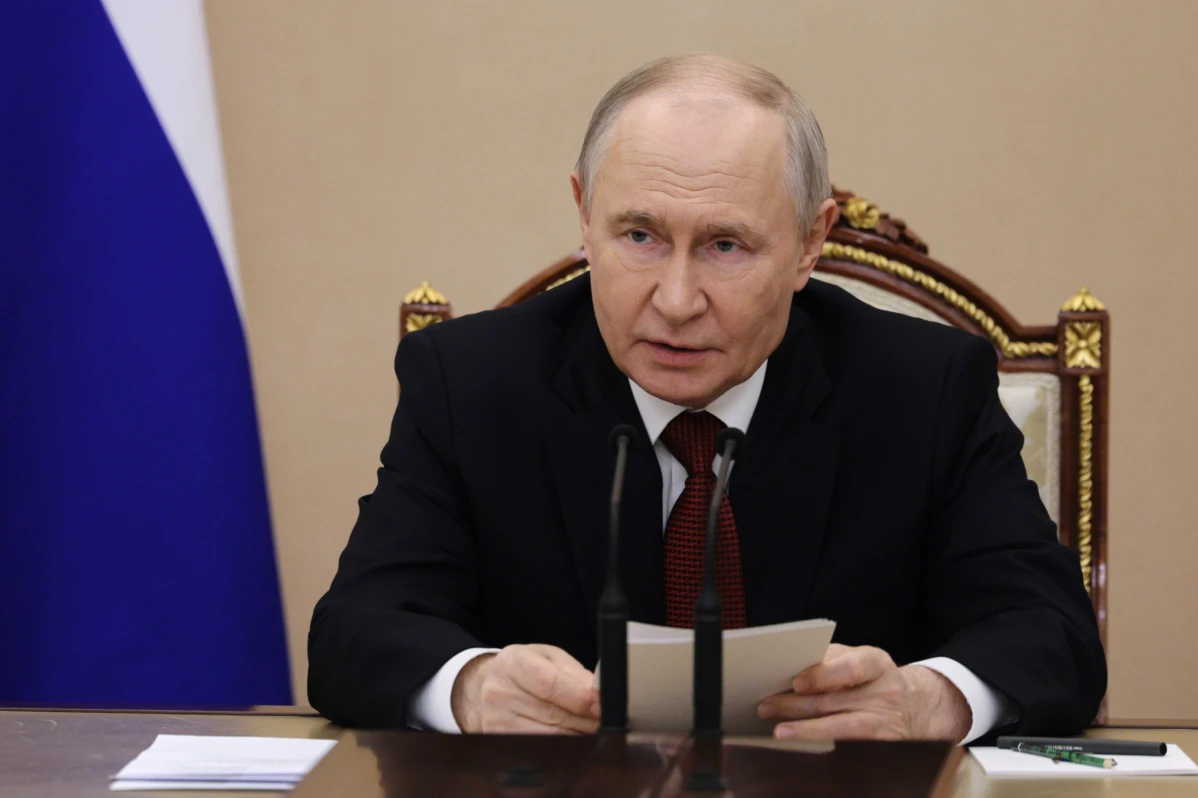
Ukraine has intensified its long-range drone campaign against Russia’s energy infrastructure, striking two more oil refineries overnight in what officials describe as a strategy to weaken Moscow’s military logistics and economic resilience.
The latest attacks come as Russian President Vladimir Putin publicly acknowledged that the country is experiencing fuel shortages; a rare admission that highlights the growing impact of Ukraine’s sustained strikes on Russia’s oil industry.
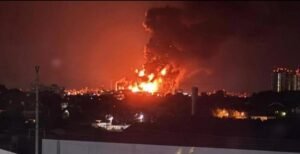
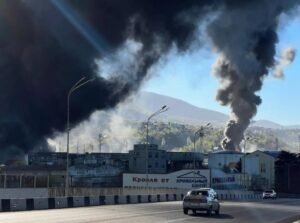
According to Ukrainian President Volodymyr Zelenskyy, drones targeted major refineries in Russia’s Krasnodar and Yaroslavl regions during the overnight operation. One of the facilities, the Slavyansk refinery in southern Russia’s Krasnodar region, was engulfed in flames, with dramatic images circulating online showing thick black smoke rising above the complex.
The attacks form part of Kyiv’s expanding campaign to strike strategic energy assets deep inside Russian territory. Ukrainian officials argue that disrupting fuel production limits Russia’s ability to sustain military operations while increasing economic pressure on the Kremlin. Zelenskyy has described the strategy as “long-range sanctions,” saying it is designed to force Russia to reconsider continuing the war.
In remarks carried by Russian state media, President Putin admitted that several regions are facing fuel deficits, particularly at a time when agricultural demand is increasing during the summer harvest season.
He said the government has established a special task force working around the clock to stabilize supplies, increase refinery output and strengthen protection for oil facilities that have increasingly become targets of Ukrainian drone attacks.
Putin said Russia currently has approximately 1.7 million metric tons of gasoline reserves and expressed confidence that production would improve in July. He also revealed that officials are considering tighter restrictions on diesel exports if domestic shortages worsen.
The latest strikes underscore the growing sophistication of Ukraine’s drone program.
Over the past year, Kyiv has repeatedly targeted oil depots, refineries, storage terminals and pipeline infrastructure hundreds, and sometimes more than a thousand kilometres from the front lines. Military analysts say these attacks have increasingly disrupted Russia’s refining capacity and complicated fuel distribution across the country.
Russian authorities reported intercepting more than 200 Ukrainian drones during the latest overnight assault. Nevertheless, officials acknowledged that several aircraft penetrated air defenses and damaged key industrial facilities.
Ukraine, meanwhile, said Russia launched more than 140 drones and several missiles against Ukrainian territory during the same period, with most intercepted by Ukrainian air-defense systems. Civilian casualties were reported on both sides of the border.

The repeated attacks are beginning to have noticeable effects beyond the battlefield.
Reports from several Russian regions indicate long queues at petrol stations, fuel rationing and supply disruptions. In parts of Siberia, authorities have reportedly limited fuel purchases to 50 litres per vehicle per day to conserve supplies, while shortages have also affected Russian-occupied Crimea.
Energy analysts note that although Russia remains one of the world’s largest oil producers, persistent strikes on refineries and fuel depots have complicated domestic distribution, forcing authorities to divert resources toward repairing damaged infrastructure and protecting critical energy facilities.
The attacks reflect Ukraine’s broader strategy of carrying the war deeper into Russian territory after years of defending against Moscow’s invasion.
Rather than focusing solely on frontline combat, Kyiv has increasingly sought to undermine Russia’s economic base by targeting facilities linked to military logistics and petroleum production. Western analysts believe the campaign is gradually raising the financial and operational costs of the war for the Kremlin, even as Russia continues offensive operations in eastern Ukraine.
Despite the mounting pressure, Putin insisted Russia’s military campaign would continue, saying the attacks would not alter Moscow’s broader objectives. Ukrainian officials, however, maintain that continued strikes on strategic infrastructure are essential to weakening Russia’s war machine and creating conditions for future negotiations.
As both sides intensify drone warfare and long-range attacks, the conflict is increasingly extending far beyond the battlefield, with critical energy infrastructure emerging as one of the war’s most contested targets.