
Weather
Lightning Strikes Eiffel Tower as Violent Thunderstorm Sweeps Across Paris

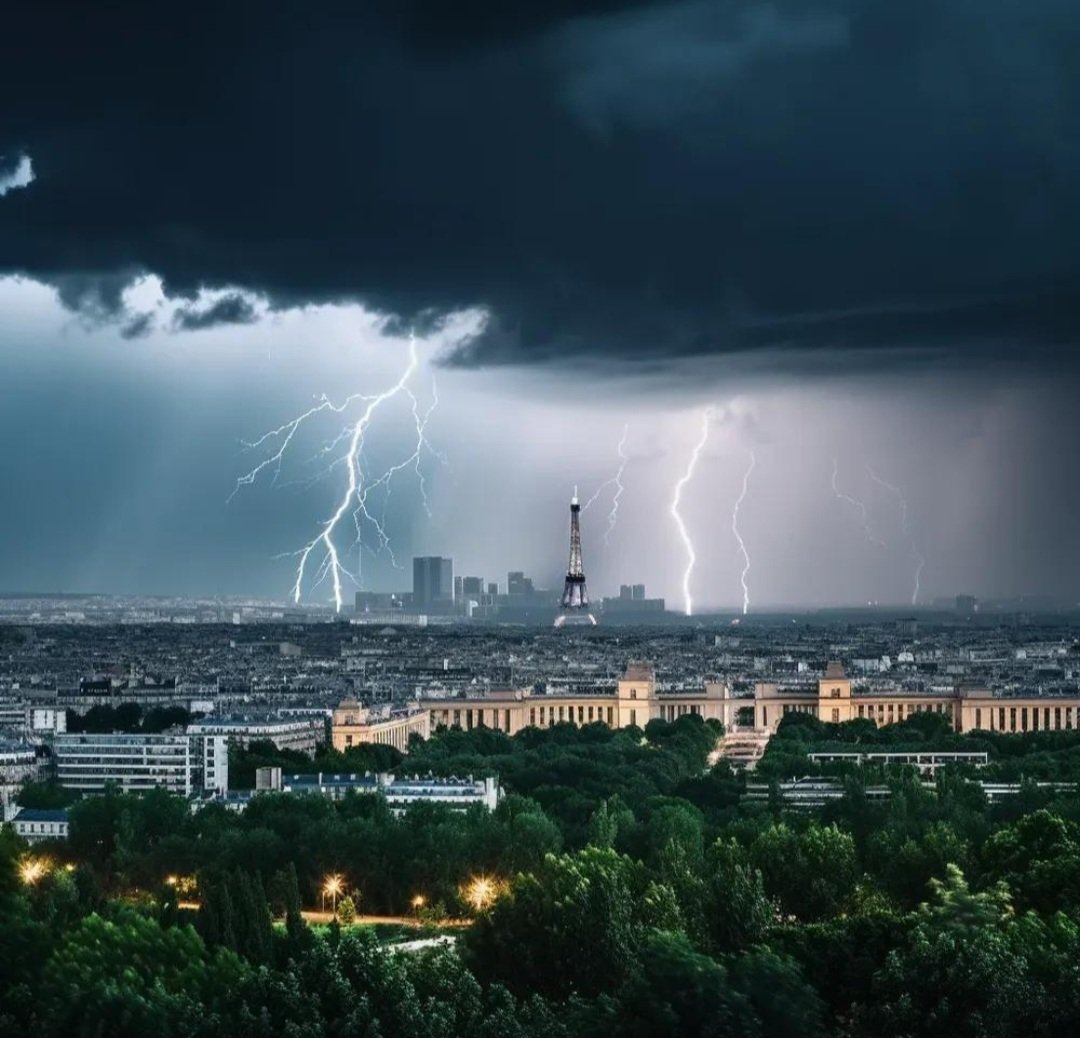
A spectacular bolt of lightning struck the Eiffel Tower as a powerful thunderstorm swept across Paris, creating dramatic scenes over the French capital after days of record-breaking heat that had gripped much of France and western Europe. Videos captured by residents and tourists quickly spread across social media, showing the iconic landmark illuminated by a brilliant flash as thunder echoed across the city.
The storm arrived late Saturday after France endured one of its most intense early-summer heatwaves on record. Meteorologists said the clash between extremely hot air and an advancing cooler weather system created unstable atmospheric conditions that triggered severe thunderstorms across Paris and several other regions of the country.
Despite the dramatic images, officials said there was no damage to the Eiffel Tower and no injuries were reported as a result of the lightning strike.
Engineers note that the 330-metre iron monument is specifically designed to withstand lightning. The tower is equipped with lightning rods and a grounding system that safely channels electrical energy into the ground, making direct strikes a normal occurrence during severe storms. Experts say the Eiffel Tower is struck by lightning several times each year without suffering structural damage.
The thunderstorm brought heavy rain, gusty winds and a noticeable drop in temperatures, offering relief after an intense heatwave that forced authorities to implement emergency measures across France.
Earlier in the week, the Eiffel Tower shortened visiting hours while other major attractions, including the Louvre Museum, adjusted operations because of the extreme temperatures. Schools also closed in parts of the country, and health officials warned residents to avoid prolonged exposure to the heat.

France recently recorded its hottest national average temperature on record, while public health authorities linked the prolonged heat to a sharp rise in heat-related illnesses and deaths. The World Health Organization has estimated that more than 1,300 excess deaths have occurred across Europe since the heatwave began, with France among the hardest-hit countries.
Although the rainfall provided temporary relief, meteorologists warned that unstable weather conditions are expected to continue in parts of France. Authorities urged residents to remain cautious as thunderstorms capable of producing frequent lightning, heavy rainfall and strong wind gusts continue moving across the country.
Emergency services also advised the public to avoid open spaces during thunderstorms, stay away from isolated trees and metal structures, and postpone outdoor activities until severe weather passes.
Footage of the lightning strike rapidly gained millions of views online, with tourists and residents describing the event as both breathtaking and frightening. The videos show a brilliant flash connecting directly with the summit of the Eiffel Tower before the surrounding skyline is illuminated by the electrical discharge.
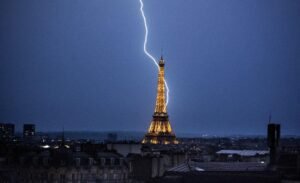
While the images captivated viewers around the world, weather experts emphasized that the event was not unusual. Because the Eiffel Tower is the tallest structure in central Paris and is fitted with advanced lightning protection, it is designed to safely absorb and redirect lightning strikes without endangering visitors or damaging the landmark.
As France transitions from record-breaking heat to unsettled weather, authorities continue to monitor conditions closely, warning that thunderstorms could remain a feature of the forecast even as temperatures begin to return to more seasonal levels.