
General News
Agbakoba Urges FG to Shield State Police, Key Institutions from Executive Control

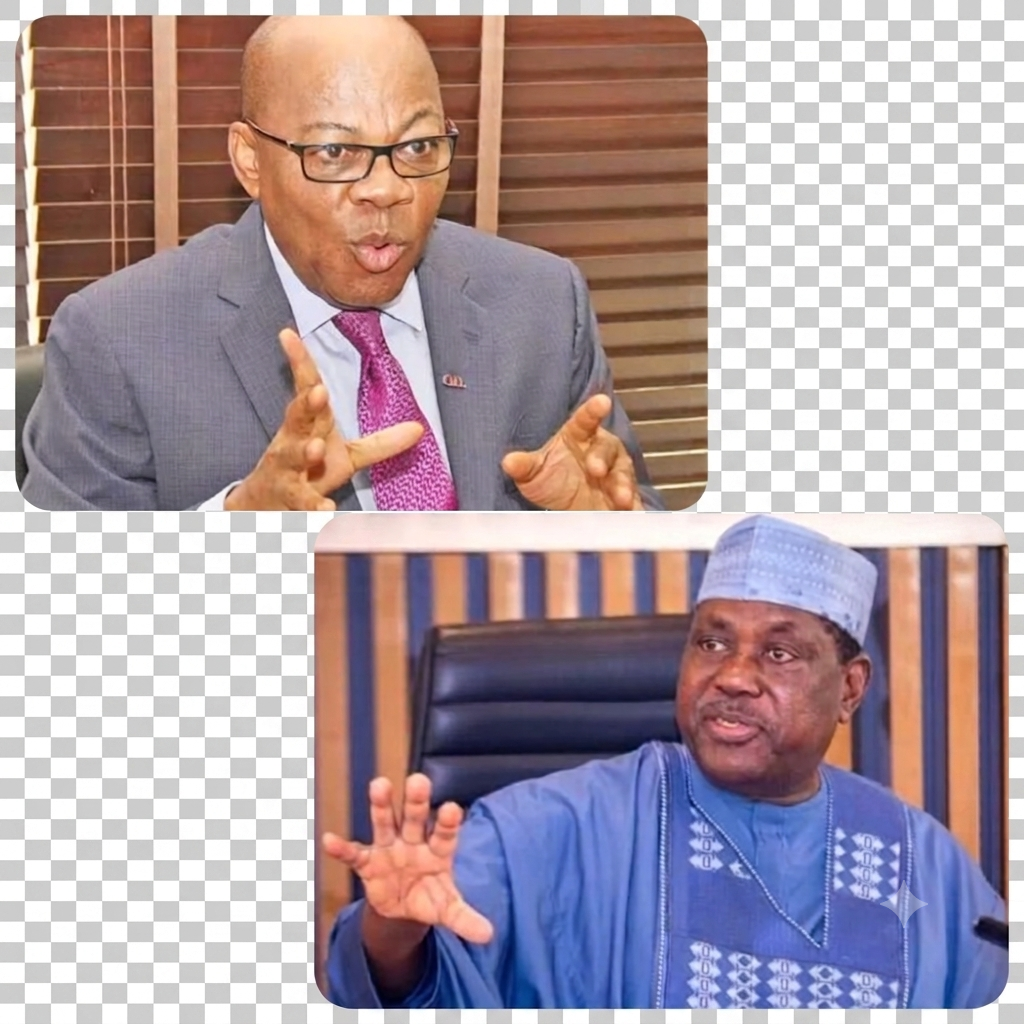
Senior Advocate of Nigeria (SAN), Dr. Olisa Agbakoba, has urged the Federal Government to accompany its proposed constitutional amendment on state police with far-reaching reforms that would insulate critical democratic institutions from executive interference.

In a letter dated June 26, 2026, and addressed to the Secretary to the Government of the Federation (SGF), Dr. George Akume, Agbakoba commended President Bola Tinubu for transmitting to the National Assembly an Executive Bill seeking to amend Section 214 of the 1999 Constitution to establish state police.
He described the move as a significant step toward improving public security and bringing policing closer to local communities.
However, Agbakoba argued that the proposed reform should serve as a catalyst for broader constitutional restructuring, including the devolution of additional responsibilities such as the issuance of drivers’ licences, prison administration, marriage registration, arbitration, trade regulation and business name registration to state and local governments.
According to him, such reforms would reduce the burden on the Federal Government while improving efficiency at the subnational level.
The former Nigerian Bar Association president warned that without strong constitutional safeguards, state police could suffer the same fate as State Independent Electoral Commissions and local governments, which he said have largely fallen under the control of state executives.
“Devolution without institutional protection is reform in name only,” Agbakoba stated, adding that institutions lacking constitutional independence inevitably become instruments of executive power rather than guardians of democracy.
Drawing lessons from South Africa, he urged Nigeria to adopt a constitutional framework similar to Chapter 9 of the South African Constitution, which guarantees the independence of institutions supporting constitutional democracy, including the Public Protector, Electoral Commission, Human Rights Commission and Auditor-General.
Agbakoba proposed that major Nigerian institutions, including the Nigeria Police Force, Independent National Electoral Commission (INEC), Economic and Financial Crimes Commission (EFCC), Independent Corrupt Practices and Other Related Offences Commission (ICPC), Central Bank of Nigeria (CBN), National Judicial Council (NJC), Office of the Attorney-General, Accountant-General, National Human Rights Commission and Code of Conduct Bureau, should be removed from executive control and granted constitutional protection.
He said such institutions should enjoy security of tenure for their leadership, receive direct funding from the Consolidated Revenue Fund and be accountable to the National Assembly or State Houses of Assembly rather than the executive arm of government.
Citing constitutional scholar Professor Ben Nwabueze, Agbakoba said the proposal aligns with the principle of “limited government,” which ensures that executive powers are constrained by independent institutions established by the Constitution.
He also recommended a tripartite appointment and removal process for heads of state police and other independent institutions. Under the proposal, the Police Service Commission would recommend qualified candidates, governors would make appointments, while State Houses of Assembly would confirm them. The same process, he said, should apply to removals to prevent political manipulation.
Agbakoba stressed that only such a system of shared constitutional responsibility would prevent executive capture of state police and safeguard the integrity of Nigeria’s democratic institutions.
He expressed hope that the Federal Government would give serious consideration to the proposals as part of the ongoing constitutional amendment process.