General News
HURIWA Blasts Wike Over Stray Cattle in Abuja, Says Apologies Not Enough

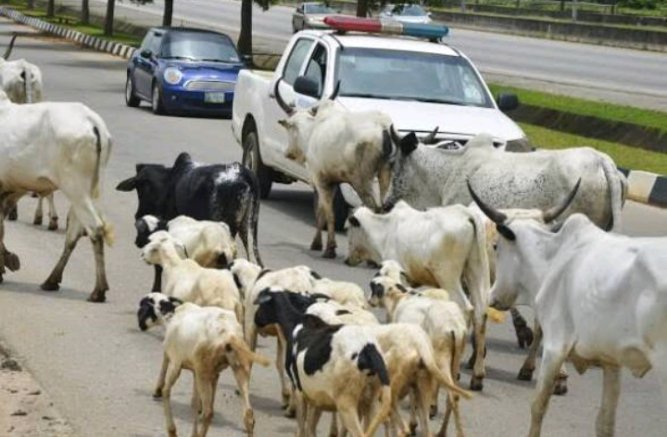
The Human Rights Writers Association of Nigeria (HURIWA) has expressed deep concern over the continued presence of stray cattle on major roads and streets of the Federal Capital Territory (FCT), weeks after the Minister of the FCT, Barrister Nyesom Wike, publicly apologised to residents and accepted responsibility for the embarrassing situation.
In a statement signed by its National Coordinator, Comrade Emmanuel Nnadozie Onwubiko, HURIWA insisted that repeated apologies cannot substitute for decisive enforcement of existing environmental and public safety laws.
The group recalled that following its earlier criticism of the failure of the FCTA to clear cows roaming the highways and streets of Abuja, the minister addressed a press conference where he admitted that the continued movement of cattle on Abuja’s streets was unacceptable and pledged to address the challenge.
However, several weeks after that assurance, residents continue to report the sight of cattle roaming freely on major roads, creating traffic hazards, exposing motorists and pedestrians to avoidable accidents, and diminishing the image of the nation’s capital.
HURIWA questioned why it has become so difficult to enforce laws prohibiting animals from straying onto public roads, asking whether the relevant authorities are unwilling to implement the law or if there is a political reluctance to enforce it because those predominantly engaged in the cattle business belong to an influential ethnic constituency.
The civil rights group recalled that in many civilised societies, livestock owners who allow animals to stray onto public highways are sanctioned because such negligence endangers lives, damages public infrastructure and disrupts economic activities, stressing that Abuja should not be an exception.
HURIWA urged the Federal Capital Territory Administration to move beyond public assurances by immediately implementing practical measures to end the menace, including strict enforcement against owners of stray cattle, coordinated monitoring by relevant agencies, impounding of wandering livestock, and sustained public enlightenment on compliance with environmental regulations.
The rights advocacy group further called on security agencies, environmental authorities and area council administrations to work together to ensure that Abuja’s roads are safe for motorists, pedestrians and residents.
While acknowledging the ongoing infrastructure projects across the FCT, HURIWA emphasised that modern roads and bridges cannot achieve their intended purpose if they are routinely occupied by roaming cattle, adding that rapid infrastructure development must go hand in hand with effective enforcement of laws that guarantee public order, sanitation and safety.
The group concluded that the continued sight of cattle on Abuja’s highways undermines the capital city’s reputation and raises legitimate questions about government’s commitment to equal enforcement of the law, insisting that Nigerians deserve action, not endless apologies.