Politics
ADC NEC Urges INEC To Enforce Leadership Judgement, Alleges Judicial Compromise

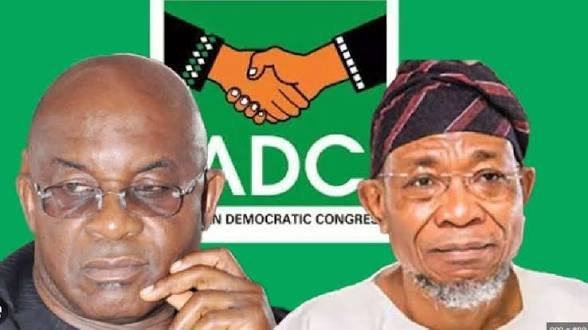
The leadership crisis within the African Democratic Congress (ADC) has taken a new turn as the party’s National Executive Committee (NEC) has called on the Independent National Electoral Commission (INEC) to enforce the recent Supreme Court judgment on its leadership dispute.
The party is also alleging that there has been a compromise within the judiciary regarding the matter.
This development follows a period of intense legal battles and conflicting court orders that have thrown the party into administrative limbo.
The Supreme Court had recently set aside an earlier order from the Court of Appeal that directed all parties to maintain the “status quo ante bellum,” a ruling that INEC had used to justify withdrawing recognition from the David Mark-led leadership.
In a swift response to the apex court’s decision, INEC restored the leadership of the African Democratic Congress led by former Senate President David Mark to its official portal.
A Senior Advocate of Nigeria, Jibrin Okutepa, who served as lead counsel to Senator David Mark, praised the electoral umpire for acting promptly without waiting to be formally served with the judgment.
However, the ongoing legal complexities have raised concerns about judicial overreach and potential compromises.
Legal experts have pointed out that courts generally lack jurisdiction to adjudicate on issues of leadership or membership of a political party, citing Section 83(5) of the Electoral Act 2026 and Supreme Court precedents.
Some party members are now questioning whether certain judicial interventions are being weaponised to destabilise the opposition.
In a counter-development that further complicates the situation, a Federal High Court in Abuja has barred INEC from recognizing or participating in any state congresses conducted by committees appointed by the David Mark-led caretaker leadership.
Justice Joyce Abdulmalik ruled that the responsibility for conducting state congresses rests with the party’s State Executive Committees, not the national leadership.
The court also upheld the four-year tenure of the ADC’s State Working Committees and State Executive Committees, pending the conduct of properly constituted congresses.
This ruling has been hailed as a victory for the faction opposing the Mark-led group, which has accused the former Senate President of attempting to hijack the party.
“The law is settled that courts will not interfere.
However, where there is an allegation of breach of constitutional or statutory provisions, the court has a duty to intervene,” Justice Abdulmalik declared while delivering her judgment. She stressed that political parties cannot abandon their constitutions under the guise of internal autonomy.
Meanwhile, factions within the ADC continue to engage in legal battles over the party’s soul. Nafiu Bala Gombe, who is at the centre of the crisis, has led a counter-protest at INEC headquarters, demanding formal recognition of his leadership.
His faction insists that due process must be followed in resolving the leadership dispute. “We are here to urge INEC to follow due process. You cannot come to the ADC through the window and expect to overturn the owners of the ADC,” Gombe stated during the protest.
In response to the conflicting court rulings, INEC has adopted a cautious stance, withdrawing recognition from all factions and declining to engage with either side, effectively placing the party in an administrative freeze. This decision has been met with mixed reactions, with some critics accusing the commission of acting as an “extended arm of the ruling APC”.
As the 2027 general elections approach, the prolonged uncertainty over the ADC’s leadership structure risks weakening internal cohesion and discouraging prospective defectors.
The party’s preparations for congresses and conventions remain uncertain, raising questions about its ability to field candidates whose nominations meet legal thresholds.
The ADC NEC’s call for INEC to enforce the Supreme Court judgment and its allegations of judicial compromise highlight the deep-seated tensions threatening to derail the party’s electoral viability.