
Politics
Atiku Says He Chose Nigeria Over Obasanjo, Defends Role in Defeating Third-Term Agenda

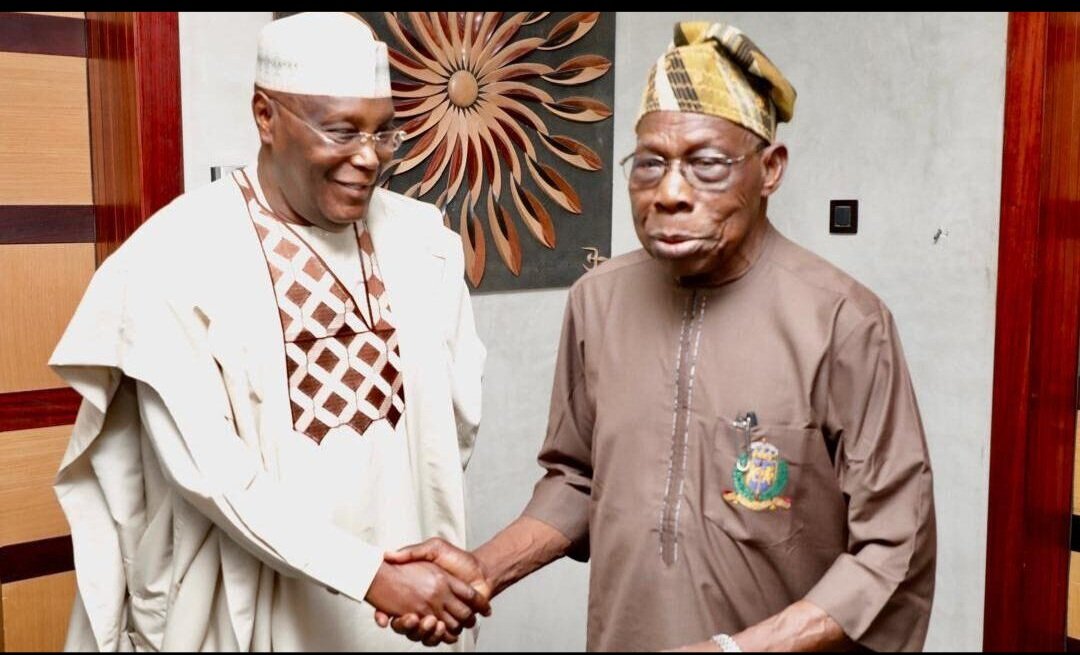
Former Vice President and African Democratic Congress (ADC) presidential candidate, Atiku Abubakar, has strongly rejected recent criticisms by former President Olusegun Obasanjo, accusing his former political ally of attempting to rewrite history out of personal resentment.

In a statement issued on Saturday by his Senior Special Assistant on Public Communication, Phrank Shaibu, Atiku said Obasanjo’s latest public remarks reflected “bitterness” rather than historical fact, insisting that his opposition to the controversial third-term agenda remains one of the defining moments of his political career.
Atiku maintained that he has no regrets over resisting attempts to amend the Constitution to allow Obasanjo seek a third presidential term while in office.
According to him, his decision was driven by loyalty to Nigeria’s Constitution rather than personal allegiance.
He argued that the campaign against the third-term agenda was not about a disagreement between two individuals but about defending Nigeria’s democracy and preventing what he described as an unconstitutional extension of executive power.
The former vice president said history had already vindicated those who opposed the proposal, insisting that “democracy won that battle.”
Atiku suggested that Obasanjo’s continued criticism stems from lingering resentment over the collapse of the third-term bid.
He said he considered the former president’s latest interview with sadness rather than anger, adding that personal grievances should not be allowed to distort historical events.
According to Atiku, no individual is greater than the Federal Republic of Nigeria, stressing that constitutional democracy must always take precedence over personal or political loyalty.
The former vice president also pointed to recent comments by Ngozi Okonjo-Iweala, who reportedly described the economic management team under the Obasanjo administration as one of Nigeria’s strongest.
Atiku argued that such recognition reinforces his contribution to the economic reforms implemented during their administration and contradicts attempts to diminish his role.
He said while Obasanjo may refuse to acknowledge those contributions, the historical record and testimonies of other senior officials remain available for Nigerians to assess.
In one of the most personal sections of the statement, Atiku recounted the role he said he played during Obasanjo’s imprisonment under the military regime.
He claimed he supported Obasanjo’s family, campaigned for his release and provided financial, political and personal assistance after his release from prison.
According to Atiku, he also helped mobilise political structures and alliances that contributed to Obasanjo’s emergence as Nigeria’s president in 1999.
Despite recalling those events, Atiku said he harbours no regrets over helping the former president, describing acts of kindness as matters of conscience rather than transactions requiring repayment.
The former vice president criticised what he described as the continued focus on past political disagreements at a time Nigeria is facing serious economic and security challenges.
He argued that national attention should instead be directed towards addressing inflation, unemployment, insecurity and restoring hope ahead of the 2027 general election.
According to him, the election should centre on rebuilding the country rather than reopening old political disputes.
Atiku said he had deliberately exercised restraint over the years out of respect for Obasanjo and the office he once occupied.
However, he maintained that silence should not be mistaken for weakness, adding that repeated attempts to distort historical events required a response.
He concluded by saying that while Obasanjo is entitled to his opinions, “he is not entitled to his own facts,” expressing confidence that history and the Nigerian people would ultimately judge the issues fairly.
The statement is the latest chapter in the long-running political disagreement between the two former allies, whose relationship deteriorated during the final years of the Obasanjo administration and has remained strained ever since.