
International
Justice After Eight Years: Italian Court Convicts Officials Over Deadly Genoa Bridge Collapse

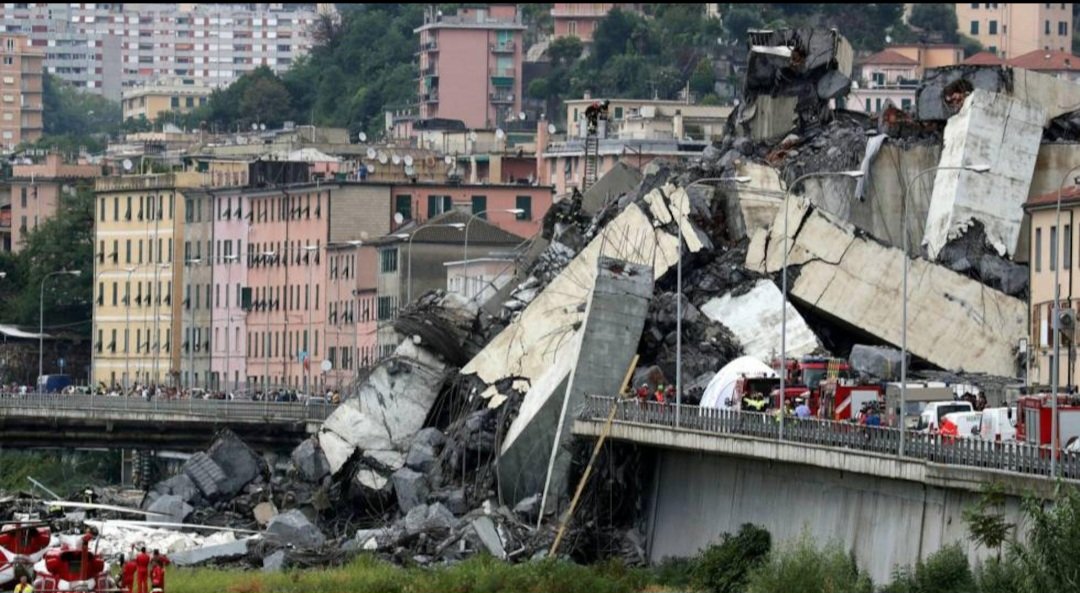
An Italian court has delivered a landmark verdict in one of the country’s deadliest infrastructure disasters, sentencing former motorway executives and officials to prison over the 2018 collapse of Genoa’s Morandi Bridge, which killed 43 people and injured several others. The ruling brings a major chapter of the years-long legal battle closer to an end, although many of the convicted defendants have already indicated they will appeal.
The harshest sentence was handed to Giovanni Castellucci, the former chief executive of Autostrade per l’Italia and former head of Atlantia, who received 12 years in prison after being found guilty of manslaughter through negligence and other offences related to the collapse. Prosecutors argued that Castellucci and other senior officials ignored repeated warnings about the deteriorating condition of the bridge while prioritizing profits over public safety.
Also receiving lengthy prison terms was Michele Donferri Mitelli, the former head of maintenance at Autostrade per l’Italia, who was sentenced to 11 years in prison. Antonino Galata, the former chief executive of engineering company SPEA, received a sentence of five years and six months. In total, 32 defendants were convicted, while 25 others were acquitted or had charges dismissed because of statutes of limitation.
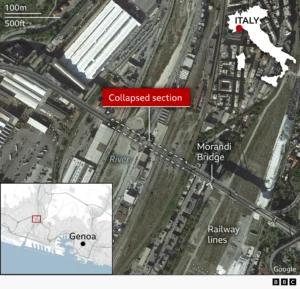
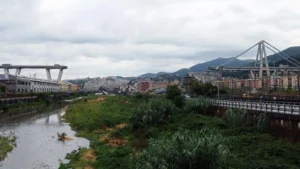
The Morandi Bridge, a major motorway viaduct in the northwestern city of Genoa, collapsed during a heavy rainstorm on 14 August 2018, sending dozens of cars and trucks plunging nearly 50 metres onto railway tracks, warehouses and the Polcevera River below. The tragedy shocked Italy and triggered nationwide scrutiny of ageing infrastructure and maintenance standards.
During the lengthy trial, prosecutors argued that the collapse was foreseeable and preventable, alleging that years of inspections had revealed serious structural weaknesses that were not adequately addressed. They claimed maintenance work was repeatedly delayed despite evidence of corrosion and deterioration. Defence lawyers rejected those allegations, insisting the disaster resulted from an original design flaw in the bridge rather than negligence by company executives.
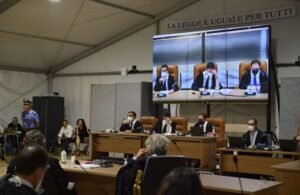
The verdict was delivered before a courtroom filled with relatives of the victims, many of whom had waited nearly eight years for justice. Several family members welcomed the convictions as recognition of corporate responsibility, although some expressed disappointment that not all defendants were found guilty. Others said no sentence could compensate for the lives lost in the tragedy.

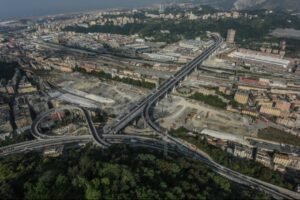
The bridge collapse sparked sweeping political and regulatory changes in Italy. Following the disaster, the Morandi Bridge was demolished and replaced by the Genoa San Giorgio Bridge, designed by renowned Italian architect Renzo Piano, which opened to traffic in 2020. The tragedy also intensified debate over the management of Italy’s motorway network and ultimately contributed to the sale of Autostrade per l’Italia to a state-backed consortium in 2021.

Lawyers representing Castellucci said they would appeal the verdict, arguing that their client relied on technical assessments from qualified engineers and should not be held personally responsible for defects that had gone undetected for decades. Under Italy’s judicial system, convictions can be reviewed by higher courts before becoming final.
The case is widely regarded as one of the most significant corporate accountability trials in modern Italian history. Legal experts say the verdict sends a strong message about the responsibilities of infrastructure operators to maintain public safety, while also highlighting the consequences of failing to address known structural risks.