
International
Japan’s Parliament Approves Male-Only Succession Law to Preserve Imperial Family Princess Aiko Still Barred as Japan

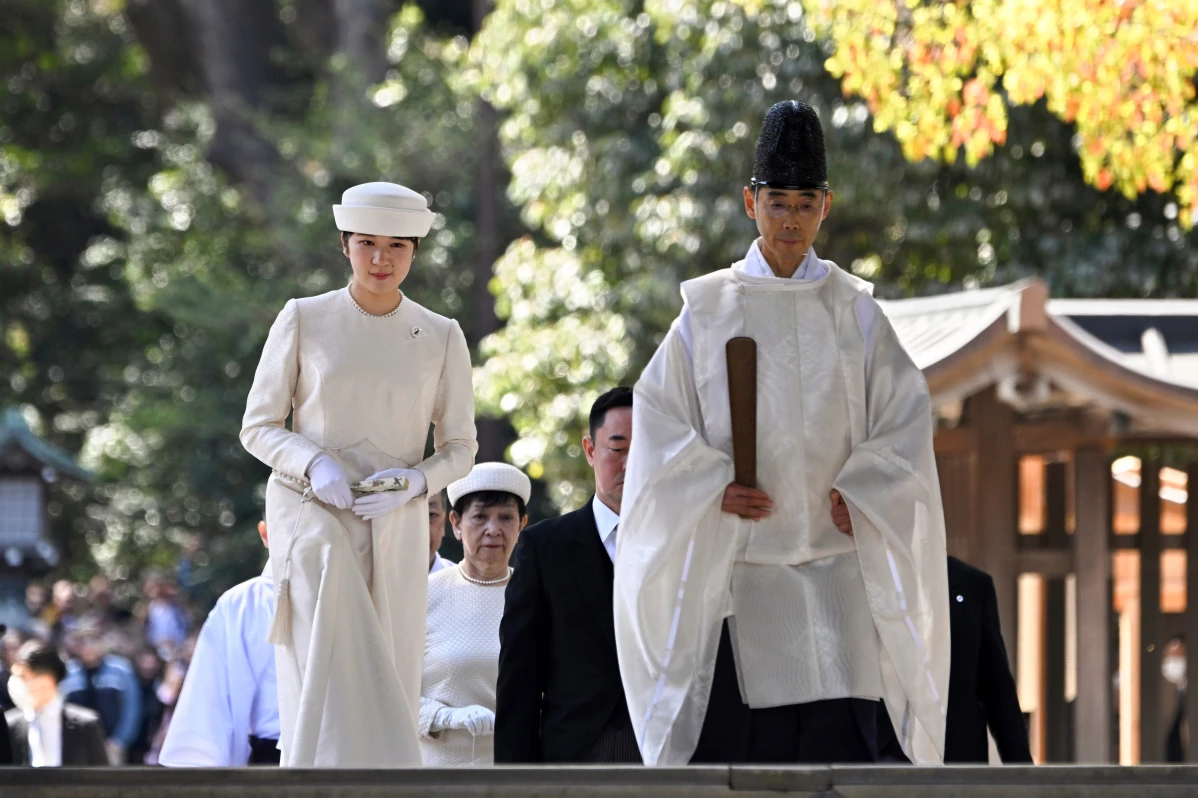
Japan’s parliament has approved a landmark revision to the country’s Imperial House Law, reaffirming that only men from the paternal bloodline can inherit the Chrysanthemum Throne, despite growing public support for allowing women to become emperor.
The legislation, passed on Friday, is intended to address the shrinking size of the imperial family while preserving what conservative lawmakers describe as the unbroken male lineage that has defined Japan’s monarchy for centuries.

The revised law introduces measures designed to bolster the imperial household without changing the long-standing rule excluding women from the line of succession. Under the changes, princesses will be allowed to retain their imperial status after marrying commoners, a departure from previous rules that required them to leave the royal family upon marriage. The law also permits the adoption of unmarried male descendants from former imperial branches, with any future sons they have becoming eligible to inherit the throne.
Despite her popularity among the Japanese public, Princess Aiko; the only child of Emperor Naruhito and Empress Masako remains ineligible to succeed her father simply because she is a woman.
Instead, the line of succession continues through Emperor Naruhito’s younger brother, Crown Prince Akishino, followed by his 19-year-old son, Prince Hisahito. After them, the next heir is Prince Hitachi, the emperor’s 90-year-old uncle. With only five male members remaining in the imperial family, concerns have grown about the monarchy’s long-term future.
Prime Minister Sanae Takaichi and conservative lawmakers argued that maintaining succession through the paternal male line is essential to preserving the legitimacy and historical continuity of the world’s oldest hereditary monarchy.
Supporters of the legislation say the reforms strike a balance by increasing the number of imperial family members while safeguarding traditions that have existed for centuries.
The legislation has drawn criticism from constitutional scholars, historians and women’s rights advocates, who argue that it reinforces gender discrimination and ignores widespread public support for allowing female emperors.

Critics point out that Japan has had eight reigning empresses throughout its history, the last being Empress Gosakuramachi, who ruled in the 18th century. They contend that the modern male-only succession rule dates back only to the Meiji era in the late 19th century rather than representing an unbroken ancient tradition.
Some experts also questioned whether adopting distant male relatives from former imperial branches would provide a sustainable solution, noting that many of those families have lived as ordinary citizens for decades and may be reluctant to return to the highly restrictive life of the imperial household.
Japan’s imperial family has steadily declined in size due to rules requiring female royals who marry commoners to leave the family and the limited number of male heirs.
Although the new law allows princesses to remain members of the imperial household after marriage, it stops short of granting succession rights to women or their children, a compromise that continues to fuel debate over the future of the monarchy.
The legislation is expected to shape Japan’s imperial succession for generations, but it has also intensified national discussions over tradition, gender equality and the long-term survival of the imperial institution.