
International
Chinese Military Researchers Used U.S. AI Models to Train Defence Systems, Investigation Finds

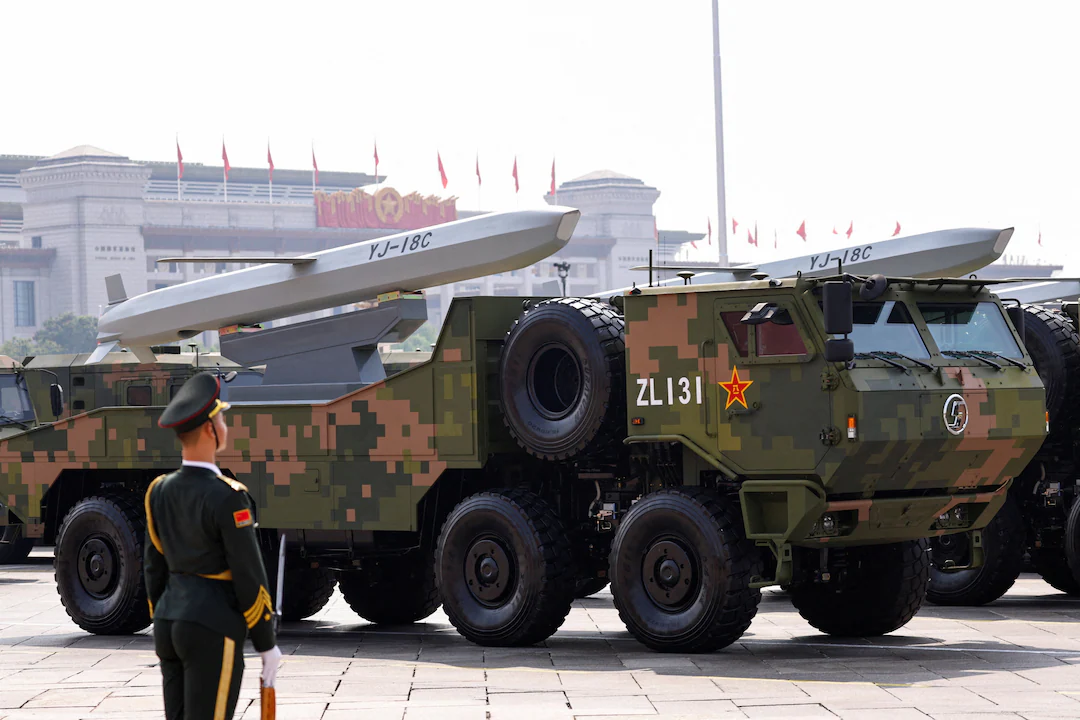
Chinese military-linked researchers have been using outputs from leading U.S. artificial intelligence models developed by OpenAI and Anthropic to help train domestic AI systems for defence-related applications, according to a Reuters investigation based on a review of more than 80 Chinese academic papers and patent filings. The findings provide a rare look at how institutions connected to China’s military are attempting to accelerate the development of homegrown AI despite U.S. export controls and technology restrictions.
The investigation found that researchers affiliated with institutions linked to the People’s Liberation Army (PLA) used a technique known as model distillation, in which outputs from advanced AI models are used to train smaller, specialized systems. These distilled models can then operate on local infrastructure with far lower computing requirements than the original frontier models.
According to the reviewed documents, Chinese researchers relied on outputs from models including GPT-3.5 and Claude 3 Haiku to generate synthetic training data, summarize software code, classify text and improve machine-learning systems.
The papers describe applications ranging from intelligence analysis and social media monitoring to surveillance, image recognition and AI systems that could support drone operations and other defence technologies. Researchers emphasized that distillation allows them to build capable AI systems without needing the enormous computing resources required to train frontier models from scratch.
Reuters reported that several of the papers originated from universities and research institutes with close ties to China’s defence establishment and weapons industry.
One example involved researchers at the North University of China, which has longstanding links to China’s military-industrial sector. They reportedly used Anthropic’s Claude 3 Haiku to generate synthetic data for a text-classification model designed for social media monitoring and content moderation. Other papers described the use of GPT-3.5 outputs to assist in developing models that could operate entirely within secure domestic military networks.
The findings are likely to intensify concerns in Washington about the transfer of advanced AI capabilities to strategic competitors.
U.S. officials have increasingly warned that Chinese developers may be using model distillation to extract capabilities from American AI systems in ways that could violate intellectual property rights or undermine export controls. Washington has already imposed restrictions on the export of advanced AI chips and has signaled that companies suspected of improperly acquiring U.S. AI technology could face sanctions or other penalties.
The report also comes amid broader efforts by both countries to tighten control over cutting-edge AI technologies, reflecting the growing view that artificial intelligence has become a strategic national security asset.
Chinese officials have dismissed U.S. accusations that Chinese organizations are improperly copying American AI technology.
Earlier this week, China’s Commerce Ministry accused Washington of pursuing “AI hegemonism” after senior U.S. officials threatened investigations and possible sanctions over alleged misuse of American AI models. Beijing argues that model distillation is a widely used machine-learning technique and says the United States has not produced evidence proving unlawful conduct.
Artificial intelligence experts note that while model distillation can significantly improve smaller AI systems, it does not perfectly replicate the capabilities of the original frontier models.
Distilled models typically inherit selected behaviours and reasoning patterns but remain less capable than the systems from which they learn. Even so, analysts say the technique can dramatically reduce development costs and accelerate deployment, making it particularly attractive for specialized military applications where efficiency and local deployment are priorities.
The revelations underscore the intensifying technological rivalry between the United States and China, with artificial intelligence now regarded as a cornerstone of economic competitiveness and military modernization.
Both governments are investing heavily in advanced AI while simultaneously imposing restrictions designed to protect their most valuable technologies. Analysts say the latest findings are likely to fuel further debate over AI export controls, intellectual property protection and the use of commercial AI systems in national defence.