
International
Peru’s Ex-President Ollanta Humala Freed After Constitutional Court Overturns Conviction

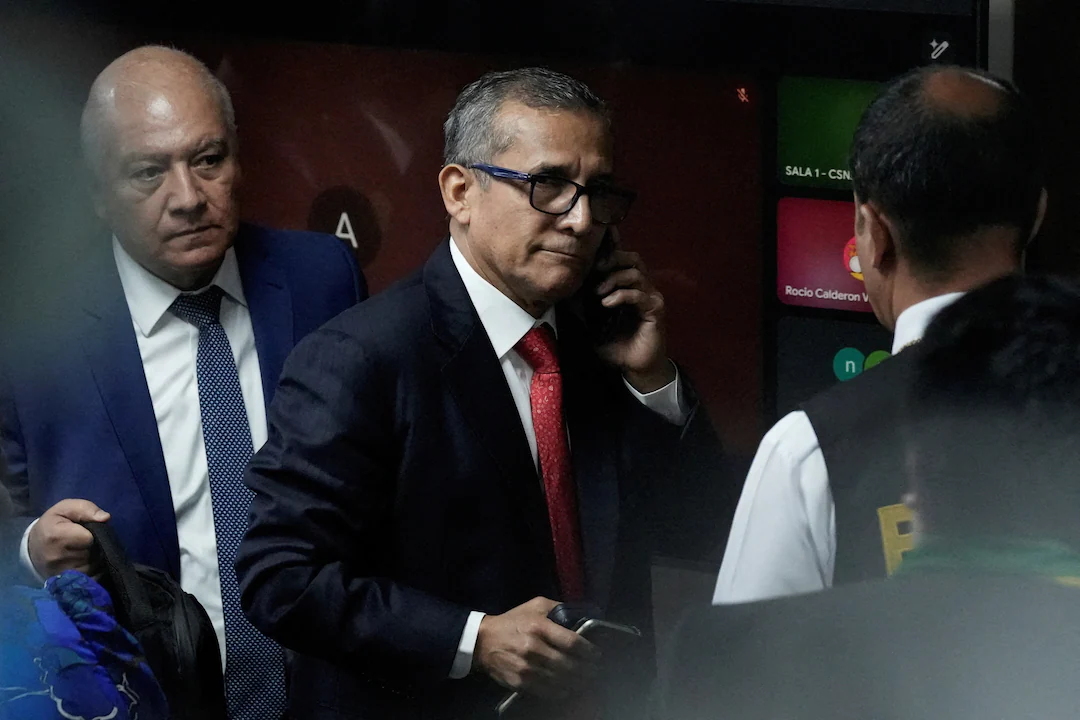
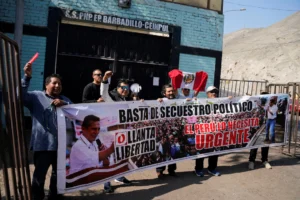
Former Peruvian President Ollanta Humala has been released from prison after Peru’s Constitutional Court overturned his 15-year conviction for money laundering, marking a dramatic reversal in one of the country’s most high-profile corruption cases linked to the sprawling Odebrecht bribery scandal. Humala walked free from Lima’s Barbadillo Prison on Friday after the court ruled that the legal basis for his conviction was flawed.
Humala had been serving a 15-year prison sentence imposed in 2025 after being found guilty of receiving illicit campaign contributions from Brazilian construction giant Odebrecht; now known as Novonor, during his successful 2011 presidential campaign. Prosecutors had also alleged that his earlier 2006 campaign received illegal funding from the Venezuelan government. Humala consistently denied any wrongdoing, arguing that the case was politically motivated.
The Constitutional Court ruled that campaign donations could not be prosecuted as money laundering under the version of Peruvian law that existed when the alleged offences occurred. The judges concluded that applying later legal interpretations to earlier campaign financing violated the constitutional principle of legality, leading them to annul the entire criminal proceeding and order Humala’s immediate release.
The decision follows similar legal reasoning used in other prominent political cases in Peru, including proceedings involving current President Keiko Fujimori, whose campaign finance case was also dismissed after courts found that campaign contributions did not constitute money laundering under the applicable law at the time.
Humala’s wife, Nadine Heredia, who was also convicted and sentenced to 15 years in the same case, did not return to Peru. She remains in Brazil, where she was granted political asylum by President Luiz Inácio Lula da Silva following the conviction.
Speaking after his release, Humala said he had been the victim of political and judicial persecution. He maintained that neither he nor his campaign had committed any crime and argued that the case reflected broader problems within Peru’s justice system. His legal team welcomed the Constitutional Court’s ruling, describing it as a victory for due process and constitutional rights.
Humala’s prosecution was one of many stemming from the Odebrecht corruption scandal, which has implicated presidents, ministers and business leaders across Latin America.
In Peru alone, the scandal has touched multiple former heads of state, including Alejandro Toledo, Pedro Pablo Kuczynski, Martín Vizcarra, Pedro Castillo, and Keiko Fujimori, making it one of the country’s largest anti-corruption investigations in modern history. The latest court ruling is expected to reignite debate over how campaign finance cases should be prosecuted under Peruvian law.
Legal analysts say the Constitutional Court’s decision could have far-reaching consequences for other corruption and campaign-financing cases, particularly those relying on similar legal interpretations.
Prosecutors have not yet announced whether they will pursue alternative legal action, but the ruling is likely to reshape Peru’s anti-corruption efforts and influence future investigations involving political leaders. Critics fear the decision could weaken accountability, while supporters argue it reinforces the constitutional principle that criminal laws cannot be applied retroactively.
Humala is now free after spending about 15 months in prison, but Peru’s wider battle against political corruption continues. The Constitutional Court’s judgment is expected to serve as a key legal precedent in future campaign finance cases and may prompt prosecutors to revise how they pursue allegations linked to election funding.
The ruling also highlights the continuing political divisions surrounding the Odebrecht investigations, which have reshaped Peru’s political landscape for more than a decade.