
Sports
Tandem Bicycle Club Gives Blind Riders Freedom to Explore Ecuador and Beyond

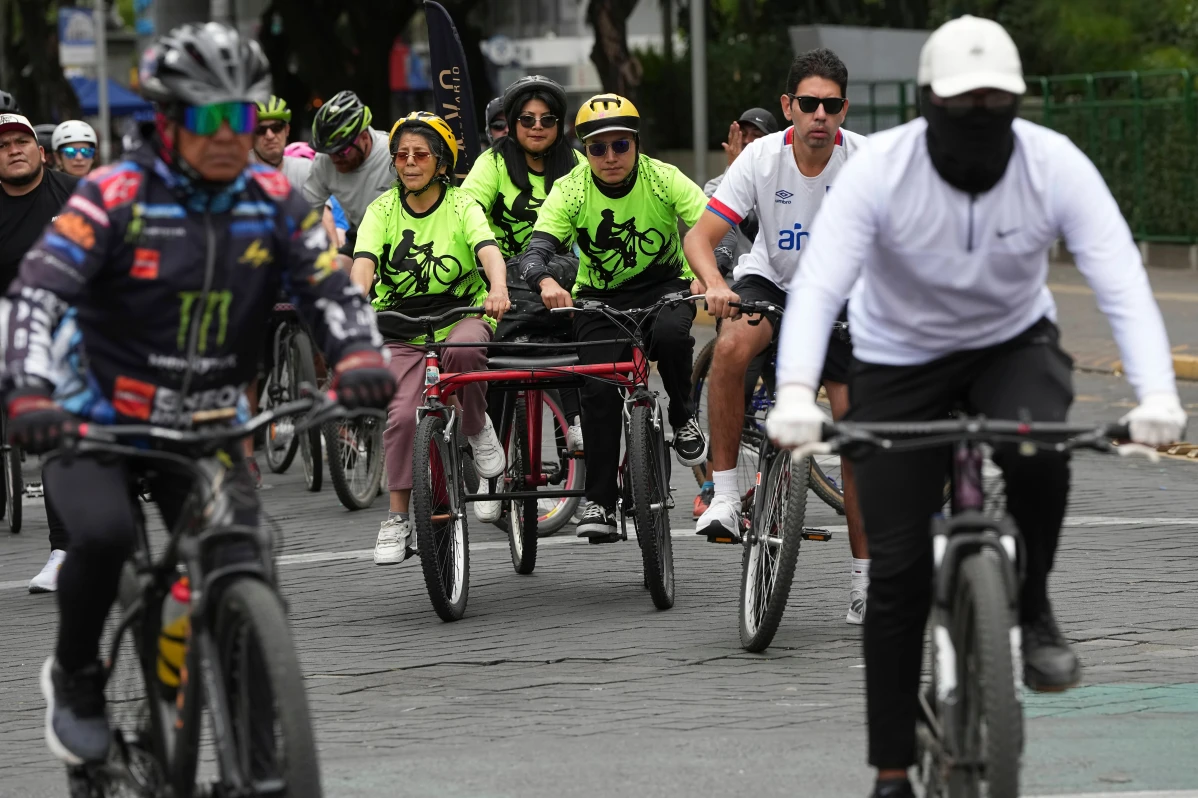
For Franklin Ochoa, losing his eyesight 16 years ago did not end his appetite for adventure. Instead, a bicycle club in Ecuador’s capital has helped him discover a new world of speed, freedom and exploration.
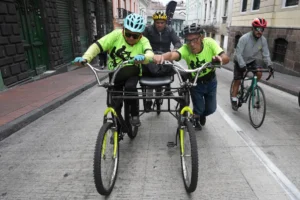
Every Sunday, members of Ciegocleta gather in Quito to ride specially adapted tandem bicycles, with sighted volunteers steering from the front while visually impaired riders pedal from the rear. The initiative has become much more than a cycling club, it has created a community where blind people can experience outdoor activities with fewer barriers.
Ochoa, 44, is among the group’s most active riders. His passion has taken him far beyond Quito: he recently completed a 1,000-kilometre tandem bicycle journey across Ecuador and is now considering an even more ambitious ride from Ecuador to Mexico.
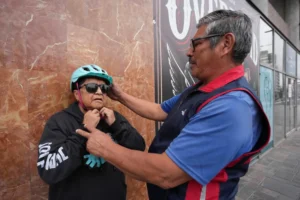
“When I arrive on a bike in a new city I feel like shedding tears of happiness,” Ochoa said, describing the sense of freedom he experiences while riding.
Ciegocleta was founded 19 years ago by Miguel Ramos, a Quito resident who initially built tandem bicycles so he could participate in the city’s weekly ciclopaseo; an event during which major roads are closed to cars and opened to cyclists and pedestrians.
The idea changed when one of Ramos’ children was unable to join him for a ride. He invited a blind neighbour to take the empty seat instead.
That simple decision eventually developed into a movement that now has about 150 members, although roughly 30 regularly turn up for the Sunday rides.
Ramos says the initiative demonstrates what genuine inclusion can look like.
The club provides tandem bicycles and volunteers who guide visually impaired riders through the city. Participants also receive safety instructions before taking to the roads.
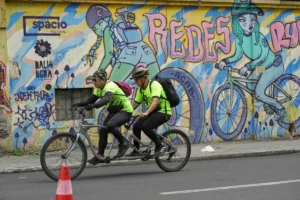
Interestingly, volunteers are encouraged to ride with their eyes covered so they can better understand what it feels like to depend on another person while cycling.
For members, the benefits extend well beyond physical activity.
Ximena Lozano, a 54-year-old psychologist who was born blind, has been part of Ciegocleta for 14 years. She said the club has encouraged her to spend more time outdoors and experience a sense of freedom that was difficult to find when she was younger.
The club has also helped sighted volunteers understand the challenges faced by people with visual impairments.
José Paéz, one of the volunteers, joined after his father-in-law rapidly lost his sight because of illness. He brought him to the free cycling sessions as a way of helping him overcome depression.
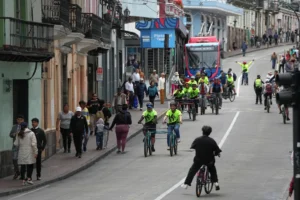
Paéz acknowledged that guiding a blind rider is not initially easy because keeping a tandem bicycle balanced and maintaining a steady rhythm requires coordination and trust.
For Ochoa, however, the experience has transformed what once might have seemed impossible into something worth pursuing.
After completing his 1,000-kilometre Ecuador journey, he is now looking toward Mexico.
Through Ciegocleta, he has already found a potential riding partner willing to join him on the much longer journey, which could take several months.
His story reflects the broader purpose of the initiative.
Ecuador has approximately 56,000 visually impaired people, according to government figures. While opportunities for employment and social participation have improved, inclusion in sports and outdoor recreational activities remains a challenge.
Ciegocleta is helping to close that gap, one tandem bicycle at a time.
The initiative demonstrates that visual impairment does not necessarily have to mean giving up adventure. With the right support, trust and a willing partner at the handlebars, riders who cannot see the road can still experience the thrill of travelling down it.
For Ciegocleta’s riders, the journey is not about what they cannot see, it is about how far they are willing to go.