
World News
128 States Reach Agreement at Geneva Autonomous Weapons Talks

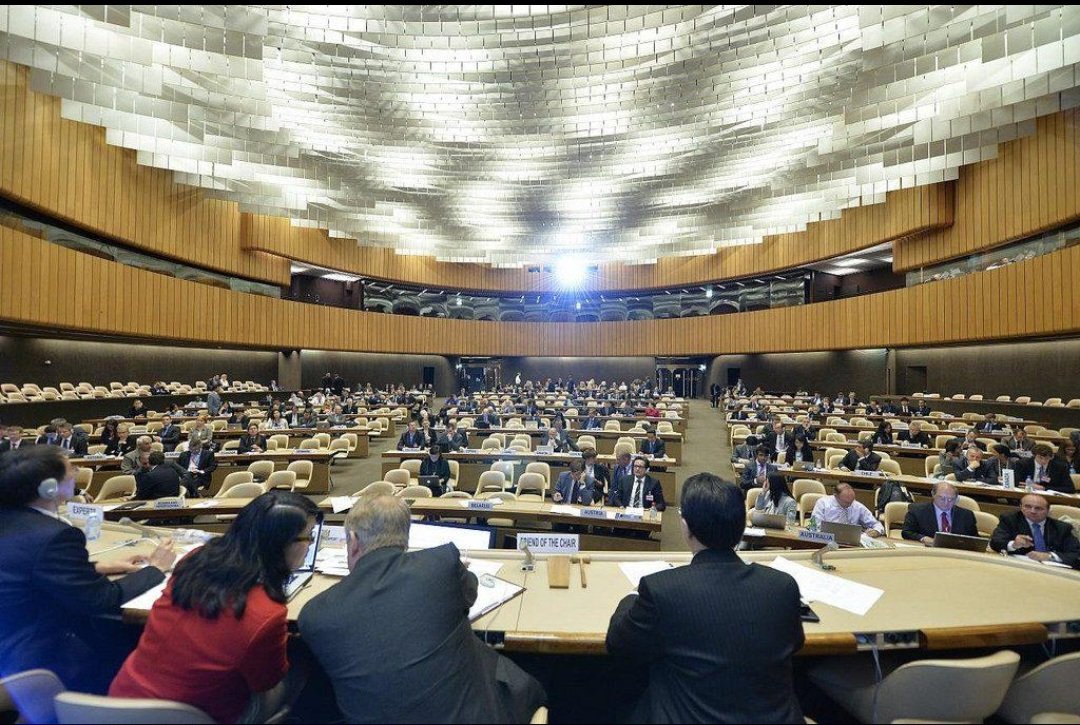
After more than a decade of international debate over weapons that can identify and attack targets with limited or no direct human intervention, 128 countries have reached consensus on a document that could pave the way for international rules governing autonomous weapons.
The agreement was reached in Geneva on Saturday by states party to the United Nations-backed Convention on Certain Conventional Weapons (CCW), marking a significant development in efforts to address what critics have dubbed “killer robots.”
However, the document is non-binding, meaning it does not immediately impose international legal restrictions on the development or deployment of autonomous weapons.
Instead, it provides a possible foundation for future negotiations on regulations, restrictions or prohibitions covering lethal autonomous weapons systems.

The breakthrough comes after years of difficult negotiations over how much control humans should retain when artificial intelligence and other technologies are used in military systems capable of selecting and engaging targets.
The consensus was not reached without significant disagreement.
Just a day before the agreement, diplomats warned that negotiations could collapse after the United States and Russia pushed for changes and deletions to the draft text.
Washington, backed by countries including Russia, India and Türkiye, had favoured an approach based largely on non-binding guidelines rather than a legally binding international treaty. Supporters of stronger regulation, including Brazil, Ireland and several African countries, had pushed for clearer safeguards and meaningful human control over weapons.
The dispute included disagreements over language concerning “lethality” and the degree of human judgment and control that should be maintained when autonomous systems are used.

The fact that the 128 states ultimately agreed on a common document therefore represents a diplomatic breakthrough, even though major differences remain over how far future regulation should go.
Humanitarian and arms-control campaigners welcomed the diplomatic progress but criticised aspects of the final text.
Stop Killer Robots said the definition of autonomous weapons and measures aimed at reducing their potential harm to civilians appeared to have been weakened during the final hours of negotiations.
Nicole van Rooijen, the group’s executive director, said the outcome represented a substantial dilution of work carried out by states over the previous three years.
The criticism highlights the central concern surrounding autonomous weapons: whether machines should ever be allowed to make life-and-death decisions without meaningful human involvement.

Autonomous weapons are no longer viewed purely as a futuristic possibility.
Concerns about increasingly autonomous military technology have grown as artificial intelligence, drones and other automated systems become more prominent in modern warfare.
The Geneva talks have taken place against the backdrop of conflicts including the wars in Ukraine and Sudan and fighting in the Middle East, where increasingly sophisticated drones and AI-assisted systems are being deployed.
Human rights organisations have warned that autonomous systems could make lethal decisions at machine speed while creating new problems of accountability if something goes wrong.
In August, UN Secretary-General António Guterres and International Committee of the Red Cross President Mirjana Spoljaric jointly urged governments to move urgently towards legally binding international rules on autonomous weapons.

They warned that the world was approaching a “moral red line” if machines were allowed to autonomously target human beings, and called for clear prohibitions and restrictions.
The Geneva agreement does not ban autonomous weapons and does not establish a legally enforceable global regime.
Instead, it creates a diplomatic pathway for countries to continue negotiations over how such weapons should be defined, controlled and potentially restricted.
The UN’s Group of Governmental Experts on lethal autonomous weapons systems had been meeting in Geneva from August 31 to September 4, building on discussions held earlier in the year. Its mandate included developing elements of a possible international instrument while leaving open whether that instrument would ultimately be legally binding.
The agreement is therefore being viewed as an important but incomplete, step in a much larger debate over the future of warfare and the role of artificial intelligence in decisions to use lethal force.
For governments and humanitarian organisations, the next challenge will be turning diplomatic consensus into concrete rules capable of keeping humans responsible for decisions involving life and death.