
World News
BepiColombo Spacecraft Enter Final Leg of Eight-Year Journey to Mercury

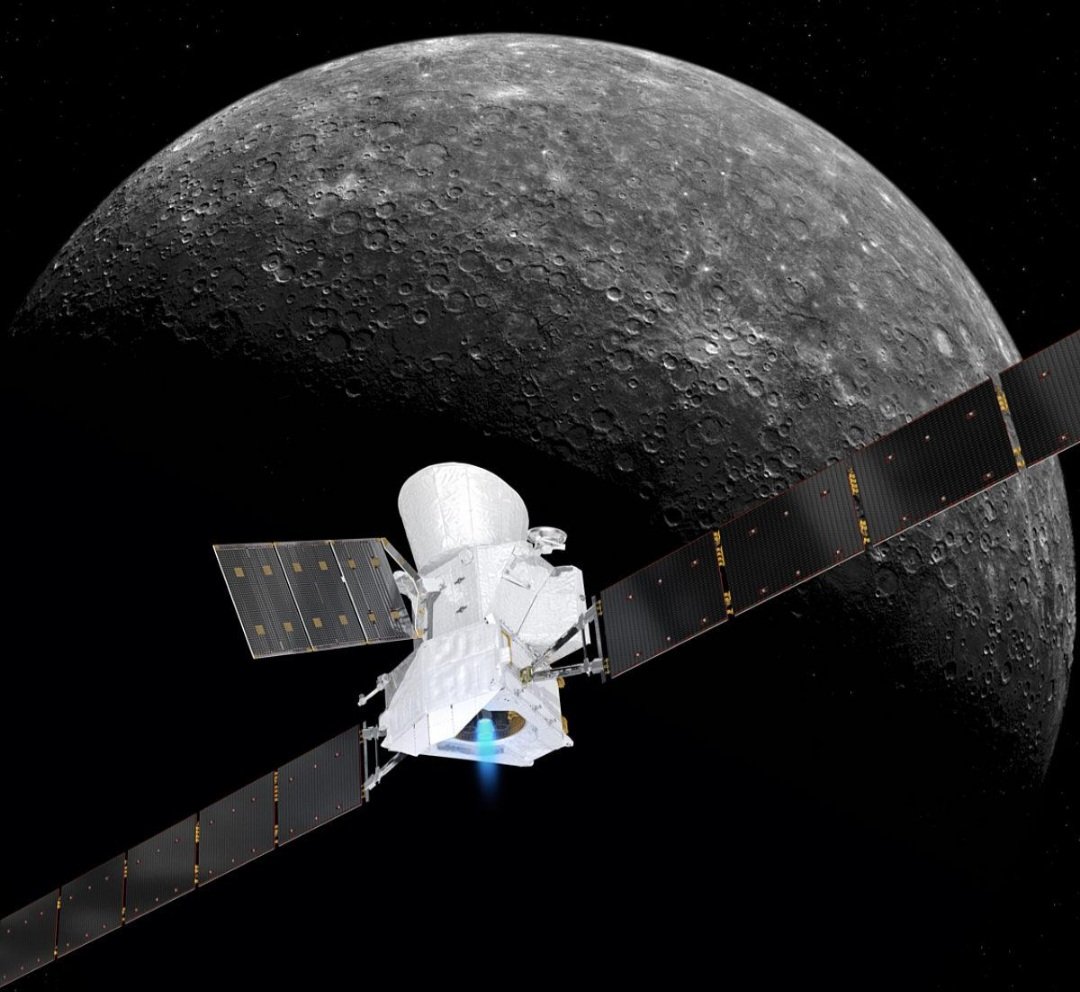
After nearly eight years travelling through the inner solar system, two spacecraft are finally closing in on their destination: Mercury, the smallest and closest planet to the Sun.
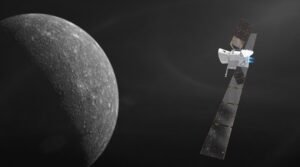
The European Space Agency (ESA) and Japan Aerospace Exploration Agency (JAXA) said their joint BepiColombo mission has entered its critical arrival phase after the spacecraft’s Mercury Transfer Module successfully separated from the two scientific orbiters on September 3.
The separation was confirmed by radio signals received at ESA’s mission control centre in Germany, more than 200 million kilometres from the spacecraft at the time. ESA said telemetry showed the operation had gone as planned and the systems were functioning normally.
BepiColombo was launched in October 2018 aboard an Ariane 5 rocket. Rather than travelling directly to Mercury, the spacecraft has followed an extraordinarily complicated route through the inner solar system, using a series of planetary flybys to gradually reduce its speed and adjust its trajectory.
According to the Associated Press, the mission has already travelled more than 6 billion miles (10 billion kilometres) and required nine planetary flybys to put it on course for Mercury.
The mission consists of two scientific orbiters: Europe’s Mercury Planetary Orbiter (MPO) and Japan’s Mercury Magnetospheric Orbiter (Mio).
They travelled together for most of the journey, carried by the Mercury Transfer Module, which provided propulsion and power during the cruise through space.
With the transfer module now separated, the two scientific spacecraft have begun the final and most demanding stage of their mission.
The spacecraft still have work to do before they can begin their scientific mission.
ESA says the combined orbiters are scheduled to enter orbit around Mercury on November 21, 2026. The two scientific orbiters will then separate from one another in December, with the separation planned for December 9–10.
Full scientific operations are expected to begin in April 2027.
AP reported that when BepiColombo reaches Mercury, the spacecraft will split into two orbiters that will study the planet from different altitudes and perspectives.
Mercury may be relatively close to Earth compared with the outer planets, but getting there is far from simple.
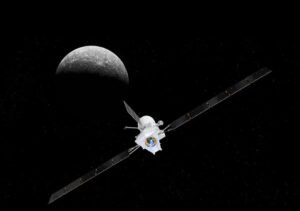
The planet sits deep inside the Sun’s gravitational field and travels around the Sun at tremendous speed. A spacecraft approaching Mercury must therefore lose a huge amount of energy before the planet can capture it.
BepiColombo’s long journey involved flybys of Earth, Venus and Mercury, allowing planetary gravity to help reshape its trajectory and gradually slow the spacecraft sufficiently for eventual orbital insertion.
The spacecraft must also survive an exceptionally harsh environment. Mercury is exposed to intense solar radiation and extreme temperatures because of its proximity to the Sun.
ESA describes the arrival sequence as one of the most demanding operational phases ever undertaken by the agency.
Once operational, BepiColombo will give scientists an unprecedented opportunity to examine Mercury in detail.
The mission will investigate the planet’s magnetic field, interior structure, surface geology and extremely thin exosphere. Scientists are particularly interested in Mercury’s mysterious surface hollows, its volcanic and impact history, and the relationship between its interior and magnetic field.
Despite being the smallest planet in the solar system, Mercury remains one of the least understood rocky worlds.
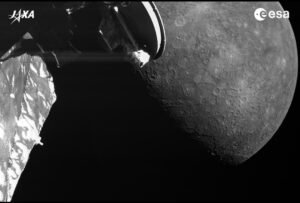
Its proximity to the Sun has made prolonged exploration difficult. Before BepiColombo, NASA’s MESSENGER was the only spacecraft to orbit Mercury.
The new mission is expected to provide much more detailed observations by using two specialised orbiters working simultaneously.
The successful separation represents a major milestone for ESA and JAXA after years of engineering, testing and navigation.
Because the spacecraft was more than 200 million kilometres from Earth during the manoeuvre, mission controllers could not intervene in real time if something went wrong. ESA said the successful confirmation followed years of preparation and precise planning.
The journey is therefore not simply a story of a spacecraft travelling from Earth to another planet. It is a carefully choreographed sequence involving gravitational assists, propulsion manoeuvres and precise navigation across billions of kilometres.
Now, after almost eight years in space, BepiColombo is finally approaching the planet it was built to study.
If everything remains on schedule, Mercury will soon have two new robotic observers circling it, opening a new chapter in humanity’s exploration of the mysterious world closest to the Sun.