
World News
Trump Calls Iran Conflict ‘Small Potatoes,’ Defends Vance’s Refusal to Call It a War

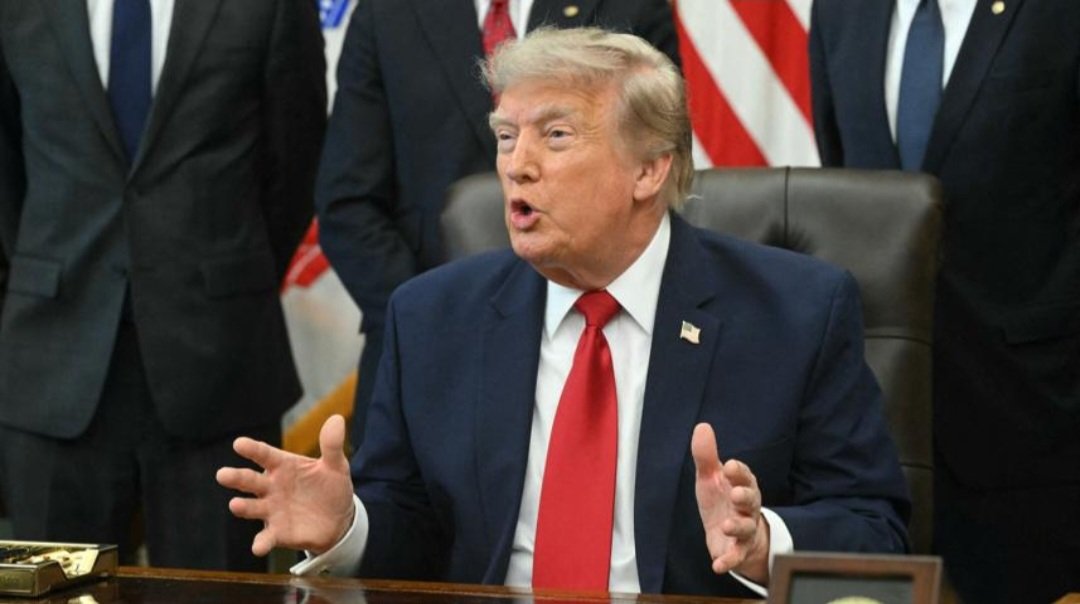
President Donald Trump has described the ongoing US conflict with Iran as “small potatoes”, defending Vice President JD Vance’s decision not to characterize the months-long fighting as a war despite continued military strikes and the deaths of American service members.
Trump made the comments Friday while speaking with reporters in the Oval Office, a day after Vance said during a White House briefing that he “wouldn’t call it a war.”
Trump said he understood Vance’s reasoning and described the confrontation as a “military conflict”, arguing that the fighting had become intermittent.
“It’s small potatoes for us. It’s not a big thing,” Trump said.
He added that it did not matter whether people called the confrontation a war or a military conflict.
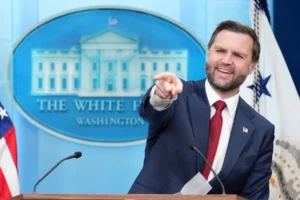
Vance made his controversial assessment Thursday when asked whether the conflict could end before Americans vote in the November 3 midterm elections.
“I wouldn’t call it a war,” Vance said, adding that there was “no active shooting” at the time.
The vice president argued that major US combat operations had ended months ago, while acknowledging that periodic flare-ups and attacks have continued.
His remarks came even as Iran had recently fired at Kuwait, a US ally in the Gulf, in retaliation for American strikes on Iranian targets.
The latest exchange has therefore generated questions over the administration’s description of a conflict that has continued for roughly six months.
Trump’s characterization of the conflict as “small potatoes” comes despite significant American casualties.
According to The Associated Press, 18 US service members have been killed since the conflict began on February 28, while hundreds more have been wounded. The operation has also cost US taxpayers more than $37.5 billion, according to figures cited in the report.
Trump defended his description by comparing the current US death toll with casualties from previous American conflicts, including Vietnam.
He argued that the number of American deaths was relatively low compared with earlier wars.
The president also pointed to what he described as the success of US military operations in weakening Iran’s nuclear capabilities.
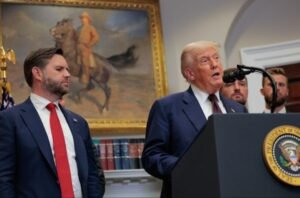
Trump echoed Vance’s claim that active fighting was not taking place at the moment, despite the recent exchange of strikes.
“I would say that it’s intermittent,” Trump said, describing the US military campaign as involving periodic strikes.
He also said he wanted to eventually withdraw from the conflict so that “the next president doesn’t have to worry about it.”
The remarks reflect the administration’s effort to portray the conflict as limited rather than an open-ended war.
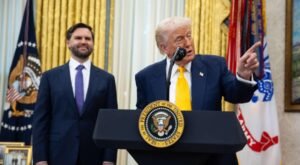
However, the continuing military activity, casualties and disruption to oil shipping through the Strait of Hormuz have kept the confrontation at the centre of international attention.
The dispute over terminology comes as the conflict increasingly carries political consequences for the Trump administration.
The fighting has contributed to higher energy prices, with disruptions around the Strait of Hormuz putting pressure on global oil supplies and US gasoline prices.
The issue is particularly sensitive ahead of the November midterms, when Republicans are seeking to maintain their majorities in Congress. Vance declined to predict when the conflict would end, saying its resolution depended in part on Iran stopping attacks on shipping.
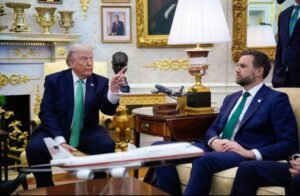
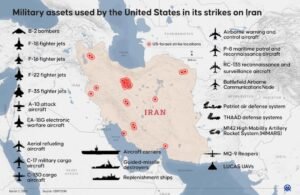
The administration’s characterization of the fighting has also drawn scrutiny because the United States has continued to maintain a substantial military presence in the Middle East.
For now, Trump and Vance are presenting the confrontation as a limited military conflict rather than a conventional war.
But with American troops killed, hundreds wounded, billions of dollars spent and continued exchanges involving Iran and its regional opponents, the debate over what to call the conflict is unlikely to disappear soon.