
World News
Argentina Turns Up Pressure on Britain Over Falklands Oil Wealth


Argentine President Javier Milei has sharply escalated his government’s campaign over the disputed Falkland Islands, announcing tougher sanctions against companies involved in oil and gas projects around the islands and promising a significant expansion of Argentina’s defence capabilities in the country’s south.
In a televised address on Thursday, Milei said Argentina would move to speed up sanctions against companies, shareholders, directors and suppliers involved in hydrocarbon projects in territory Buenos Aires claims as its own but which has been administered by Britain since 1833.
The announcement comes as preparations advance for the Sea Lion offshore oil project, adding an important economic dimension to the decades-old sovereignty dispute between Argentina and the United Kingdom.

Milei said he would sign a decree designed to accelerate the application of Argentina’s existing sanctions regime.
Under his proposed measures, companies directly or indirectly involved in oil and gas projects around the islands without Argentine authorization could be barred from operating in Argentina. The penalties would also be extended to shareholders, directors and suppliers connected to the projects.
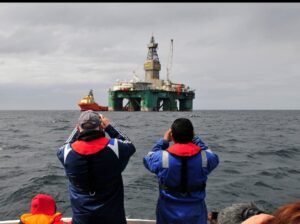
The immediate target is the Sea Lion development north of the Falkland Islands, operated by Navitas Petroleum alongside Rockhopper Exploration.
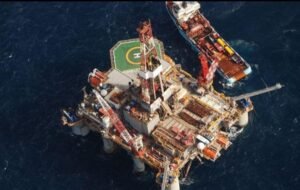
The project has already reached a final investment decision, with first oil currently planned for 2028. Navitas says the field is located roughly 220 kilometres north of the islands and that it holds a 65% working interest.
Argentina considers the development unauthorized exploitation of resources in territory it claims sovereignty over.
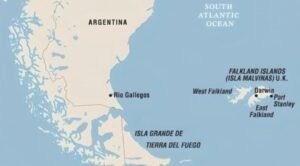
Milei also announced that his government would increase resources for Argentina’s Defence Ministry, with the priority of building an integrated naval base in Tierra del Fuego, the southern province closest to the Falklands.
The government says the base would strengthen Argentina’s presence and logistical capabilities in the South Atlantic. Milei also announced plans to improve telecommunications capabilities in the region.
In addition, he plans to send Congress an urgent National Sovereignty Defence Bill aimed at strengthening penalties for unauthorized activities involving the islands and Argentina’s natural resources.
Despite the tougher rhetoric, Milei has continued to frame Argentina’s effort to recover the islands as a diplomatic and legal campaign rather than a military operation.
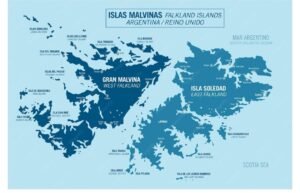
The Falkland Islands, known in Argentina as the Islas Malvinas, have been administered by Britain since 1833, but Argentina has never abandoned its sovereignty claim.
The two countries fought a 74-day war over the islands in 1982, after Argentine forces invaded the territory. Britain retained control following Argentina’s defeat.
The sovereignty dispute has remained unresolved, while the islanders overwhelmingly backed remaining a British overseas territory in a 2013 referendum. Britain continues to say its sovereignty over the islands is not open to negotiation against the wishes of the islanders.
Milei’s latest move comes at a particularly sensitive moment because US President Donald Trump has recently made comments suggesting Washington could review aspects of its traditional position on the Falklands dispute.
Trump’s remarks have unsettled British officials and encouraged Buenos Aires to believe that geopolitical circumstances could be shifting in Argentina’s favour. Milei described the current international environment as presenting an opportunity to press Argentina’s claim more forcefully.
Britain, however, has reiterated that its position remains unchanged: sovereignty rests with the United Kingdom and the right of Falkland Islanders to determine their future remains central to London’s position.
The Sea Lion project has transformed the Falklands dispute into an increasingly important energy issue.
The field is expected to produce its first oil in 2028, with Phase 1 targeting about 170 million barrels and a peak production rate of approximately 50,000 barrels per day, according to Rockhopper.
For Argentina, the prospect of large-scale offshore oil production in waters it considers sovereign territory has increased the urgency of its opposition.
For the Falkland Islands, meanwhile, the project could become a major source of future economic activity.
Milei’s latest measures therefore put pressure on an already sensitive relationship with Britain while raising questions over how far Buenos Aires can go in attempting to disrupt a project being developed under the authority of the Falkland Islands government.
For now, Argentina says it will pursue the dispute through sanctions, legislation, diplomacy and increased defence capabilities, rather than military confrontation.