
World News
Trump Calls Cuba ‘Failed State’, Says Freedom Is Coming to Island

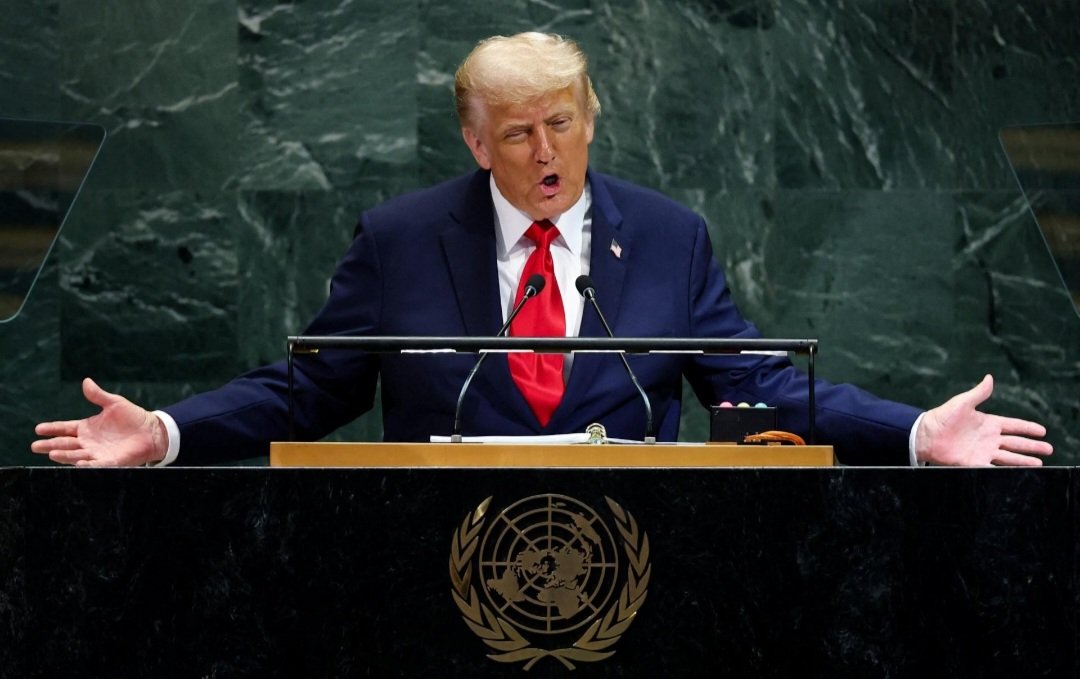
US President Donald Trump has described Cuba as a “failed state” and declared that “freedom will be coming to Cuba” during his address to the United Nations General Assembly in New York.
Trump used the speech on Tuesday to highlight his administration’s tougher approach toward the Communist-run Caribbean nation, saying the Cuban government was facing the greatest pressure it had ever experienced.
“My administration is also seeking a fundamental change in the situation in Cuba, where the communist regime is under great pressure; the biggest pressure they’ve ever been under,” Trump said.
“It’s an absolutely failed state, it’s failing like never before, and it will fall,” he added, before declaring: “Communism will never be coming to America, but freedom will be coming to Cuba.”
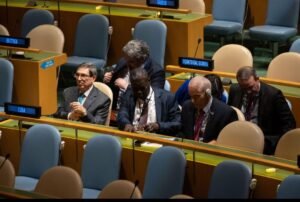
The Cuban delegation walked out of the General Assembly hall while Trump was speaking about the island, underscoring the sharp disagreement between Havana and Washington over US policy toward Cuba.
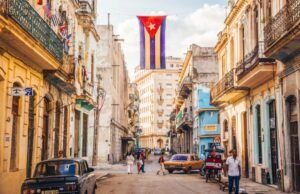
Trump’s comments came against the backdrop of an increasingly confrontational US policy toward Cuba. Washington has maintained a trade embargo against the island for more than six decades, while the Trump administration has introduced additional pressure and sanctions aimed at Cuba’s government and economy.
Earlier this month, the United States imposed new sanctions on Cuban individuals and entities, including Fidel Ernesto Castro, grandson of former Cuban President Raúl Castro, and a state-linked company involved in supplying equipment and spare parts for the country’s power infrastructure. The measures came as Cuba faced a deepening energy and economic crisis.
The Trump administration has also linked its Cuba policy to a broader push to increase US influence in Latin America and the Caribbean. In his UN address, Trump vowed to reassert US dominance in the Western Hemisphere and spoke of strengthening cooperation with regional governments, particularly around counter-narcotics efforts and security.
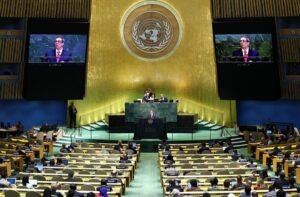
Cuban Foreign Minister Bruno Rodríguez, speaking ahead of the UN gathering, accused Washington of using the fight against drug trafficking as a pretext for increased militarisation of Latin America and the Caribbean. He said Cuba viewed the policy as an attempt to impose a renewed version of the Monroe Doctrine on the region.
Trump has previously predicted major political change in Cuba and has repeatedly criticised its Communist government. His latest remarks at the UN indicate that Cuba remains a significant part of his administration’s broader Western Hemisphere agenda.
The United States and Cuba have been adversaries since Fidel Castro’s 1959 revolution, although diplomatic relations were restored under President Barack Obama before tensions increased again under subsequent administrations. Trump’s current policy represents another major shift toward economic and political pressure on Havana.