
General News
Shettima: Africa’s Exclusion From UN Security Council Undermines Global Governance

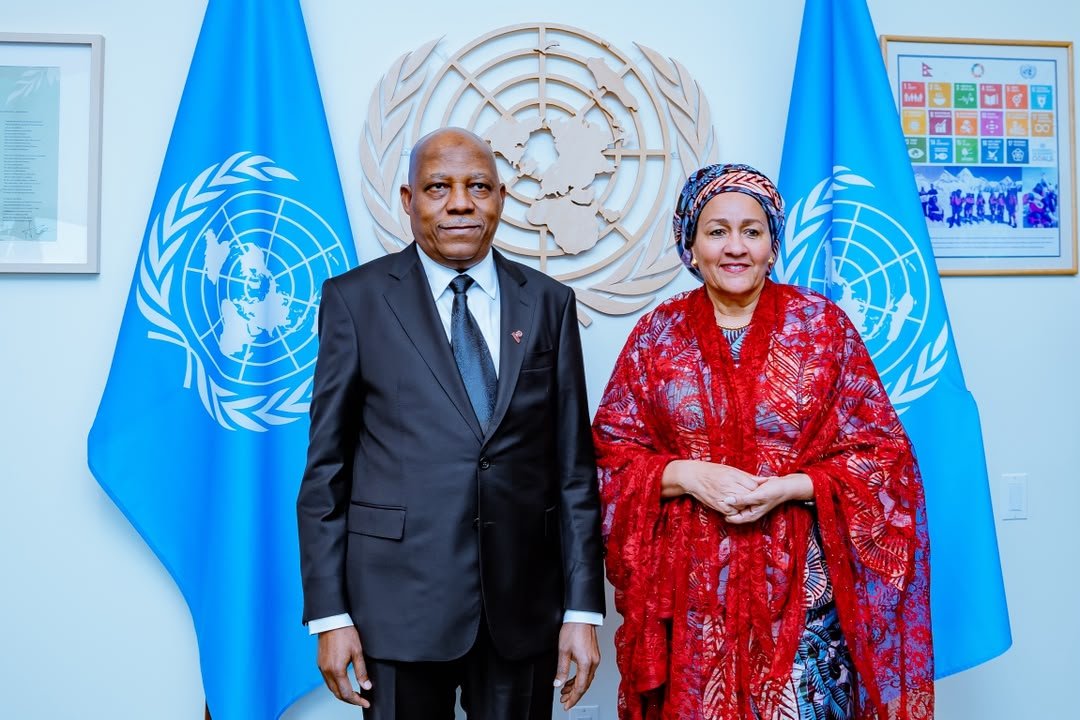
Vice President Kashim Shettima has said Africa’s continued exclusion from permanent membership of the United Nations Security Council undermines the fairness and legitimacy of the global governance system.
Shettima made the remarks during a meeting with UN Deputy Secretary-General Amina J. Mohammed on the sidelines of the 81st United Nations General Assembly in New York.
He reaffirmed Nigeria’s support for urgent reform of the United Nations, saying the country would continue to support efforts aimed at making international institutions more representative, responsive and credible.
The Vice President said Nigeria would remain a partner in efforts to rebuild trust among nations, uphold international law and address challenges including hunger, violence and exclusion.
Shettima commended UN Secretary-General António Guterres for his advocacy for a more representative Security Council, particularly his position that a 21st-century council without permanent African representation is “unjust and indefensible.”
“A continent cannot be summoned to bear the burdens of the international order and then denied an equal hand in directing it,” Shettima said.
He argued that decisions taken by global institutions should better reflect present-day geopolitical and demographic realities rather than the distribution of power established after the Second World War.
Nigeria has intensified its call for Security Council reform during the 81st UN General Assembly. In his national statement delivered by Shettima on behalf of President Bola Ahmed Tinubu, Nigeria called for at least two permanent seats for Africa, with the rights and responsibilities of permanent membership, including veto power for as long as the veto exists. Nigeria also called for five non-permanent African seats.
Shettima also praised Guterres for defending international law and human dignity amid continuing conflicts and geopolitical tensions.
He said diplomacy should not lose sight of the human consequences of wars and instability, stressing that civilians affected by conflict should remain at the centre of international decision-making.
“The mother searching for her child, the family driven from home and the hungry child awaiting food must never become abstractions in the language of states,” he said.
The Vice President also commended Amina Mohammed for her work in multilateral diplomacy and sustainable development, describing her service at the United Nations as a source of pride to Nigeria.
Mohammed, in response, thanked Nigeria and the Tinubu administration for their support for the United Nations and for her work as Deputy Secretary-General.
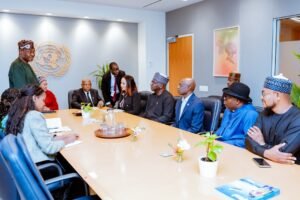
She described the meeting with the Nigerian delegation as an honour and expressed appreciation to President Tinubu and Shettima for supporting her and the UN institution.
The meeting was attended by Kwara State Governor AbdulRahman AbdulRazaq, Benue State Governor Hyacinth Alia, Rivers State Governor Siminalayi Fubara and Zamfara State Governor Dauda Lawal.
Minister of Foreign Affairs Bianca Odumegwu-Ojukwu and Nigeria’s Permanent Representative to the UN, Ambassador Jimoh Ibrahim, were also among the officials accompanying the Vice President.
The renewed Nigerian push comes as debates over reform of the Security Council continue, with African countries seeking permanent representation on a body whose five permanent members currently comprise China, France, Russia, the United Kingdom and the United States.