
International
Flydubai Pilot Recounts Cockpit Attack: ‘I Was Not Going to Let Others Die’

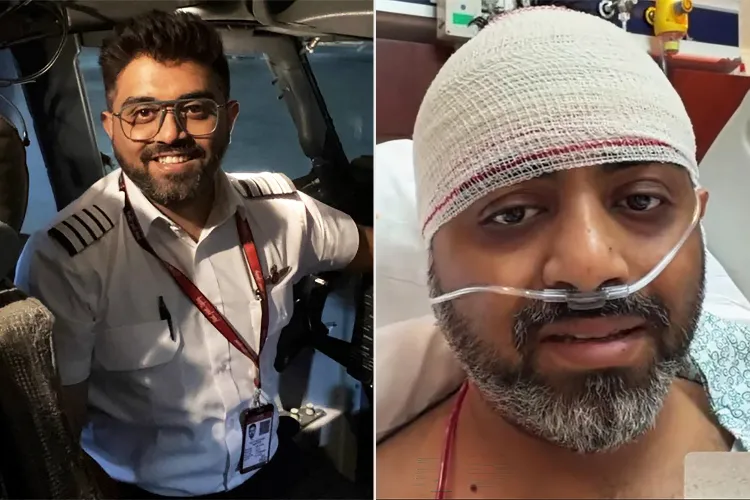
The captain of a Flydubai passenger aircraft has recounted how he fought to save the plane after being attacked by his co-pilot during a flight from Dubai to Tel Aviv.
Captain Smit Machchhar, who remains in hospital after suffering injuries in the incident, said he was lying on the cockpit floor when he realised the aircraft was rapidly losing altitude.
Speaking during a video call with Indian Prime Minister Narendra Modi on Friday, Machchhar said he made one final effort to open the cockpit door despite his injuries.

“I was lying on the floor injured, but I told myself to go for one last push to open the door from inside,” he said.
Machchhar said his priority was not only his own survival but also the lives of those aboard the aircraft.
“I was, of course, fighting for my own life, but at the same time I knew I was not going to let others die,” he said.
The incident occurred on September 30 aboard Flydubai flight FZ1073, a Boeing 737 travelling from Dubai to Tel Aviv with more than 170 people aboard.
According to flight-tracking data and reports from Reuters and AP, the aircraft was cruising at about 34,000 feet when it suddenly entered a steep descent. Reuters reported that the plane lost more than 16,000 feet in a matter of seconds and subsequently made several erratic altitude changes.

During the crisis, the co-pilot allegedly attacked Machchhar with a knife. Israeli officials said the co-pilot appeared to have attempted to crash the aircraft, although authorities are still investigating the circumstances and motive behind the incident.
Despite his injuries, Machchhar managed to open the cockpit door. Passengers and crew members then entered the cockpit and helped restrain the co-pilot, while two other pilots who were travelling on the aircraft helped regain control of the plane.
The aircraft subsequently diverted to Tabuk, Saudi Arabia, where it landed safely. Flydubai confirmed that the flight had been diverted following an incident and said all passengers were safe and accounted for.
The captain was initially treated in Saudi Arabia before being transferred to Abu Dhabi for further medical care. The co-pilot was also taken into custody while investigations continued.
The incident triggered emergency procedures aboard the aircraft, including the transmission of 7700, the international transponder code for a general emergency, followed by 7500, which indicates unlawful interference or a hijacking situation.
Investigations involving authorities in several countries are continuing. The precise motive for the alleged attack has not been conclusively established, and claims about possible terrorism or radicalisation remain under investigation rather than established findings.
The episode has also prompted renewed discussion about aviation security and the potential risks posed by threats originating from within an aircraft’s crew. Aviation experts cited by AP said the incident could lead to further examination of cockpit security and crew-vetting procedures.
For the passengers aboard FZ1073, however, the immediate outcome was a safe landing after a flight that had briefly descended into a potentially catastrophic situation.