
Business
AU Launches Africa-Owned Credit Rating Agency to Challenge High Borrowing Costs

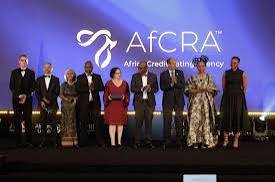
The African Union has officially launched the African Credit Rating Agency (AfCRA), a continent-owned initiative designed to provide independent assessments of African economies and address concerns over the high cost of borrowing faced by governments and businesses across the continent.
The agency was unveiled in Port Louis, Mauritius, where it is headquartered, following years of discussions on the need for an African institution capable of providing a more context-specific assessment of the continent’s economic and financial risks.

The African Peer Review Mechanism (APRM), which coordinated the operationalisation of AfCRA, said the agency is intended to complement existing international rating agencies while providing an additional perspective on African economies.
Speaking at the launch, Ugandan Minister of State for Finance, Planning and Economic Development, Amos Lugoloobi, who represented President Yoweri Museveni, Chairperson of the APR Committee of Focal Points, said Africa has significant economic potential but continues to face challenges, including weak resource mobilisation and human capital constraints.

He said access to adequate and affordable capital remains critical to Africa’s development, noting that many African countries continue to face high borrowing costs in international markets.
Lugoloobi said Africa should not shy away from scrutiny but should ensure that its economies are assessed accurately and within the context of their unique development realities.

The Chairperson of the African Union Commission, Mahmoud Ali Youssouf, said AfCRA was established to provide objective assessments of risks facing African economies while maintaining the independence necessary to build credibility.
The Chief Executive Officer of APRM, Ambassador Marie-Antoinette Rose Quatre, said the agency was created against the backdrop of concerns that prevailing assessments of Africa often fail to reflect the continent’s economic realities.
“Africa could no longer postpone the institutions required to tell its own economic story with rigour and credibility,” she said.
Quatre stressed that AfCRA was not established simply to compete with Fitch Ratings, Moody’s Ratings and S&P Global Ratings.
Rather, she said, the agency would provide assessments that are “rigorously independent, materially unbiased, credible and firmly rooted in Africa’s true measure.”
The launch comes amid long-running concerns among African policymakers over the impact of sovereign credit ratings on the continent’s borrowing costs.
Countries including Ghana and Zambia have previously raised concerns about repeated credit downgrades and their implications for access to international capital and debt sustainability.
The APRM has also criticised some assessments of African financial institutions, arguing that global rating methodologies may not always adequately capture the structure and operating environment of African institutions.
According to the APRM, Africa’s capital market is valued at about $4 trillion, but less than five per cent of financial instruments by value currently carry a credit rating.
AfCRA is expected to cover sovereign, sub-sovereign and corporate issuers, including parts of the African market that remain largely unrated.
The agency is also expected to place particular emphasis on local-currency debt instruments, potentially widening the scope of credit assessments available to African governments and companies.
Speaking on the initiative, Afreximbank President and Chairman, Dr George Elombi, represented by the bank’s Senior Executive Vice President, Denys Denya, said AfCRA could help address what he described as a distorted perception of the African operating environment.
“Why should Dangote Group, which is rapidly expanding its footprint across Africa, be confined by Nigeria’s credit ratings?” he asked.
He similarly questioned why major banks operating across several African countries should be constrained by the credit rating of a single national market.
Denya said AfCRA must establish a new benchmark for Africa while maintaining its independence and African ownership.
Despite being established following an AU decision, AfCRA is not expected to be owned by African governments, a structure intended to strengthen its institutional independence and credibility.
The launch also gives practical expression to renewed calls by African leaders for greater African participation in determining how the continent’s economic risks are assessed in global financial markets.
President Bola Tinubu of Nigeria had, months before the launch, advocated an Africa-owned credit rating agency, arguing that African economies continue to face elevated borrowing costs partly because of perceptions of risk that may not fully reflect their underlying economic conditions.
In an opinion article published by the Financial Times, Tinubu highlighted what he described as the “Africa premium” — the difference between perceived and actual risk — and argued that it contributes to the high cost of capital for African countries.
With AfCRA now operational, the continent has established a new institution intended to provide an African perspective on credit risk while operating alongside established international rating agencies.
Its ability to maintain independence, secure market confidence and produce ratings accepted by investors will ultimately determine its influence on Africa’s access to capital.