International
90 Years After Historic Long March, China’s Revolutionary Spirit Resonates Globally

Ninety years after the victory of China’s historic Long March, international observers say its enduring lessons of resilience, sacrifice, unity and perseverance continue to inspire societies confronting difficult challenges.
The Long March, which took place between 1934 and 1936, was a defining episode in the history of the Communist Party of China (CPC) and the Chinese revolution. The military retreat, marked by extraordinary hardship, helped preserve the revolutionary movement and laid the groundwork for its eventual victory.
This year marks the 90th anniversary of the Long March victory and the 105th anniversary of the founding of the CPC.
Australian publisher and filmmaker Harold Weldon described the Long March as a central pillar of China’s modern history, arguing that understanding the episode was essential to understanding the country’s historical development.
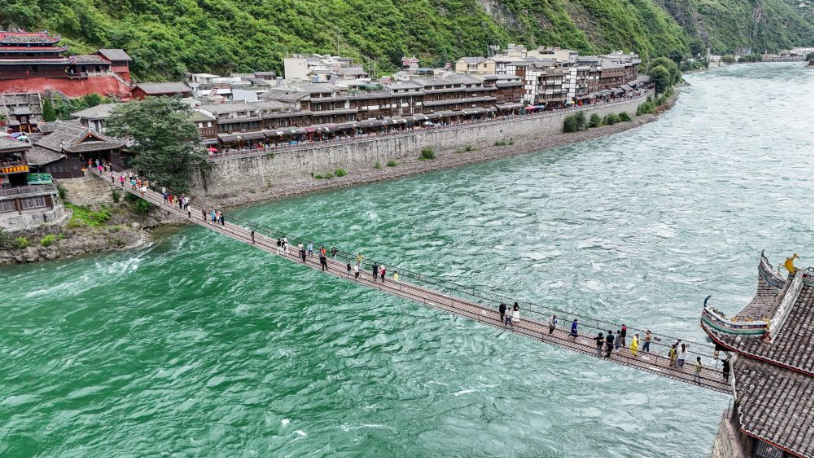
The journey saw the CPC-led Red Army break through encirclement by Kuomintang forces while navigating raging rivers, snow-covered mountains and treacherous grasslands. Some soldiers travelled as far as 12,500 kilometres under extremely difficult conditions.
Weldon described the experience as one of the greatest demonstrations of human endurance in recorded history, given the scale of the hardships encountered.
Khairy Tourk, a professor of economics at the Stuart School of Business at the Illinois Institute of Technology in Chicago, said the Long March demonstrated the determination of the Chinese people to overcome overwhelming odds, even when success demanded enormous sacrifices.
He maintained that sacrifice remained essential to achieving significant victories, particularly when pursuing ambitious goals in difficult circumstances.
Paul Ilado, editorial director of Kenya’s Radio Africa Group, said the Long March transformed a military retreat into a decisive political and historical turning point.
According to him, the Red Army’s ability to survive the encirclement campaign was critical to the survival of the revolutionary movement.
He added that the episode demonstrated the importance of organisation, discipline and sustained commitment in overcoming adversity.
The Long March spirit is associated with unwavering conviction, strong determination and the refusal to abandon a collective goal despite seemingly insurmountable obstacles.
Brazilian journalist Wagner Lacerda Dantas of China International Communications Group described the spirit as the resolve to continue fighting for a common objective even when circumstances appear almost impossible.
He identified courage, solidarity, discipline, sacrifice and confidence in victory as key values demonstrated during the journey.
Balew Demissie, a senior consultant at Ethiopia’s Policy Studies Institute, said the Red Army’s organisational cohesion and ideological commitment were particularly remarkable given the extreme conditions its soldiers faced.
He noted that despite navigating dangerous terrain and confronting better-equipped enemy forces, the soldiers maintained their discipline and determination.
Yuri Tavrovsky, head of the Expert Council of the Russian-Chinese Committee for Friendship, Peace and Development, also identified endurance, patriotism, sacrifice and wisdom as defining qualities associated with the Long March.
He said the experience helped shape a generation of leaders capable of confronting crises, assessing changing circumstances and finding solutions to difficult problems.
LONG MARCH VALUES IN MODERN CHINA
Although China’s present circumstances differ significantly from those of the 1930s, international observers believe the values associated with the Long March remain relevant to the country’s development and its response to contemporary challenges.
Tourk said values such as sacrifice, patriotism, perseverance and firmness remained essential to maintaining a sense of direction in difficult times.
Dantas said the Long March offered important insights into how the CPC survived adversity and developed its organisational strength.
He highlighted unity, discipline, independence, autonomy and confidence in the people as characteristics demonstrated during the historic journey.
According to him, the revolutionary movement’s strength rested not only on its military capabilities but also on its ability to maintain close ties with the population.
Etienne Bankuwiha, a Burundian sinologist, said Chinese revolutionaries demonstrated unwavering convictions and made strategic decisions that shaped the future of their movement during the Long March.
He added that the experience continued to serve as a source of motivation for China as it pursues modernisation and national development.
Ilado said his visit to China’s Ningxia Hui Autonomous Region offered a practical illustration of the determination and persistence associated with the Long March.
He recalled being impressed by the transformation of land that had previously been difficult to cultivate into productive agricultural areas.
For him, the development demonstrated how sustained effort and a long-term commitment to a goal could produce significant results.
Ilado said the same principle could be applied to farmers cultivating difficult land, engineers developing irrigation infrastructure and young people leaving disadvantaged communities to pursue education.
He argued that although their circumstances differed from those of the Red Army soldiers, their determination to continue despite difficulties reflected a similar commitment to long-term objectives.
Joshua Kingdom, a research fellow at Uganda’s Development Watch Center, said China’s response to contemporary challenges also reflected aspects of the Long March spirit.
He cited the country’s efforts to withstand external pressure and deepen cooperation with economies in the Global South as examples of resilience and determination.
GLOBAL SOUTH SEES BROADER SIGNIFICANCE
Beyond China’s borders, observers say the Long March offers lessons for countries seeking independence, economic development and greater cooperation in addressing shared challenges.
Demissie said the Long March contributed to the eventual victory of the Chinese revolution and the emergence of an independent modern Chinese state.
He noted that China had since become an important participant in efforts to promote multipolarity, South-South cooperation and the growing influence of the Global South.
Bankuwiha described the Long March as a significant part of China’s national history and a valuable source of inspiration for humanity’s pursuit of independence, freedom and liberation.
He said its broader message was that countries seeking lasting prosperity must understand their circumstances, uphold independence and self-reliance, and overcome obstacles through unity and sustained effort.
Dennis Munene, executive director of the China-Africa Center at the Africa Policy Institute, said the principles associated with the Long March could encourage international cooperation in tackling conflicts, climate change and poverty.
He stressed that these challenges required sustained commitment, dialogue and collaboration rather than short-term interventions.
According to Munene, the international community must remain willing to work towards shared objectives despite setbacks.
Kingdom also observed that accounts of the Long March, including those popularised by American journalist Edgar Snow, had resonated with people across the world because of their universal themes of courage and overcoming fear.
He said stories of individuals who had overcome extraordinary difficulties could inspire others facing their own struggles.
As China marks the 90th anniversary of the Long March victory, the historic journey remains an important reference point in the country’s revolutionary history and a reminder of the role perseverance, collective effort and determination can play in confronting seemingly impossible challenges.