
Opinion
INEC’s Candidate List And The Question of Double Standards: A Credibility Test For Nigeria’s Electoral Umpire

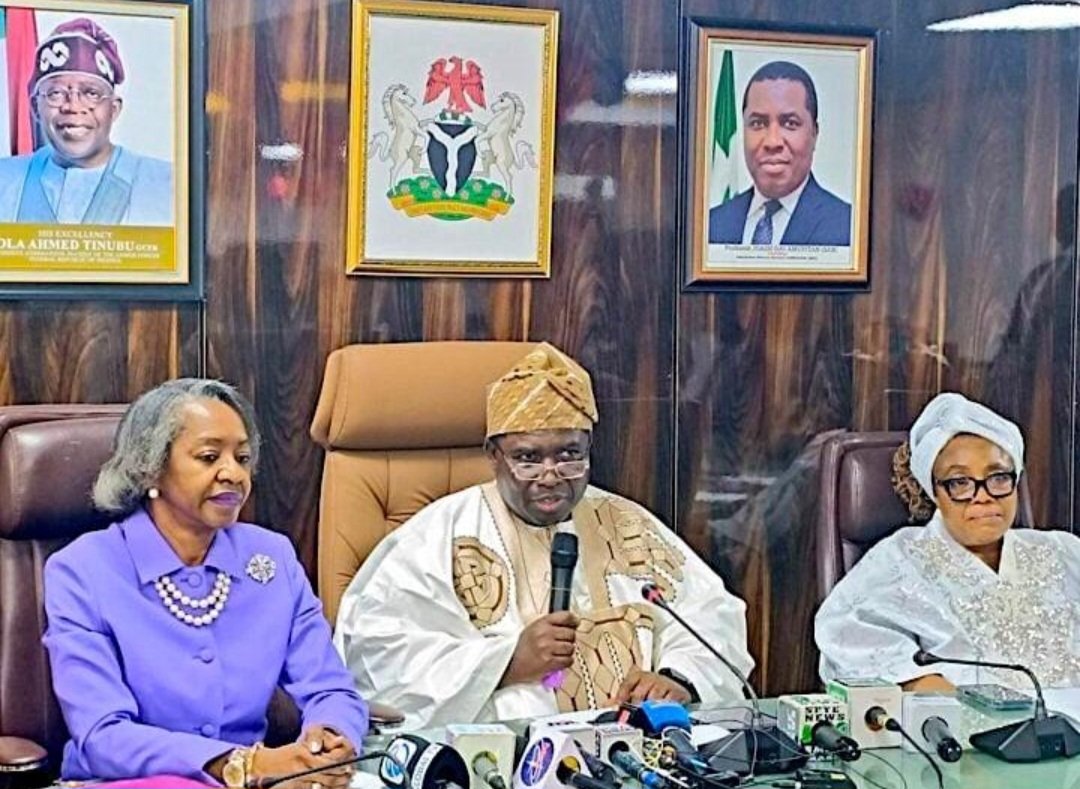
By Kenneth Eze, Election Observer
Abuja – The Independent National Electoral Commission (INEC) has a constitutional responsibility that extends beyond organising elections: it must inspire public confidence in the fairness, impartiality and credibility of the electoral process. Unfortunately, the omissions of several prominent gubernatorial candidates from its recently published final lists for the 2027 elections have raised questions that the Commission must urgently address.
The People’s Democratic Party’s (PDP) Oladipupo Adebutu in Ogun State and Isa Ali Pantami in Gombe State are absent from their respective lists. The Nigeria Democratic Congress (NDC) has also been affected, with Senator Danjuma La’ah missing from Kaduna’s list and former Deputy Governor Aminu Abdussalam Gwarzo absent from Kano’s. Meanwhile, the All Progressives Congress (APC) candidate, Kingsley Ogundu Chinda, appears on Rivers State’s list. These omissions and inclusions have intensified public debate about consistency in the application of electoral requirements.

The controversy follows the Supreme Court’s 24 September 2026 judgment in INEC v. Zenith Labour Party, Appeal No. SC/CV/495/2026, which restored provisions of the Electoral Act 2026 concerning party membership registers and candidate nomination. The judgment reinforces statutory requirements governing membership records and participation in party primaries. However, applying the judgment requires examining each party’s compliance and the circumstances of each nomination, not simply removing names without adequate public explanation.

Chinda’s inclusion, alongside the exclusion of opposition candidates, has consequently attracted scrutiny. His political journey from the PDP to the APC while still acting as the minority leader in the house of representatives have added to public interest in the circumstances of his emergence. Nevertheless, political association alone is not evidence of preferential treatment, just as omission alone does not establish unlawful discrimination. INEC must provide the facts necessary to resolve these questions objectively.
The NDC has attributed La’ah’s omission to a registration-name discrepancy, while reports concerning Gwarzo indicate that the circumstances remain unclear. The PDP has also disputed the basis for concerns surrounding Adebutu’s membership registration. These competing explanations make transparent disclosure more urgent, not less. INEC should explain the specific legal and documentary grounds for each disputed omission and clarify why candidates in apparently comparable circumstances have received different outcomes.
Nigeria’s electoral history has left citizens with legitimate concerns about the administration of elections. INEC must therefore understand that credibility is built not merely through procedural compliance but through demonstrable fairness, transparency and timely communication. Silence creates an information vacuum in which suspicions of political interference can flourish, even where administrative errors or genuine legal deficiencies may explain the outcome.
We call on INEC to publish clear, candidate-specific explanations, review credible complaints promptly, correct any established administrative errors through lawful procedures and ensure that all parties receive equal treatment under the law. Political parties must also provide complete, accurate documentation and use the appropriate legal channels to challenge adverse decisions.
The 2027 elections are too important for avoidable credibility crises. INEC must not allow perceptions of selective enforcement to undermine the confidence it is expected to protect. An impartial umpire must not only act fairly; it must demonstrate fairness through consistent decisions and transparent explanations.
Ultimately, the objective is not to favour the opposition or the ruling party. It is to protect the electorate’s right to a credible contest in which eligibility is determined by law, not political affiliation, and every decision can withstand public scrutiny. INEC must rebuild trust without creating new reasons for Nigerians to doubt its neutrality.
_You can reach me via engrchukeze2014@gmail.com_