
International
Dolores Huerta, Pioneering US Labour Leader and Civil Rights Icon, Dies at 96

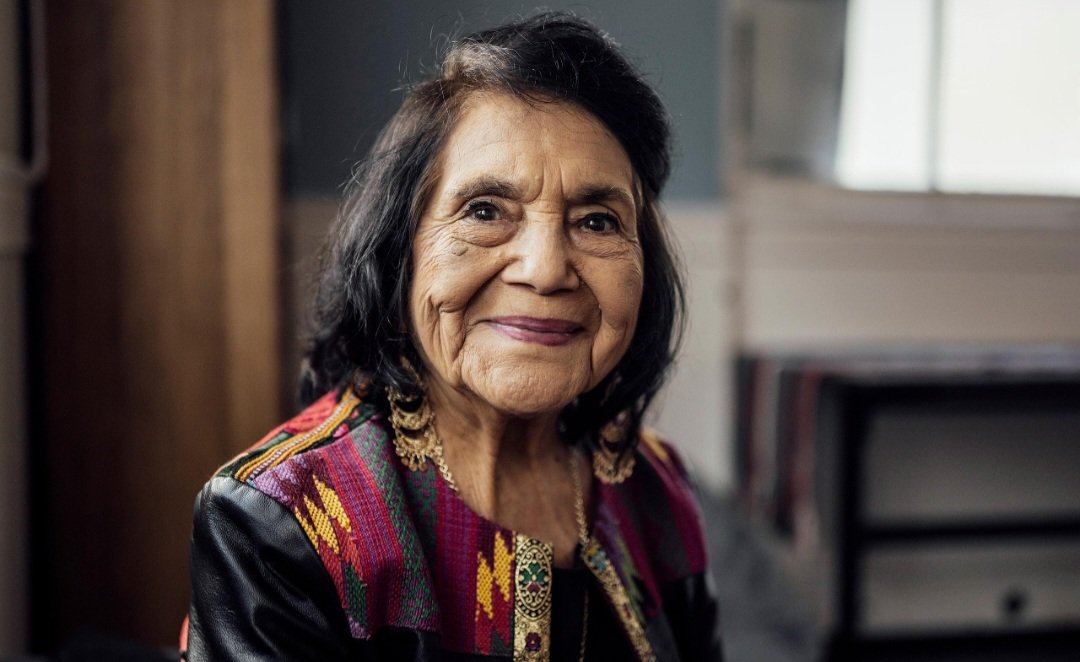
Dolores Huerta, the influential American labour organiser, feminist and civil rights activist who helped transform the fight for farmworkers’ rights in the United States, has died at the age of 96.
Huerta died at her home in Bakersfield, California, on Wednesday, October 28, surrounded by close family members, according to a statement released by her family through the Dolores Huerta Foundation.
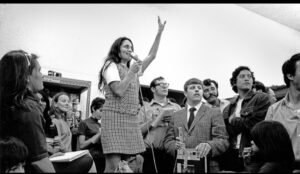
She co-founded the United Farm Workers (UFW) alongside César Chávez in 1962, helping to organise agricultural workers who faced low wages, poor working conditions and limited employment protections. Her decades of activism made her a leading figure in the American labour movement and a prominent advocate for women, immigrants and other marginalised communities.
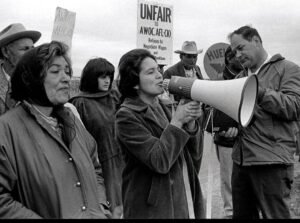
Huerta was also closely associated with the Spanish-language slogan “¡Sí, se puede!”, meaning “Yes, it can be done”. The phrase became a rallying cry for social and political movements and was later adapted into the slogan “Yes, we can”, popularised during Barack Obama’s 2008 presidential campaign.
Born Dolores Clara Fernández on April 10, 1930, in Dawson, New Mexico, Huerta grew up in California after her parents separated. She initially worked as a schoolteacher but became increasingly troubled by the poverty and hardship experienced by children from farmworker families.
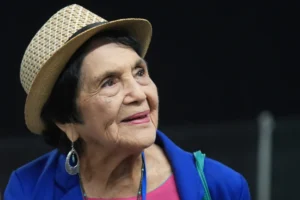
She eventually turned to community organising, believing that improving the lives of agricultural workers would help address the circumstances that left many children hungry and poorly equipped for school.
In 1962, Huerta and Chávez established the National Farm Workers Association, which later became the United Farm Workers of America. She played a central role in organising workers, negotiating collective bargaining agreements and mobilising public support for agricultural labourers.
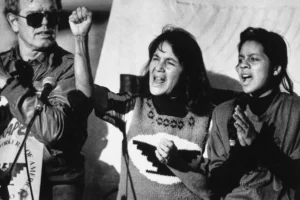
Huerta was among the activists who supported Filipino farmworkers during the Delano grape strike, a major labour campaign that began in California in 1965. The strike and subsequent consumer boycotts drew national attention to the conditions faced by agricultural workers and helped build pressure for improved wages, benefits and labour protections.
Her activism extended beyond the fields. She lobbied elected officials, campaigned for immigrant rights, challenged gender discrimination and encouraged more Latina women to participate in public life. She was arrested numerous times during demonstrations and remained active in public advocacy well into her 90s.
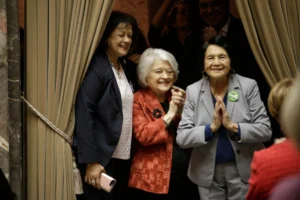
In 1988, Huerta suffered serious injuries after being struck by a police officer’s baton during a protest in San Francisco against then-Republican presidential candidate George H.W. Bush’s position on the United Farm Workers’ grape boycott. She suffered broken ribs and a ruptured spleen, requiring surgery and a lengthy recovery.
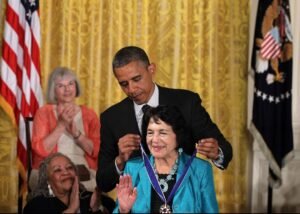
Her contributions earned her numerous honours, including the Presidential Medal of Freedom, which President Obama presented to her in 2012. She was also inducted into the National Women’s Hall of Fame and received honorary degrees from several American universities.
Despite her age, Huerta continued to speak at demonstrations and public events, advocating for economic equality, women’s rights, LGBTQ+ rights and the protection of immigrant communities through her foundation.
Her later years also brought renewed public attention to painful aspects of the farmworker movement’s history. In 2026, Huerta publicly disclosed allegations of sexual abuse by Chávez during the 1960s, a revelation that prompted wider examination of his legacy and the experiences of women within the movement. Chávez, who died in 1993, was not alive to respond to the allegations.
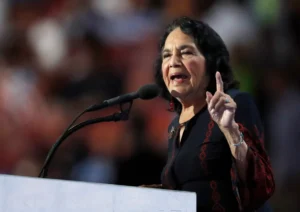
Huerta said she had remained silent for decades because she feared that speaking out could damage the movement she had devoted her life to building.
Her death marks the passing of a figure whose organising helped reshape the debate over workers’ rights in the United States. Her legacy includes the campaigns she led, the protections she helped secure for farmworkers and the generations of activists inspired by her insistence that collective action could bring about change.
Her family said further plans to honour and celebrate her life would be announced later.