
Featured
Beyond Survival: India’s Remarkable Journey in the Fight Against Poverty

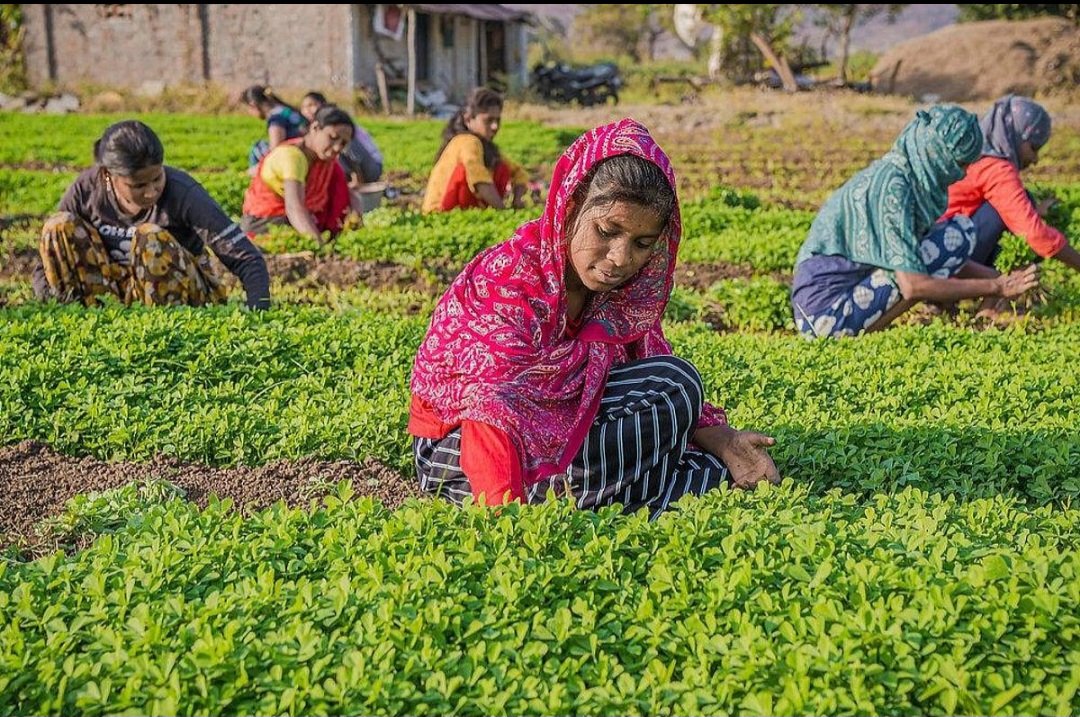
For millions of people in India, the difference between poverty and a more secure life is measured in the ability to afford food, keep children in school, access basic services and earn enough to meet everyday needs. Over the past decade, the country has recorded a significant shift in these realities, with new figures from the World Bank pointing to one of the most substantial poverty reductions in its recent history.
According to the World Bank’s October 2026 Poverty and Equity Brief, an estimated 496 million people moved above the lower-middle-income poverty line between 2011–12 and 2023–24. During that period, the proportion of Indians living below the threshold of $4.20 per person per day, measured using 2021 purchasing power parity (PPP), fell from 57.7 per cent to 16.1 per cent.
The decline in extreme poverty was equally striking. The share of the population living below the international extreme poverty line of $3 a day dropped from 27.1 per cent to 2.6 per cent over the same period.
These figures represent more than a change in economic statistics. They point to a transformation in the living conditions of a vast population across one of the world’s most populous countries.
What Changed?
The World Bank identifies several factors behind India’s progress, including stronger household consumption, rising employment and expanded social protection programmes.
Consumption growth has played an important role in improving household welfare. As families spend more on food and other essential goods and services, their measured living standards can improve. Government interventions, particularly food subsidies and other social transfers, have also helped households meet basic needs and reduce the financial pressure associated with everyday living.
Employment has been another important part of the story. Between 2017 and 2023, India’s employment increased by approximately 134 million people, nearly twice the growth in its working-age population.
A significant proportion of this expansion came from rural women entering paid employment. Their participation has increased the number of income earners in many households, creating additional financial support for families and contributing to the country’s broader poverty reduction efforts.
For women in rural communities, access to paid work can mean more than an additional source of household income. It can also provide greater financial independence and a stronger role in household decisions.
However, the increase in women’s employment must be considered alongside the quality and stability of the jobs available to them.
Poverty Is More Than Income
India’s progress is not limited to income-based measurements. The World Bank also reported improvements in multidimensional poverty, which considers disadvantages beyond how much money people earn.
Such measurements take into account conditions affecting people’s everyday lives, including access to education, healthcare, housing and basic services.

The Oxford Poverty and Human Development Initiative’s Multidimensional Poverty Index recorded a decline in India’s poverty rate from 53.8 per cent in 2005–06 to 16.4 per cent in 2019–21. The World Bank’s own multidimensional poverty measure stood at 15.5 per cent in 2022–23.
These indicators suggest that improvements in living standards have extended beyond household income, although the different indices cover different periods and use distinct methodologies.
Access to essential services remains a central part of the development challenge. A household may earn more than it did a decade ago but still face serious difficulties if its members lack reliable healthcare, quality education, clean water or adequate housing.
The Progress Is Significant, but the Challenges Remain
Despite the impressive reduction, the World Bank’s findings do not suggest that poverty has disappeared from India.
In 2023–24, rural poverty stood at 19.3 per cent, compared with 8.6 per cent in urban areas. The report also found that approximately 57 per cent of India’s poor population was concentrated in a belt of states stretching from Uttar Pradesh to West Bengal.
This geographical concentration highlights the uneven nature of development across the country. While some communities have experienced substantial improvements, others continue to face limited economic opportunities and weaker access to essential services.
The quality of employment is another concern
Although employment expanded significantly between 2017 and 2023, the World Bank noted that real earnings remained broadly unchanged, with much of the employment growth concentrated in relatively low-productivity activities.
In practical terms, having more people in work does not automatically mean that workers are earning enough to improve their standard of living sustainably.
Youth unemployment also presents a challenge. The rate increased from 14.6 per cent in the first quarter of 2025–26 to 15.9 per cent in the corresponding quarter of 2026–27, with rural young women particularly affected.
The figures raise questions about whether the economy is generating enough productive, well-paying opportunities to absorb its growing workforce.
There are also limitations to how poverty is measured. The World Bank’s estimates rely on household consumption surveys and acknowledge that some of the reported progress may reflect changes in measurement as well as genuine improvements in welfare. The surveys may also fail to capture the full consumption of wealthier households, potentially understating inequality.
Can the Momentum Be Sustained?
The World Bank expects poverty in India to continue declining, although at a slower pace. Its projections indicate that the poverty rate measured against the $4.20-a-day threshold could fall from an estimated 14.2 per cent in 2026 to 12.1 per cent by 2028.
These projections are indicative and may change as new economic and labour market information becomes available.
Sustaining the progress will require more than maintaining existing welfare programmes. It will depend on creating productive jobs, improving wages, strengthening education and skills development, and ensuring that economic opportunities reach communities that have benefited less from recent growth.
Social transfers and food subsidies can provide important protection for vulnerable households, but long-term poverty reduction also requires people to have reliable opportunities to earn and build financial security.
India’s experience offers an important development lesson: economic growth can have a significant impact on poverty when accompanied by employment expansion, household consumption and targeted public support.
Yet the next stage of the country’s journey may be more difficult than the last. Moving millions of people above an international poverty threshold is a major achievement; ensuring that they do not fall back into poverty requires stable incomes, decent work and access to essential services.
The World Bank’s figures tell a story of remarkable progress. But the larger question is whether that progress can become a lasting experience of shared prosperity; one in which economic gains are not only reflected in national statistics but felt in the everyday lives of people across India’s cities, towns and rural communities.