
Politics
Ikokwu Warns: Nigeria’s Food Crisis Is Becoming a National Security Threat


Nigeria’s growing food insecurity could pose a serious threat to national stability if urgent steps are not taken to protect farmers, agricultural land and indigenous seed systems, Dr Chiogo Constance Ikokwu has warned.
Ikokwu, Spokesperson for the NDC Campaign Council, said rising food prices and the persistent displacement of farmers were putting the country’s food production at risk, stressing that agriculture must be treated as a national security priority rather than merely an economic activity.
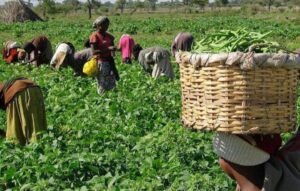
In a commentary titled “Save Our Farmers: A Hungry Nation Is a National Security Threat,” she argued that the country’s ability to feed itself was increasingly threatened by insecurity, rapid urbanisation and the gradual loss of agricultural land.
She noted that attacks and conflicts in parts of Benue and other areas of the North-Central and North-West regions had forced many farmers away from their farmlands, disrupting agricultural activities and threatening food supplies.
Citing figures from the International Organisation for Migration (IOM), Ikokwu said the North-East recorded about 2.33 million internally displaced persons in 2025, with approximately 913,000 still living in camps and camp-like settings.
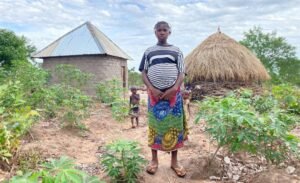
She warned that the consequences of displacement and declining agricultural production should not be viewed as problems affecting only particular regions, noting that disruptions to farming in one part of the country could eventually affect food availability and prices nationwide.
According to her, the pressure on agricultural land is also evident in parts of southern Nigeria, particularly the South-East, where rapid urbanisation is gradually replacing farmland with residential estates, commercial buildings and other developments.
Ikokwu cautioned that continued conversion of agricultural land could undermine the country’s long-term food production capacity, regardless of the pace of urban development.

She further pointed to projections by the Food and Agriculture Organisation (FAO) and the World Food Programme (WFP), which indicated that 34.8 million Nigerians could face acute food insecurity between June and August 2026. The projection included 1.8 million people at Emergency levels and about 15,000 at Catastrophe levels in Borno State.
The NDC spokesperson said the figures highlighted the scale of the challenge and the need for a coordinated response to protect food production and improve access to food.
“A hungry population is vulnerable, desperate and unstable,” she argued, warning that countries unable to produce enough food for their populations could become increasingly dependent on external suppliers, creating strategic vulnerabilities.

She also called for a change in how farming is perceived in Nigeria, urging greater investment in agriculture as a sustainable business capable of attracting young people and supporting future generations.
Ikokwu observed that in many developed countries, farming operates as a structured enterprise supported by technology, access to finance, insurance, research and infrastructure.
She said Nigeria should create similar conditions to make agriculture more attractive and commercially viable, particularly for young people willing to venture into the sector.

Beyond large-scale agricultural investment, she encouraged households with available space to consider growing vegetables, fruits and herbs for personal consumption, describing small-scale food production as one way to strengthen individual and community food resilience.
The protection of indigenous seeds and traditional farming systems was another major concern raised in the commentary.
Citing FAO estimates and African research, Ikokwu said between 80 and 90 per cent of seeds accessed by smallholder farmers came through local seed systems, while some newer research placed the contribution of farmer-managed seed systems across sub-Saharan Africa at between 80 and 95 per cent.

She warned against allowing Nigeria’s agricultural future to become overly dependent on international seed companies, arguing that indigenous seed varieties and farmer-managed systems must be protected.
Ikokwu called on government authorities and relevant stakeholders to address insecurity in farming communities, prevent the uncontrolled conversion of agricultural land and develop long-term strategies for safeguarding the country’s food production capacity.
She urged Nigerians to look beyond immediate food prices and consider the future of the country’s agricultural system, asking what its food supply would look like in the next 10 to 50 years if existing threats were not addressed.
She concluded with a call for collective action, insisting that protecting farmers, farmland and indigenous seeds was essential to securing Nigeria’s future.