General News
INEC Creates AI Unit as Amupitan Warns of Deepfakes, Fake Results Ahead of 2027

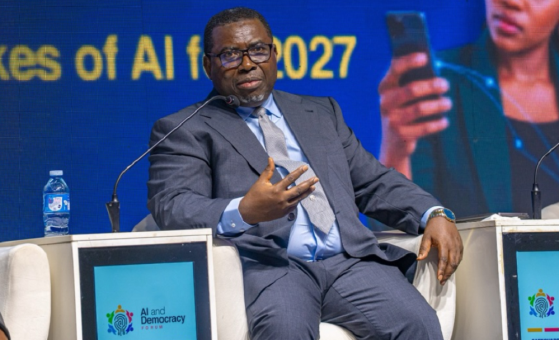
The Independent National Electoral Commission, INEC, has stepped up preparations to counter artificial intelligence-driven threats to the 2027 general elections, establishing a dedicated AI unit to track emerging technologies and combat the spread of manipulated electoral information.
INEC Chairman, Prof. Joash Amupitan, SAN, said the Commission was concerned that artificial intelligence could be exploited to create fake videos, clone voices of public officials and circulate fabricated election results capable of misleading voters and undermining confidence in the electoral process.

Amupitan spoke in Abuja at the National Summit on Electoral Information Integrity, themed Beyond the Ballot: AI, FIMI and the Integrity of the Nigerian 2027 Elections.
He said the nature of election interference was changing rapidly, with digital platforms becoming new battlegrounds for those seeking to manipulate public opinion.

“Today, elections can be undermined long before the first ballot is cast,” the INEC chairman said, noting that threats to electoral integrity were no longer limited to physical interference at polling units.
According to him, synthetic media, automated misinformation, deepfakes and other forms of digital manipulation have created fresh challenges for election managers across the world.
Amupitan warned that individuals could use increasingly accessible AI tools to produce convincing audio and video materials falsely attributed to election officials or political leaders.

He said one of INEC’s major concerns was the possibility of fabricated election results being circulated on social media before the Commission makes an official declaration.
“Because of the danger of AI, it is possible for anybody in his room or her room to just begin to put results, AI-generated results that are not derived from authentic results that come from the polling unit,” he said.
The INEC chairman said the Commission had established the AI unit to monitor new developments, identify potential risks and develop safeguards against attempts to compromise the electoral process.
He also disclosed that INEC was exploring the use of ChatGPT to strengthen strategic communication and improve its response to misinformation and other emerging information threats.

The Commission, he said, was working to build the capacity of its ICT, voter education and communications departments to identify suspicious content, monitor information channels and respond more quickly to coordinated disinformation.
Amupitan said INEC was also engaging technology companies and international partners to develop faster mechanisms for identifying and addressing manipulated electoral content.
He warned that the traditional approach of waiting for misinformation to spread before issuing corrections may no longer be effective.
“While technology evolves at the speed of light, the truth often travels at the speed of trust,” he said.
The INEC chairman also raised concerns about the possibility of AI-generated propaganda being released during the legally restricted period for political campaigns, when candidates and institutions may have limited opportunities to respond.
He pointed to the experience of other countries where manipulated audio recordings circulated shortly before elections, warning that Nigeria must prepare for similar attempts to influence voters.
Amupitan identified voter registration as another potential target, saying malicious actors could create fake registration platforms, circulate false directives or manipulate information about the voters’ register.
He called for a coordinated response involving INEC, security agencies, telecommunications providers, media organisations, civil society groups, fact-checkers and social media platforms.
The chairman also urged journalists to take greater responsibility for ensuring the accuracy of information shared with the public, particularly during the election period.
“Speed is important, but accuracy is the currency of democracy,” he said.
Amupitan said the fight against election disinformation would require more than technology, stressing that public awareness, institutional transparency and public trust would be critical to protecting the integrity of the 2027 polls.
“AI cannot police the truth alone,” he said, calling on Nigerians and key stakeholders to work together to prevent emerging technologies from being used to distort electoral information and weaken confidence in democracy.