Politics
2027 POLLS: INEC COMPLETES NINE KEY MILESTONES, SEEKS UK SUPPORT TO STRENGTHEN BVAS,CYBERSECURITY


The Independent National Electoral Commission (INEC) has completed nine of the 14 activities outlined in its revised timetable for the 2027 general elections, while seeking additional technical assistance from the United Kingdom to strengthen electoral technology, cybersecurity and operational capacity.
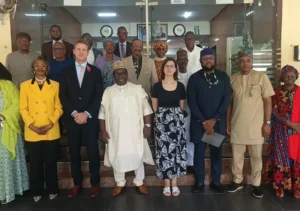
INEC Chairman, Professor Joash Amupitan, disclosed this on Wednesday during a meeting with the British High Commissioner to Nigeria, Peter Vowles, and his delegation at the commission’s headquarters.

Amupitan said the commission had moved beyond preliminary preparations and was implementing critical activities towards delivering credible elections in 2027.
He explained that INEC was prioritising the integrity of the national voters’ register through continuous voter registration, data verification, voter transfers and the removal of ineligible entries.
According to him, the nationwide collection and distribution of Permanent Voter Cards (PVCs) are also ongoing, while political parties have completed the submission of their candidates in line with the Electoral Act and statutory deadlines.

On electoral technology, the INEC chairman said the commission was focusing on improving the reliability of existing systems, particularly the Bimodal Voter Accreditation System (BVAS) and electronic transmission of election results.
He clarified that INEC was not considering an entirely new technological framework but was working to strengthen its existing infrastructure to improve operational efficiency and public confidence.
Amupitan identified cybersecurity, specialised training for electoral personnel, strategic communication, voter education and the fight against misinformation as critical areas where the commission would welcome additional support from the UK.
He also stressed the need for stronger collaboration with security agencies to protect election officials, electoral facilities and sensitive materials before, during and after the polls.
On efforts to address voter apathy, particularly among young people, women and persons with disabilities, the chairman said the commission was pursuing initiatives to encourage broader participation in the electoral process.
He cited a university debate programme organised across the six geopolitical zones as part of efforts to deepen young people’s understanding of democracy and stimulate their interest in electoral participation.
Earlier, the British High Commissioner, Peter Vowles, said his visit was aimed at understanding INEC’s statutory responsibilities and assessing the commission’s preparations for the 2027 elections.
Vowles, who disclosed that he had spent approximately eight weeks in Nigeria, described the country’s democratic development as significant not only to its estimated 240 million citizens but also to West Africa and the international community.
He said the forthcoming elections would offer Nigeria an opportunity to demonstrate how democratic governance could function effectively in a large and diverse country.
The British envoy reaffirmed the United Kingdom’s commitment to supporting Nigeria’s democratic development and strengthening institutions responsible for safeguarding electoral integrity.
Responding, Amupitan described the relationship between Nigeria and the UK as one built on shared interests and a common commitment to democracy, electoral credibility and institutional development.
He acknowledged Britain’s previous contributions to Nigeria’s electoral development, particularly in technical assistance, capacity building, voter education, gender inclusion and institutional reforms.
The INEC chairman expressed optimism that the renewed engagement would deepen cooperation in electoral technology, cybersecurity, personnel training and other areas critical to strengthening public confidence in the electoral process.
He assured Nigerians and the international community that the commission remained committed to conducting credible, transparent, inclusive and peaceful elections in 2027.
Amupitan also urged domestic and international stakeholders to sustain their support for electoral reforms, stressing the importance of addressing identified weaknesses in previous elections to strengthen the country’s democratic process.