
International
BBC Appeals Ruling Allowing Trump’s $10bn Defamation Lawsuit to Proceed

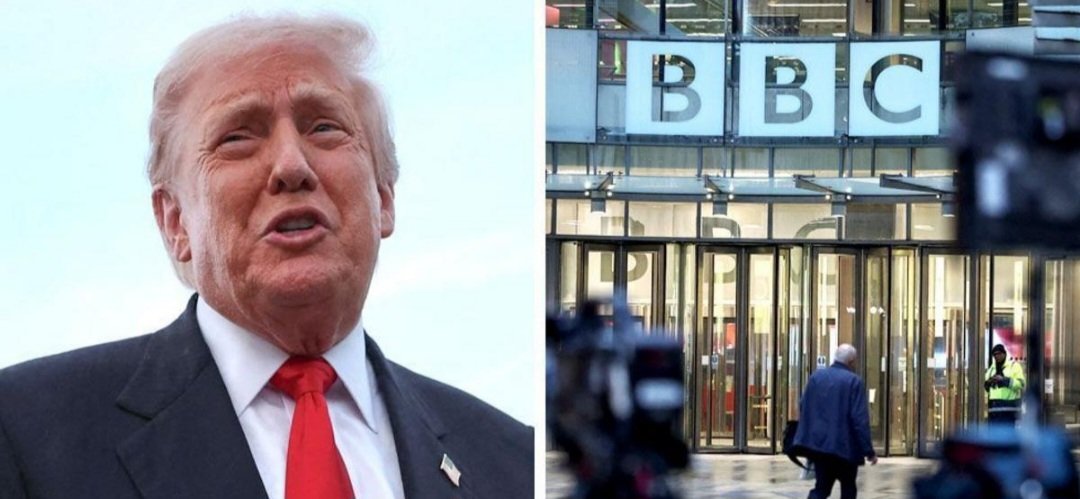
The British Broadcasting Corporation (BBC) has lodged an urgent appeal against a United States court decision allowing President Donald Trump’s $10 billion defamation lawsuit against the broadcaster to proceed, escalating a legal dispute over the editing of a documentary featuring his January 6, 2021 speech.
The broadcaster is asking the US Court of Appeals for the 11th Circuit to overturn a ruling by a federal judge in Florida, who earlier this month rejected its attempt to have Trump’s defamation claim dismissed.

The BBC argues that the Florida court lacks jurisdiction to hear the case because the documentary at the centre of the dispute was broadcast exclusively in the United Kingdom and was never shown in Florida or elsewhere in the United States.
In its appeal, the broadcaster maintained that there was no evidence anyone in Florida had accessed the programme, adding that it had taken systematic measures to prevent access to its streaming content in the United States.
A BBC spokesperson said the corporation was surprised and disappointed by the earlier court decision, insisting that the documentary was broadcast in the UK only.

The legal dispute stems from a 2024 edition of the BBC’s flagship investigative programme, Panorama, titled Trump: A Second Chance?, which examined Trump’s political comeback ahead of the US presidential election.
The documentary included an edited version of a speech Trump delivered to supporters on January 6, 2021, shortly before a mob stormed the US Capitol in Washington.
The programme spliced together two separate portions of the speech, recorded nearly 55 minutes apart, making it appear that Trump had directly told supporters: “We’re going to walk down to the Capitol and I’ll be there with you, and we fight. We fight like hell.”
The edited sequence omitted an intervening section in which Trump called on his supporters to demonstrate peacefully.
The BBC subsequently acknowledged that the editing had created a misleading impression and issued an apology, but rejected Trump’s allegation that the broadcaster had defamed him.
Trump filed the $10 billion lawsuit in December 2025, seeking at least $5 billion in damages for defamation and another $5 billion over alleged violations of Florida’s unfair trade practices law.
However, on November 10, 2026, US District Judge Jeffrey Kuntz allowed the defamation claim to proceed while dismissing the separate unfair trade practices allegation.
In his ruling, Kuntz said Trump had sufficiently alleged that the broadcaster’s editing could amount to actual malice and had potentially damaged his reputation.
The decision did not establish that the BBC was guilty of defamation. Trump will still have to prove his allegations and demonstrate that the broadcaster acted with the required level of fault under US law.

The BBC’s latest appeal challenges the court’s authority to hear the dispute, arguing that the absence of evidence that the documentary was accessed in Florida undermines the basis for exercising jurisdiction over the corporation.
The case has also raised questions about the relationship between international broadcasting, digital distribution and the legal responsibilities of media organisations operating across national borders.
Meanwhile, the court has ordered Trump to sit for a deposition by January 22, 2027, as part of the evidence-gathering process. The trial is currently scheduled to begin on May 3, 2027, in Fort Lauderdale, Florida.
The dispute has placed the BBC under renewed scrutiny over its editorial standards, while also highlighting the legal and financial risks facing media organisations when their reporting becomes the subject of high-profile defamation claims.
The broadcaster has maintained that it will defend itself through the legal process and remains confident in its position.