
Sports
Infantino Forced to Abandon FIFA’s World Cup Investment Proposal Following Global Backlash

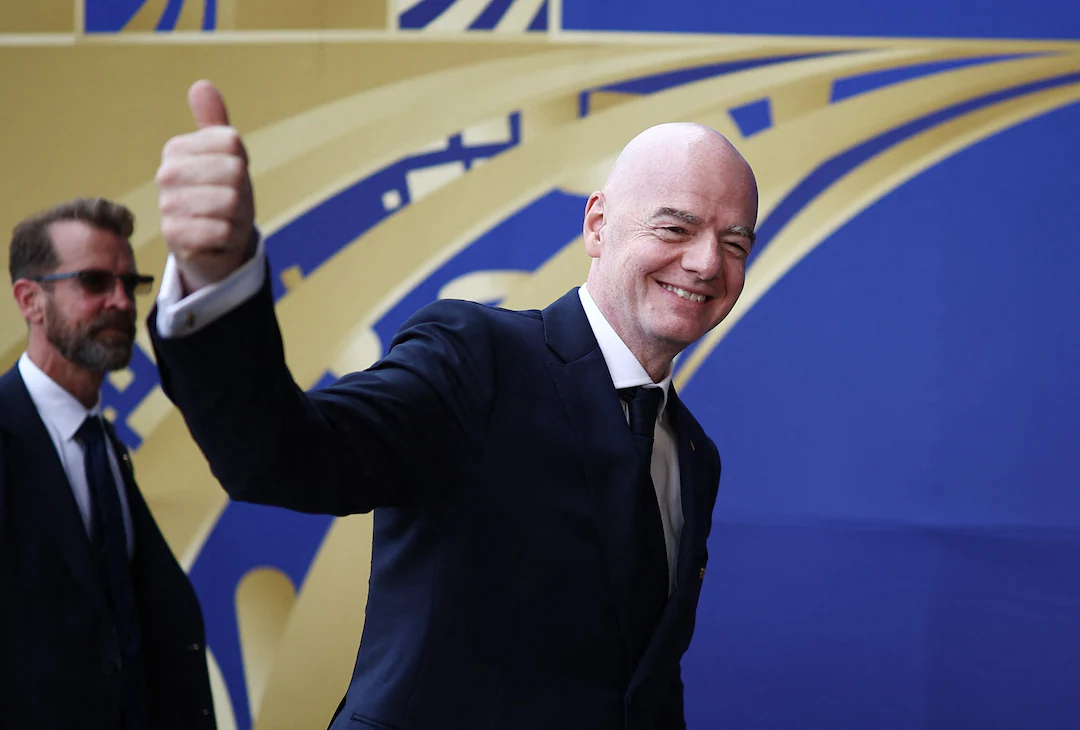
FIFA has abandoned plans to sell a stake in the commercial rights to the FIFA World Cup and other major tournaments after facing strong opposition from its own member associations, continental confederations and leading football clubs.


The proposal, championed by FIFA President Gianni Infantino, sought to create a separate commercial company that would manage the governing body’s most valuable tournaments before selling a minority stake to outside investors. The initiative was intended to raise billions of dollars for football development, but critics argued it risked giving private investors influence over the world’s most prestigious football competitions. The growing resistance ultimately forced FIFA to shelve the proposal.
Under the plan, FIFA would have established a new commercial subsidiary, widely referred to as FIFA Forward Enterprise (FFE), into which it would transfer the commercial rights to flagship competitions such as the men’s FIFA World Cup, the FIFA Women’s World Cup and the expanded FIFA Club World Cup.
FIFA intended to sell a 20% stake in the new entity to private investors, with the venture reportedly valued at approximately $20 billion. The governing body argued that the investment would generate new revenue streams that could be distributed among its 211 member associations to fund grassroots football, infrastructure projects and youth development.
The proposal quickly encountered resistance from across the football community.
Several continental confederations, including UEFA, expressed concern that allowing private investors to acquire a stake in World Cup commercial rights could fundamentally change the governance of global football. Officials questioned whether FIFA had the authority to commercialize assets that derive much of their value from the participation of clubs, players and national teams.

Reports also indicated that leading European clubs such as Real Madrid and Juventus privately opposed the proposal, arguing that football’s premier competitions should not be partially controlled by investment firms. Club executives reportedly warned that investors might eventually seek greater influence over broadcasting, scheduling and commercial decisions.
Following consultations with member associations and football stakeholders, FIFA concluded that the proposal lacked sufficient support to proceed.
In a statement, the organization said it would no longer pursue the commercial restructuring, emphasizing that preserving unity within world football was more important than implementing a divisive financial strategy. FIFA said it remains committed to finding alternative ways to increase funding for football development without selling ownership interests in its commercial business.
The withdrawal represents a significant setback for Infantino, whose administration has pursued ambitious commercial expansion since he became FIFA president.
Critics argue that the failed proposal illustrates growing concerns about governance, transparency and the increasing commercialization of international football. Some football administrators contend that FIFA should focus on improving the sport’s administration rather than pursuing complex financial structures involving outside investors.
The controversy also follows recent criticism of Infantino from political figures and football officials who have questioned his leadership style and decision-making.
Although the sell-off proposal has been abandoned, FIFA is expected to continue exploring new ways to increase revenue as it prepares for future editions of the FIFA World Cup, Women’s World Cup and Club World Cup.
For now, many member associations have welcomed the decision, saying it preserves FIFA’s direct control over the sport’s flagship tournaments and avoids introducing private investors into one of football’s most valuable commercial assets. The debate, however, has highlighted ongoing tensions between expanding football’s revenues and protecting the governance traditions of the global game.