Legislature
N’Assembly Proposes 182 Extra Seats for Women in Landmark Constitutional Reform


The National Assembly has proposed the creation of 182 additional legislative seats exclusively for women as part of ongoing efforts to address gender imbalance in Nigeria’s political representation.
The proposal comprises 74 additional seats in the National Assembly and 108 seats across the 36 State Houses of Assembly.

Senate Leader and Vice Chairman of the Senate Committee on the Review of the 1999 Constitution, Senator Opeyemi Bamidele, disclosed this on Monday during the 2026 Law Week organised by the International Federation of Women Lawyers (FIDA), Ekiti State Chapter.
Bamidele said a bill seeking to amend the 1999 Constitution to provide special seats for women in the National and State Houses of Assembly was receiving attention at the National Assembly.
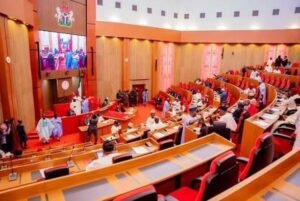
Under the proposed arrangement, each of the 36 states and the Federal Capital Territory will have one additional senatorial seat and one additional House of Representatives seat reserved for women, bringing the total to 74 federal seats.
Similarly, three additional seats will be created in each of the 36 State Houses of Assembly, accounting for another 108 seats.
The Senate Leader explained that the proposed arrangement was designed to increase women’s political participation without displacing existing lawmakers or changing the boundaries of current constituencies.
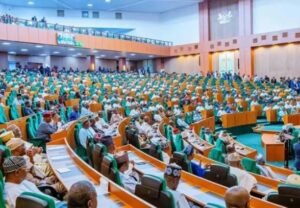
He said the special seats would remain in place for 16 years, covering four electoral cycles, after which the arrangement would undergo a comprehensive review.
According to him, the proposed sunset clause is intended to give Nigeria’s political system time to develop a more inclusive culture while ensuring the long-term sustainability of the initiative.
Bamidele disclosed that the National Assembly had begun engaging State Houses of Assembly to secure the necessary constitutional backing for the proposed amendment.
He emphasised that the reform was not a partisan initiative but an effort to address the longstanding exclusion of women from political decision-making.

He said advocacy by First Lady Senator Oluremi Tinubu had further strengthened the commitment of the 10th National Assembly to advancing the special seats proposal.
Bamidele argued that a democracy that excludes a significant proportion of its population from decision-making cannot fully reflect the interests and aspirations of its citizens.
The proposal comes amid concerns over the low representation of women in Nigeria’s legislative institutions, despite women accounting for approximately half of the country’s population.
Bamidele also called for stronger legal and institutional protections for women, children and persons with disabilities, stressing the need to make justice accessible, affordable, timely and effective.
He maintained that women experiencing domestic violence should be able to seek protection without intimidation or social stigma, while children who suffer abuse must be heard, protected and provided with appropriate support.
The FIDA Law Week was attended by the Chairman of the House Committee on Information and National Orientation, Steve Fatoba, and Speaker of the Ekiti State House of Assembly, Adeoye Aribasoye, among other dignitaries.