
Sports
Nearly 100 Influencers at US Open as Content Creation Collides With Tennis Tradition

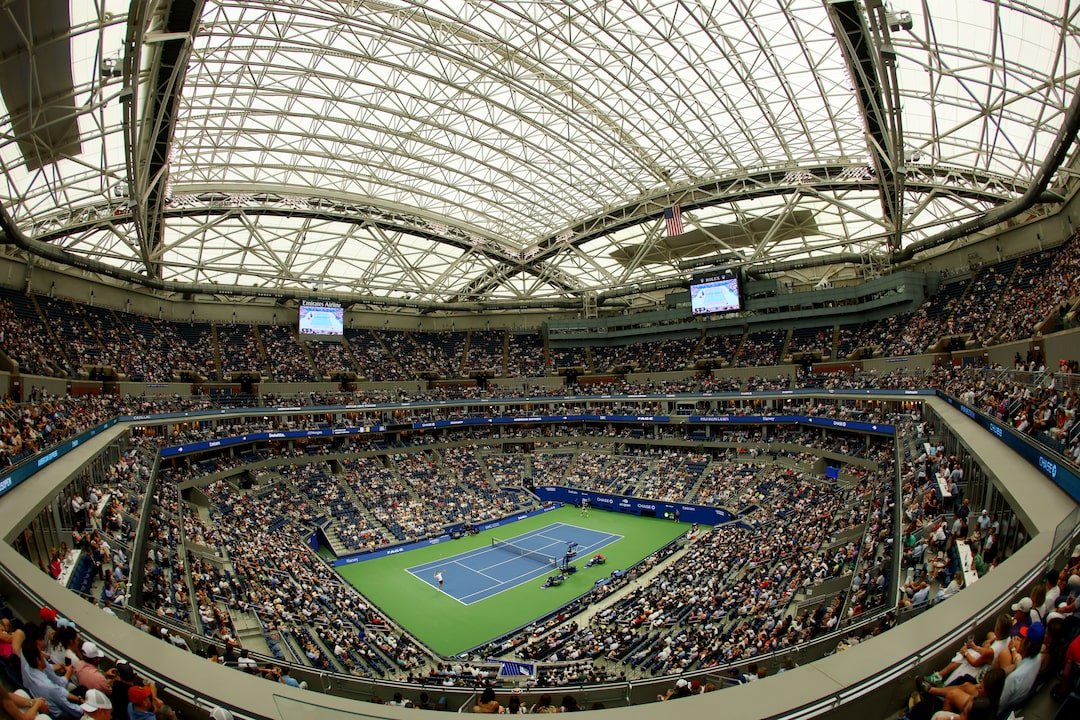
The US Open is increasingly becoming more than a tennis tournament. It is now a major destination for influencers, content creators, celebrities and brands seeking access to one of sport’s biggest stages.
But as the number of creators at the 2026 tournament has surged, so too have questions about where to draw the line between promoting tennis and disrupting it.

Nearly 100 content creators have received credentials from the United States Tennis Association (USTA) this year, almost twice the 54 creators who were given credentials when the programme began in 2025. Their job is to produce social-media content around the tournament, helping take the US Open to audiences far beyond the courts of the Billie Jean King National Tennis Center.
The growth reflects a broader transformation in professional tennis, where social media has become an important tool for attracting younger fans, increasing engagement and creating new commercial opportunities.
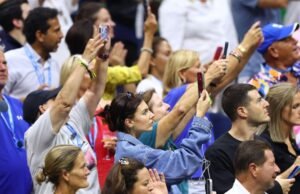
But the new influencer culture has also collided with one of tennis’ oldest traditions: silence and concentration during points.
The debate intensified after an incident during Naomi Osaka’s first-round match against Anastasia Zakharova at Arthur Ashe Stadium.

A group of people in a hospitality suite were reportedly taking photographs and filming with bright lights while the match was underway. Their activity became disruptive enough for chair umpire Kader Nouni to intervene and tell them to sit down and stop the disturbance.
Video of the incident quickly spread online, prompting criticism from tennis fans who argued that the pursuit of social-media content had crossed into interference with the players.

The episode became particularly striking because tennis players require intense concentration, and even relatively brief movements, flashes or noise from the stands can become a distraction during a point.
World No. 3 Jessica Pegula has acknowledged that influencers can help bring new audiences to tennis, but she has also expressed concern about their behaviour at this year’s tournament.

After her second-round victory, Pegula said the situation had become “a little maybe too much”, adding that people on court were trying to perform at the highest level and that disruptive behaviour could be disrespectful.
Her comments highlight the tension facing tournament organisers.
On one side, creators can introduce tennis to millions of people who may never watch a traditional sports broadcast. On the other, players and established fans expect the atmosphere inside the stadium to remain respectful and focused on the competition.

The USTA’s decision to expand creator access is not accidental.
The organisation’s first formal content-creator programme in 2025 gave credentials to 54 creators, whose content generated more than 5.5 million social engagements, according to Vogue’s reporting on the programme. This year’s programme has expanded to roughly 100 creators.
Creators are also attractive to brands.
The US Open has increasingly become a major fashion, food, entertainment and lifestyle event alongside its sporting identity. Influencers can showcase everything from outfits and restaurants to premium hospitality experiences and behind-the-scenes access.

Vogue reported that brands are spending tens, and in some cases hundreds of thousands of dollars on creator campaigns connected to tennis events.
That means the influencer presence is not simply about people taking selfies in the stands. It is part of a growing sports-business ecosystem surrounding the Grand Slam.
Pegula is not alone in trying to find the balance.
Some players see the influencer boom as an opportunity to expose tennis to new audiences. American star Frances Tiafoe, for example, has expressed support for the broader evolution of fan engagement and the role social media can play in expanding tennis’ reach.

Daniil Medvedev has similarly recognised the promotional benefits while acknowledging that problems arise when content creation interferes with matches.
That distinction may ultimately become the key question for tournament organisers:
How can the US Open embrace the digital audience without allowing the pursuit of viral content to disrupt the athletes creating the spectacle in the first place?
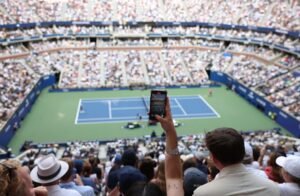
The presence of creators at major sporting events is hardly unique to tennis. Football, basketball, Formula One and other sports have all embraced influencers as a way of reaching audiences that traditional media sometimes struggles to capture.
But tennis presents a particular challenge because of its emphasis on silence during points.
The US Open’s challenge is therefore not necessarily whether influencers should be there. It is how they should behave once they are there.

With the number of credentialed creators nearly doubling in just one year, organisers may increasingly have to provide clearer guidance about filming, lighting, movement and noise during matches.
The tournament has much to gain from the creator economy, but players and fans are making it clear that the price of greater visibility cannot be a loss of basic tennis etiquette.