
General News
NEC Approves N83.2bn Flood Intervention Fund, Shettima Pushes States to Boost Agricultural Exports

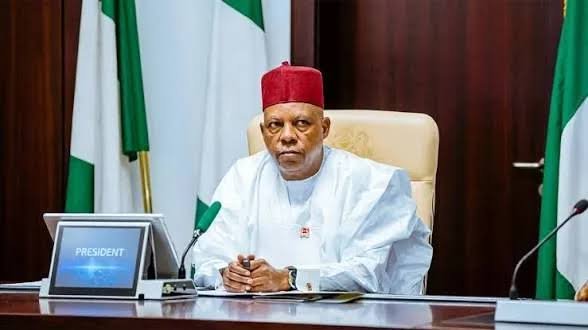
The National Economic Council (NEC) has approved N83.2 billion for intervention measures aimed at mitigating the impact of anticipated flooding and other climate-related emergencies across Nigeria.


The approval was granted on Thursday during the 158th meeting of the National Economic Council, chaired by Vice President Kashim Shettima, following a presentation by the Minister of State for Budget and Economic Planning, Senator Abubakar Atiku Bagudu, on the need for proactive measures to address flood risks during the rainy season.
The intervention fund will be deployed through the Anticipatory Action Task Force (AATF) to strengthen preparedness and response mechanisms for flooding and other environmental emergencies across the country.
Council members stressed the need for a more proactive approach to disaster management, noting that government institutions should move beyond reactive responses to emergencies and focus on prevention and risk mitigation.
Speaking at the meeting, Vice President Shettima said the administration of President Bola Ahmed Tinubu had reached a stage where ongoing economic reforms must translate into measurable improvements in the lives of ordinary Nigerians.
According to him, the success of government policies should be assessed by their impact on farmers, manufacturers, vulnerable citizens, unemployed youths and future generations.
“When this Council last met, I called our economy a workshop. A place of measurement and correction. A place where plans are turned into systems, and systems into institutions before any of it becomes prosperity,” the Vice President said.
He noted that Nigeria was steadily transitioning from economic stabilisation to production-driven growth and from policy formulation to implementation.
“The assignment has not changed. We remain a federation moving from stabilisation to production, from aspiration to implementation, from isolated interventions to coordinated national growth. What has changed, I hope, is our proximity to delivery,” he added.
On social protection, Shettima said government programmes must be designed to shield vulnerable citizens from economic shocks while strengthening the country’s human capital base.
The Vice President also challenged state governments to work closely with the Federal Government to remove obstacles limiting Nigeria’s agricultural exports and global market access.
He argued that Nigeria could no longer afford to rely on exporting raw materials while importing finished products, insisting that sustainable economic growth depends on developing complete value chains from production to export.
“We cannot continue to export raw materials and import finished prosperity,” he said.
Shettima identified logistics bottlenecks, inefficient port operations and compliance challenges with international standards as key barriers preventing Nigerian agricultural products from competing effectively in global markets.
According to him, addressing these challenges would improve returns for farmers, strengthen local manufacturing and expand Nigeria’s share of international trade.
“A nation that cannot move its goods has imprisoned its own farmers. Meeting international standards is not submission to foreign demand. It is the price of the markets that will reward our labour,” he stated.
The NEC meeting comes amid growing concerns over the impact of seasonal flooding on lives, livelihoods and food production, with government authorities seeking to strengthen disaster preparedness and climate resilience across the federation.
The Council expressed optimism that the N83.2 billion intervention package would help reduce the effects of flooding while supporting broader efforts to protect communities, infrastructure and agricultural production during the rainy season.