General News
Nigeria, Germany Move to Deepen Trade, Security, Investment Ties

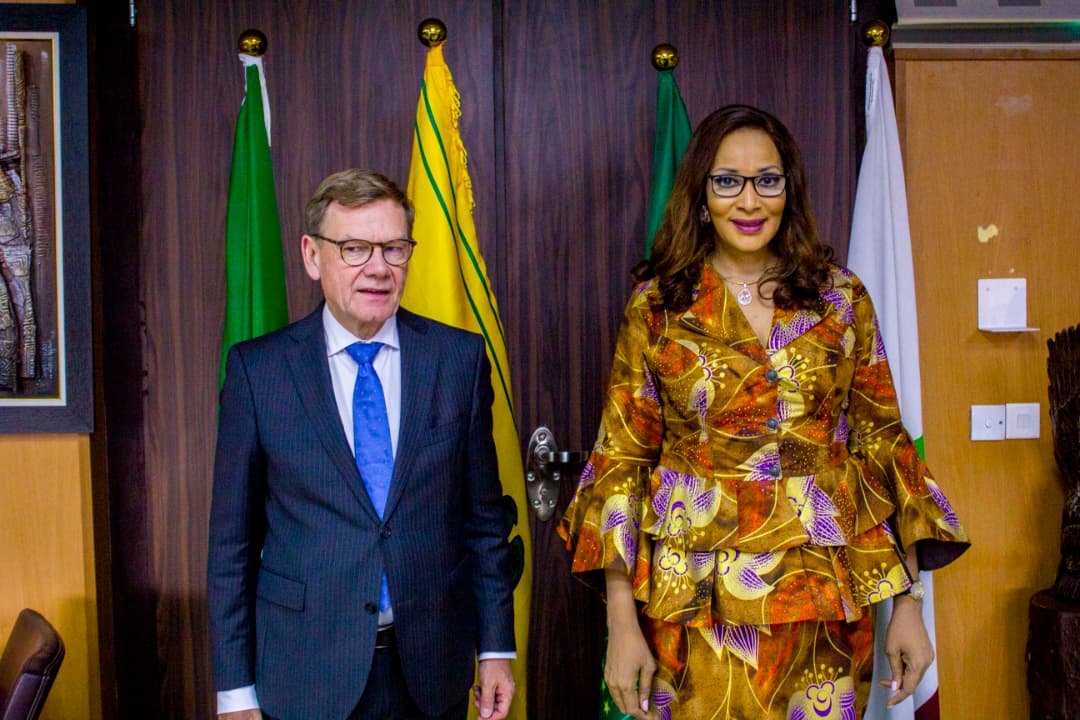
Nigeria and Germany on Wednesday reaffirmed their commitment to strengthening bilateral relations, with both countries pledging closer cooperation in trade, investment, renewable energy, security and regional stability.
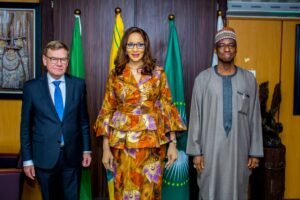
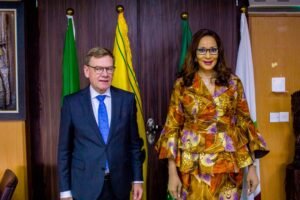
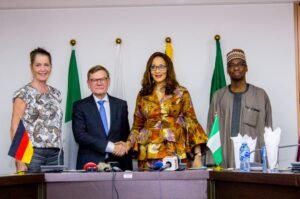
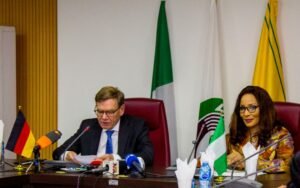
The commitment was made during a bilateral meeting in Abuja between Nigeria’s Minister of Foreign Affairs, Ambassador Bianca Odumegwu-Ojukwu, and Germany’s Federal Minister for Foreign Affairs, Johann Wadephul.
In her opening remarks, Odumegwu-Ojukwu described Germany as one of Nigeria’s most important strategic partners in Europe, noting that relations between both countries had continued to expand beyond diplomacy to trade and investment, development cooperation, renewable energy, education, science and technology, migration, culture, peace and security.
She said Nigeria valued Germany’s longstanding support for its development agenda and for peace and stability across West Africa.
According to the minister, the growing challenges of terrorism, violent extremism, climate change, irregular migration, food insecurity and economic uncertainty have reinforced the need for stronger international partnerships based on dialogue and shared responsibility.
She said Nigeria was committed to deepening collaboration with Germany in emerging sectors, including renewable energy, digital innovation, artificial intelligence, critical minerals, manufacturing, agriculture, healthcare, infrastructure development and the green economy.
Odumegwu-Ojukwu noted that the Nigeria-Germany Bi-national Commission had remained the cornerstone of bilateral engagement, adding that Nigeria had continued to implement agreements reached during the commission’s 2025 session through reforms aimed at improving the investment climate, strengthening governance and expanding private sector participation.
She also commended Germany for its continued support to the Economic Community of West African States (ECOWAS), particularly in promoting regional integration, democratic governance, peacebuilding and conflict prevention.
The minister urged greater participation by German businesses in Nigeria’s priority sectors, saying the economic reforms introduced by the administration of President Bola Ahmed Tinubu were creating new investment opportunities.
Responding, German Foreign Minister Johann Wadephul reaffirmed Germany’s commitment to expanding its strategic partnership with Nigeria, describing the relationship as one that has endured for more than six decades.
He recalled that Germany opened its embassy in Lagos just three days after Nigeria attained independence in 1960, describing it as a reflection of the long-standing friendship between both countries.
Wadephul said Nigeria remained Germany’s largest trading partner in sub-Saharan Africa, revealing that bilateral trade increased by 10 per cent in the past year.
He said the Nigeria-Germany Business Forum would continue to strengthen commercial relations and expressed optimism that his visit, accompanied by senior government officials and business executives, would encourage more German investments in Nigeria.
The German minister also highlighted his country’s interest in Nigeria’s energy sector and noted that the Nigeria-Germany Bi-national Commission had continued to deliver tangible outcomes in bilateral cooperation.
On regional security, Wadephul reaffirmed Germany’s support for ECOWAS in addressing terrorism and violent extremism, particularly in the Sahel, stressing that peace and stability remained essential for sustainable development in West Africa.
He expressed confidence that closer collaboration with his Nigerian counterpart would further strengthen the strategic partnership between the two countries and advance shared interests in economic development, security and regional stability.