Politics
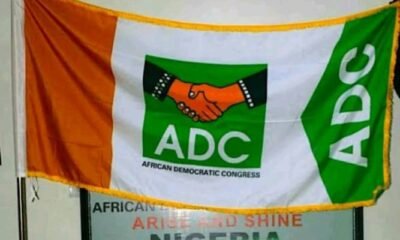
Peter Obi Confirms Departure From African Democratic Congress, Cites Political Toxicity

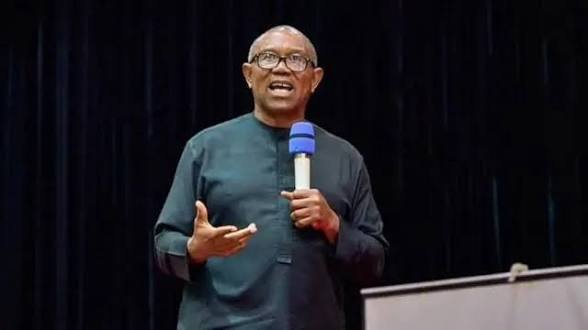
Former Nigerian presidential candidate Peter Obi has officially confirmed his departure from the African Democratic Congress, ending weeks of speculation about his political future and dealing a fresh blow to opposition coalition efforts ahead of the 2027 elections.
In a personally signed statement released on Sunday, Obi said he arrived at the decision after deep reflection, describing the move as necessary despite “every constraint.” He said, “I woke up this morning after my church service with a deeply reflective heart and felt compelled to share these thoughts,” adding that many people do not understand the “silent pains” and private struggles faced by those trying to serve in Nigeria’s political space. Obi painted a grim picture of the current political climate, describing it as increasingly hostile and discouraging. “We now live in an environment that has become increasingly toxic, where the very system that should protect and create opportunities often works against the people,” he said, pointing to intimidation, insecurity, and persistent scrutiny as defining features of the system.


The former Anambra State governor also expressed disappointment over what he described as a lack of solidarity, even among close associates. “Some who publicly identify with you privately distance themselves or join in unfair criticism,” he noted, lamenting that humility is often misinterpreted as weakness while compassion is seen as foolishness.
Obi clarified that his decision was not driven by personal grievances against key leaders within the party. He specifically exonerated ADC National Chairman David Mark and former Vice President Atiku Abubakar, saying neither treated him unfairly. “Let me state clearly: my decision to leave the ADC is not because our highly respected Chairman treated me badly, nor because Atiku Abubakar, or any other respected leaders did anything personally wrong to me,” he said.
Instead, Obi attributed his exit to what he described as a recurrence of the same challenges that plagued his time in the Labour Party, including internal divisions, legal battles, and external interference. “The same Nigerian state and its agents that created unnecessary crises and hostility within the Labour Party that forced me to leave now appear to be finding their way into the ADC, with endless court cases, internal battles, suspicion, and division,” he stated. He further lamented that sincere contributions are often undervalued, with individuals becoming scapegoats for broader systemic failures. “Even within spaces where one labours sincerely, one is sometimes treated like an outsider as though honest contribution has become a favour being tolerated rather than appreciated,” Obi added.
Buba Galadima, Secretary of the Board of Trustees of the New Nigeria Peoples Party, disclosed that Obi and former Kano State governor Rabiu Kwankwaso are finalising arrangements to join the Nigeria Democratic Congress, with an announcement expected as early as Monday. Galadima said, “Both Obi, Kwankwaso and their chieftains were on ground between yesterday and this morning signing relevant documents with Senator Dickson and the NDC leaders. We don’t want a repeat of what happened in the ADC. We discovered late that Atiku and his loyalists lured our leaders to that opposition party to fulfil only one single mission – Atiku’s presidential ambition.
All is now set. Both Obi and Kwankwaso will announce their defection to the ADC on Monday.” Galadima warned supporters to expect coordinated attacks following the announcement, saying, “As from Monday, when our leaders declare on which platform they will run, I want to tell you that one of two things will happen. First, they will sponsor columnists. Two, they will deploy social media influencers to start attacking our candidates.”
The Nigeria Democratic Congress has responded cautiously to the reports. Deputy National Publicity Secretary Abdulmumin Ohiare Abdulsalam said the defection remains under probability rather than certainty. He stated, “My recent response to a rare inquiry by a print journalist regarding the possibility of defections of the duo of Dr. Rabiu Musa Kwankwaso and Mr. Peter Gregory Obi, both of the ADC, dwelt more on the realm of probability rather than certainty. The NDC has not foreclosed the defections of the duo, even though discussions have been going on among the opposition parties on the possibility of an alliance to build a multi-party momentum towards the 2027 polls.” Meanwhile, ADC leaders are reportedly making moves to stop the planned defection. A party chieftain said, “There are internal moves to resolve the matter. A lot of work is going on. We hope that by the time they are done, it will be resolved.” However, ADC National Publicity Secretary Bolaji Abdullahi said the planned defection was still speculative. He said, “For us, it is still at the realm of speculation. We have not seen any official announcement to that effect. It will be within their right to do so.”
Despite stepping away from the ADC, Obi reiterated that his ambition is not driven by a quest for political office but by a desire to see a better Nigeria. “I am not desperate to be President, Vice President, or Senate President. I am desperate to see a society that can console a mother whose child has been kidnapped or killed,” he said, highlighting issues of insecurity, poverty, and displacement. He concluded on a hopeful note, affirming his belief in Nigeria’s potential for transformation. “Yet, despite everything, I remain resolute. I firmly believe that Nigeria can still become a country with competent leadership based on justice, compassion, and equal opportunity for all. A new Nigeria is possible,” Obi said. Political analyst Adebayo Abubakar cautioned that divisions within the opposition could weaken its chances in 2027, noting that growing mistrust and personal ambitions among leaders may hinder efforts to present a united front. He said, “These movements you are talking about Obi, Kwankwaso and others considering different platforms only confirm that the opposition is still far from presenting a united front. Instead of consolidation, what we are seeing is further fragmentation, and that is dangerous for any opposition that is serious about taking power.”