General News
Presidency Describes Nigerians Doing UK Care Homes Work in ‘Modern Slavery’

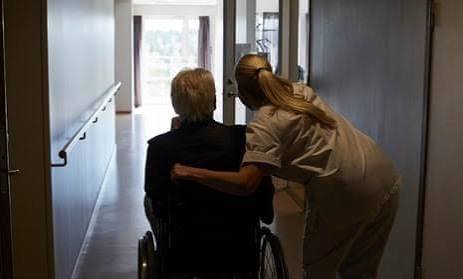
The Nigerian Presidency has sparked controversy after a top official described highly educated Nigerians working in United Kingdom care homes as victims of “modern-day slavery”.
Special Adviser to President Bola Tinubu on Policy Communication, Daniel Bwala, made the remark during an interview on ‘The Morayo Podcast Show’ on Wednesday.
Bwala, who says he resides in the United Kingdom, claimed that many Nigerian graduates with first-class and second-class degrees end up in care homes and warehouses despite holding additional qualifications obtained abroad.
“A Nigerian that finished with first class or second class, now moves to the UK, and then adds another degree only to be working at care homes,” Bwala stated. “As far as I am concerned, it’s a modern-day slavery, and I will tell you today. It’s less than house girl, because there are certain things that a house girl cannot do”.
He argued that Nigerians earning modest incomes at home are often better off than those who relocated abroad five years ago . “Some of you Nigerians, who think you are suffering, you’re better off than your colleagues that traveled out five years ago,” he said.
Bwala noted that while care workers may earn between £2,600 and £2,800 monthly, most of their income goes toward rent, utilities, internet, transportation, and food . “At the end of the day, what you are left with is not much. So you are forced to do two or three jobs,” he explained.
Comparing a ₦60,000 monthly earner in Nigeria to a UK migrant, Bwala said the Nigerian worker can benefit from family support, access to credit, and lower living costs. “That ₦60,000 earner can still get support from family and friends, while many abroad have nobody to fall back on,” he added.
His comments have generated widespread debate on social media, with many Nigerians countering that the UK offers better infrastructure, security, healthcare, and long-term opportunities despite current cost-of-living pressures.