
International
Thanksgiving Storm Leaves Hundreds of Thousands Without Power Across US

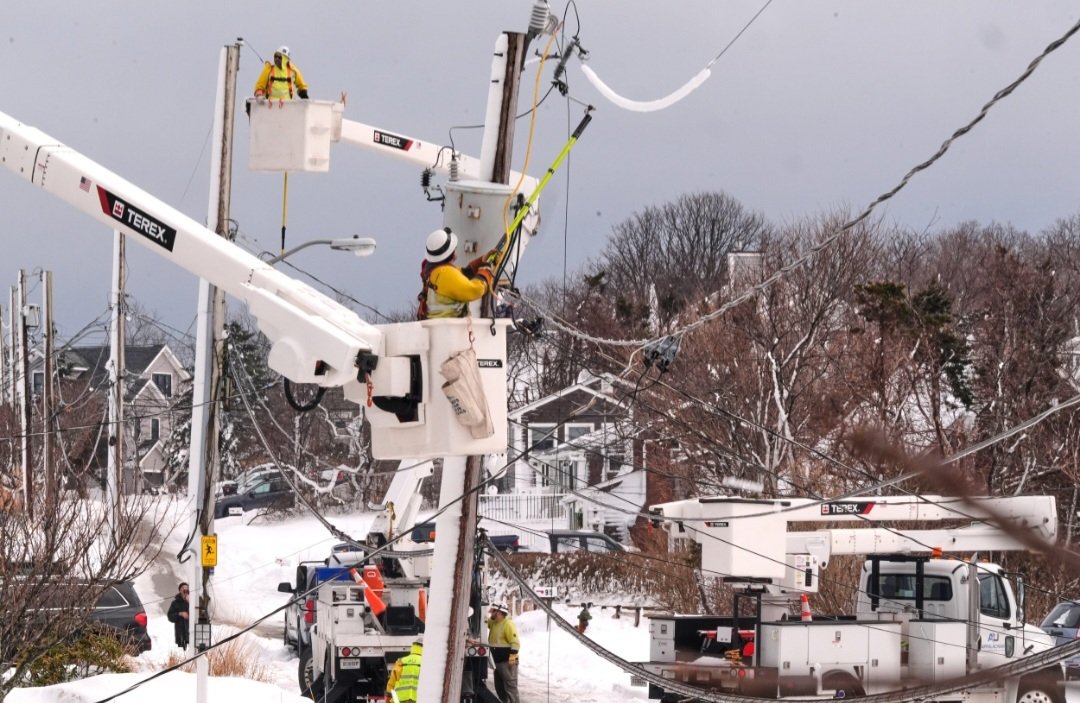
Hundreds of thousands of households and businesses across the United States remained without electricity on Friday after powerful storms battered several parts of the country during the Thanksgiving holiday, causing widespread flooding, infrastructure damage and major travel disruptions.
The storm, which swept across the East Coast and parts of the Midwest on Thursday, November 26, brought heavy rainfall, powerful winds and coastal flooding, with some areas recording wind gusts of up to 70 miles per hour.

According to power outage tracking website PowerOutage.us, approximately 961,000 utility customers were without electricity at the peak of the disruption on Thursday evening.
Although electricity restoration efforts continued overnight, more than 700,000 customers remained without power early Friday, with Pennsylvania, New Jersey, Maryland and Virginia among the worst-affected states.
Pennsylvania recorded the highest number of outages, followed by New Jersey, Maryland and Virginia.
The severe weather also disrupted transportation networks, with more than 2,400 flight delays and over 450 cancellations recorded across US airports on Thursday, according to flight-tracking service FlightAware.
New York City was among the areas affected by the storm, with powerful winds and heavy rainfall forcing organisers to postpone the annual Macy’s Thanksgiving Day Parade until Saturday.
The decision was taken over safety concerns, particularly the risk posed by strong winds to the parade’s giant helium balloons as they moved through Manhattan’s streets.
The postponement marked an unusual interruption to the annual Thanksgiving tradition, which attracts large crowds and millions of television viewers.
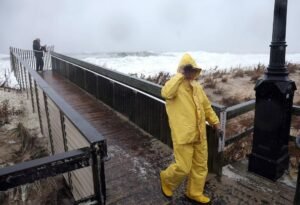
Coastal communities also experienced significant flooding as strong winds combined with unusually high tides to push seawater into residential areas, roads and business districts.
In New York City, Mayor Zohran Mamdani said emergency responders rescued two people from vehicles trapped in floodwaters.
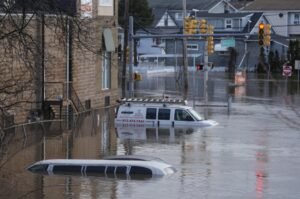
Parts of New Jersey and New York were placed under states of emergency, while several roads and bridges were closed because of dangerous weather conditions.
In Maryland, authorities asked nearly two million water customers in Montgomery and Prince George’s counties to conserve water because of intermittent power disruptions affecting water infrastructure.
The storm’s impact extended beyond the East Coast, with heavy snowfall reported across parts of the Midwest. Some areas of Missouri recorded up to 35 centimetres of snow, creating additional challenges for motorists and emergency services.
Meanwhile, coastal areas along the Pacific coast also experienced flooding associated with unusually high tides, while strong winds and rough seas prompted warnings and evacuations in some communities.
The National Weather Service said conditions were expected to gradually improve across parts of the eastern United States on Friday as the storm weakened and moved towards New England. However, lingering winds, wet snow and freezing rain were expected to complicate recovery efforts.
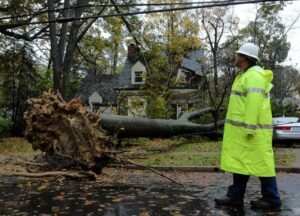
Utility companies deployed additional repair crews to restore electricity, although extensive damage to power lines, fallen trees and difficult working conditions slowed the process in some locations.
The widespread disruption came as millions of Americans travelled to celebrate Thanksgiving, one of the busiest holiday periods in the country, leaving many families facing interrupted journeys and celebrations.
The storm has renewed concerns about the vulnerability of electricity and transport infrastructure to increasingly disruptive extreme weather events.