
World News
US Army to Detonate Toxic Bomb-Making Chemicals in Iowa After Court Approval

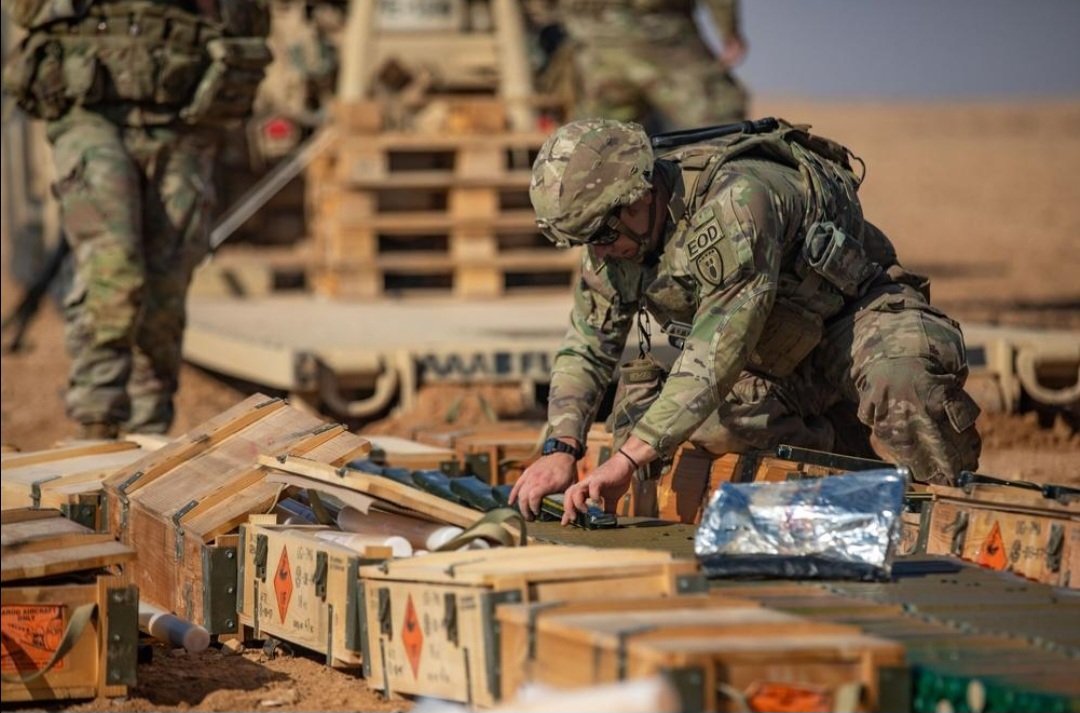
The United States Army is preparing to detonate 68 barrels of deteriorating bomb-making chemicals in Iowa on Wednesday, November 25, after receiving approval from a federal appeals court.
The planned operation at the Iowa Army Ammunition Plant in Middletown involves nearly 10,000 pounds (approximately 4,500 kilogrammes) of lead azide, an explosive chemical used in military ammunition production.
The decision follows days of uncertainty, public opposition and legal disputes over the Army’s proposed disposal method, which environmental groups have challenged over potential health and environmental risks.

According to the Associated Press, the Eighth US Circuit Court of Appeals on Monday lifted a temporary restriction on the Environmental Protection Agency’s emergency permit, allowing the military to proceed with the controlled detonation while legal proceedings continue.
The Army subsequently confirmed that it would move ahead with the operation in coordination with federal, state and local authorities.
Acting Army Secretary Adam Telle described the decision as a consensus reached by relevant experts and authorities, adding that the operation was necessary to address the growing danger posed by the deteriorating material.

The barrels were discovered in March during inspections at the ammunition facility. Military officials said the lead azide had become increasingly unstable as crystals formed inside the storage containers, creating the possibility of an accidental explosion.
The Army maintains that moving or chemically treating the material could trigger an uncontrolled detonation, potentially resulting in fatalities among personnel and nearby residents.
However, environmental organisations, including groups represented by Earthjustice, have challenged the emergency permit, arguing that alternative disposal methods were not adequately considered and that communities have not received sufficient information about the potential consequences.

The proposed detonation has also generated concerns over the release of toxic lead particles into the atmosphere.
Although the Army has developed safety measures and conducted environmental modelling, officials acknowledge that the explosion could produce a dust plume containing lead particles that may settle on surrounding homes, farmland, livestock and other outdoor surfaces.
Lead exposure poses serious health risks, particularly to young children and pregnant women. Public health authorities have therefore advised residents in potentially affected areas to follow official safety instructions, including remaining indoors, keeping windows and doors closed and limiting exposure to outdoor dust.
The dispute has also drawn President Donald Trump’s attention. On Monday, Trump announced that he had directed the military not to proceed without court approval, following the legal challenge.
He subsequently indicated that the court’s decision would determine whether the administration could move forward with the operation.
Iowa Governor Kim Reynolds has activated the state’s emergency management operations to coordinate with federal agencies and provide information to affected communities.
Incoming governor Rob Sand has also questioned the handling of the situation, raising concerns about why the disposal process was delayed and why residents were not adequately informed earlier.
Neighbouring states, including Illinois and Missouri, have expressed concern about possible environmental consequences beyond Iowa’s borders.
Illinois authorities have established a dedicated information platform to provide updates on potential air-quality impacts and public health recommendations.
The Army initially planned the detonation for November 20 before postponing it several times amid public concern, legal intervention and changing weather conditions.
Military officials say colder temperatures could further destabilise the material, making prolonged storage increasingly dangerous.
The planned operation is therefore being presented by the Army as an emergency safety measure, although environmental groups continue to question whether sufficient precautions and alternative options have been explored.
The controversy has exposed the difficult balance between eliminating an immediate explosive hazard and protecting communities from the environmental consequences of its disposal.