
Business
Wall Street Suffers Broad Sell-Off Amid Interest Rate Fears

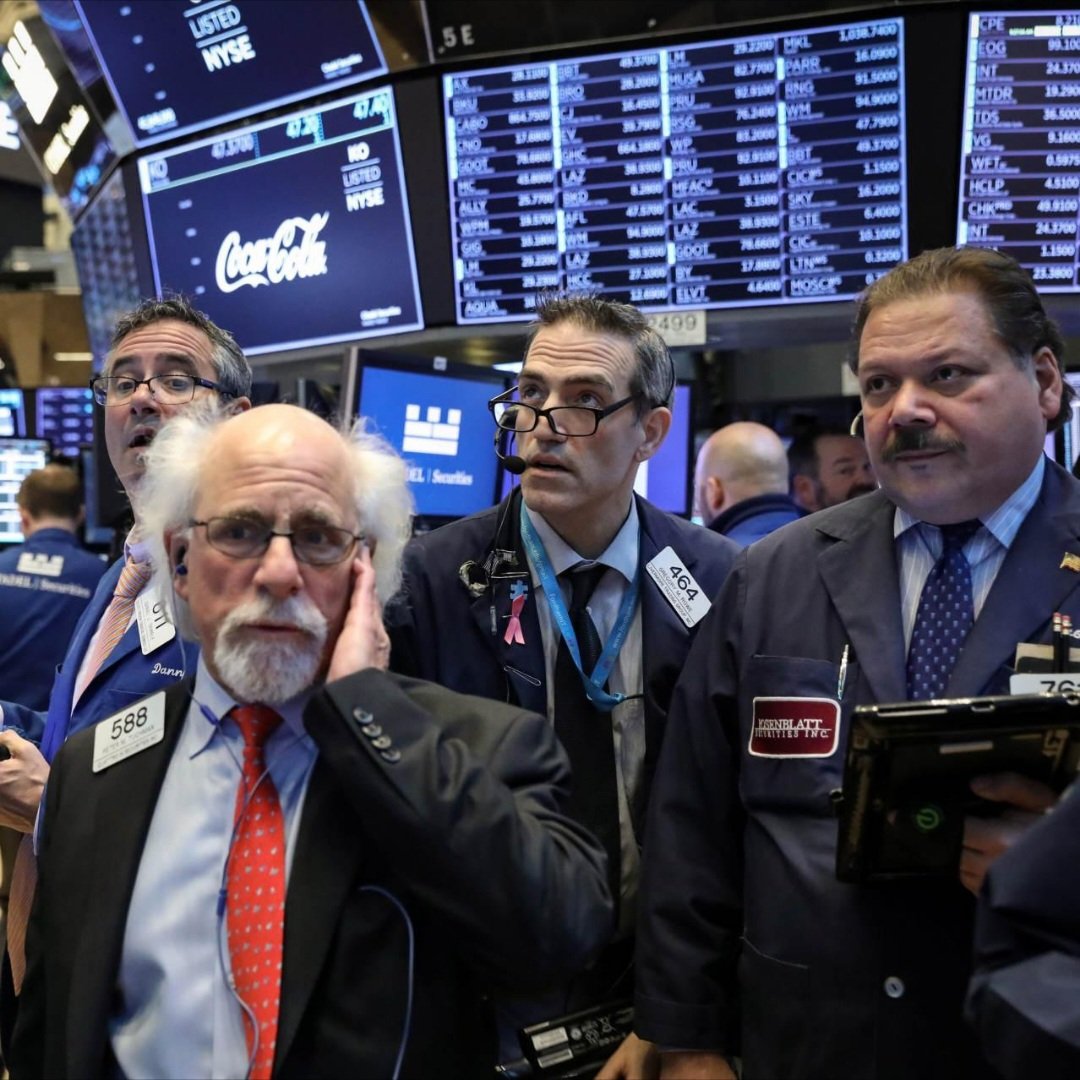
U.S. stocks fell sharply on Wednesday as investors increasingly bet that the Federal Reserve may raise interest rates later this year, reversing earlier expectations that borrowing costs would remain unchanged or move lower.
The sell-off hit all three major U.S. indexes, with the Dow Jones Industrial Average, S&P 500, and Nasdaq Composite ending the session in negative territory as traders reassessed the outlook for monetary policy and inflation. Concerns over rising prices and resilient economic growth prompted markets to rethink the likelihood of future Federal Reserve action.

Investor sentiment shifted after a series of economic indicators pointed to continued strength in the U.S. economy. Strong retail sales, steady consumer spending, and a resilient labor market have fueled speculation that policymakers may need to keep interest rates higher for longer, or even consider additional increases if inflation remains stubbornly above target.

Higher interest rates typically weigh on equities because they increase borrowing costs for businesses and consumers while making bonds and other fixed-income investments more attractive. Growth-oriented sectors such as technology were among the hardest hit during the session.

Financial markets also reacted to comments from Federal Reserve officials who emphasized that inflation risks have not completely disappeared despite recent progress in bringing price pressures down from their post-pandemic highs. Investors interpreted those remarks as a signal that policymakers remain prepared to tighten policy if necessary.
Treasury yields moved higher as traders adjusted their expectations, with bond markets reflecting increased odds of a future rate hike. Rising yields often put pressure on stock valuations, particularly among companies whose earnings are expected to grow significantly in the future.
The decline on Wall Street came despite generally positive economic data, highlighting a paradox facing investors: strong growth can be beneficial for corporate profits, but it may also encourage the Federal Reserve to maintain a restrictive policy stance to prevent inflation from accelerating again.
Analysts noted that market volatility has increased in recent weeks as investors attempt to gauge the likely path of interest rates amid shifting economic signals and geopolitical uncertainty.
Some economists continue to argue that the Federal Reserve is more likely to hold rates steady rather than raise them again, pointing to moderating inflation trends. Others believe persistent consumer demand and a robust labor market could justify additional tightening if price pressures begin to re-emerge.
The Federal Reserve has repeatedly stated that future policy decisions will depend on incoming economic data, leaving markets highly sensitive to inflation reports, employment figures, and consumer spending trends.
For now, investors appear to be preparing for the possibility that interest rates could remain elevated for longer than previously anticipated, a prospect that has injected fresh uncertainty into Wall Street’s outlook for the remainder of the year.