
International
Wildfires Rage Across Western US and Canada as Thousands Evacuate

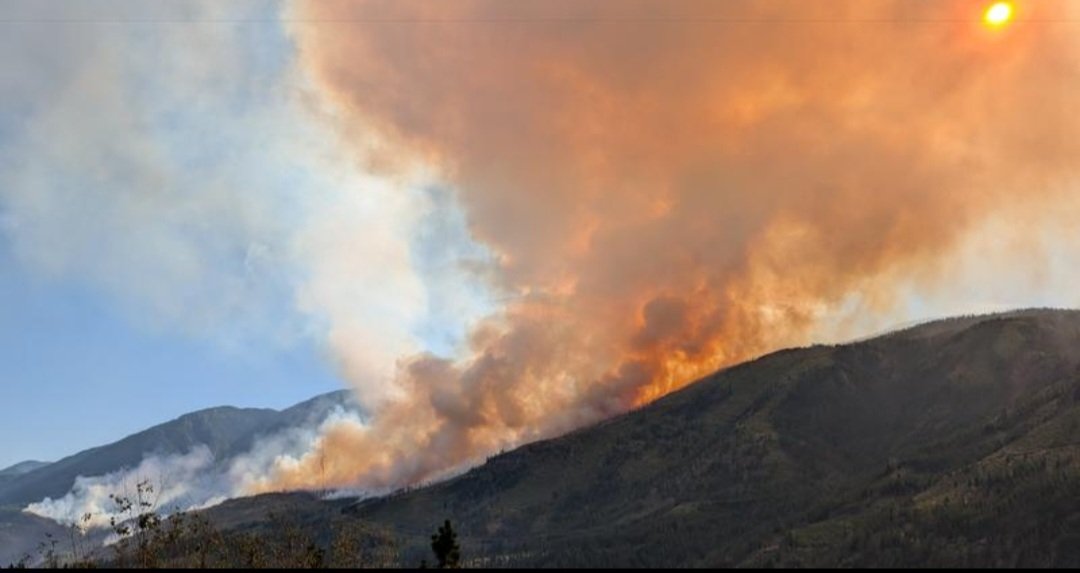
Wildfires are spreading across parts of western Canada and the United States, forcing thousands of residents from their homes as firefighters battle fast-moving flames amid hot, dry and windy conditions.
The most serious situation has been reported in British Columbia, Canada, where more than 20,000 people were forced to evacuate communities around Okanagan Lake over the weekend. Homes have been destroyed and some residents had to be rescued by aircraft as fires advanced rapidly.
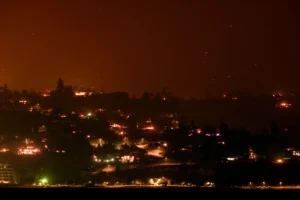
British Columbia declared a state of emergency as more than 100 wildfires burned across the province, with nearly half classified as out of control.
The Bald Range wildfire became particularly dangerous after erupting Friday evening. The fire expanded to roughly 100 square kilometres within hours, racing toward populated areas around Okanagan Lake.

The entire community of Summerland, home to about 12,000 people, was ordered to evacuate. Another 8,000 people in and around nearby Peachland were also ordered to leave, while thousands more were warned to be ready to evacuate at short notice.
Some residents were unable to escape by road and had to be rescued by helicopter.
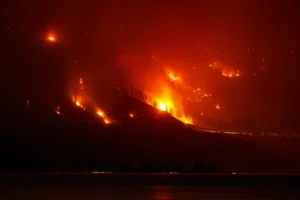
Canadian authorities said an 80-year-old woman died while attempting to escape the wildfire in the Okanagan Lake region.
Canada’s federal government has approved emergency assistance for British Columbia, including support for shelter and accommodation for people displaced by the fires.

Fire crews have been working around the clock, with helicopters deployed to attack the flames and assist communities cut off by the fires. Authorities say the speed at which some of the blazes are spreading has made firefighting particularly difficult.
Officials have blamed prolonged hot and dry conditions for creating what British Columbia’s wildfire service described as “explosive” fire conditions.
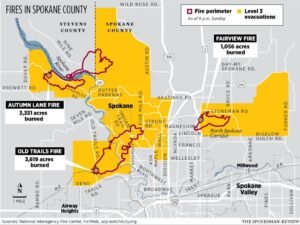
Across the border in the United States, firefighters have been battling several wildfires around Spokane, Washington.
Residents in some areas north of Spokane were advised to leave their homes, while evacuation levels were lowered in some communities after fire activity eased. However, authorities continued to keep residents on alert.

Three fires around the Spokane area had damaged or destroyed approximately 920 structures, according to reports, although officials said the fires were no longer expanding.
The wildfire emergency has also taken a deadly toll among firefighting personnel. In Utah, two helicopter pilots were killed when their aircraft crashed while fighting a wildfire in the Fishlake National Forest.
Experts say the combination of prolonged drought, heat and dry vegetation is allowing some fires to spread with unusual speed and intensity.

Wildfire specialist Mike Flannigan told The Guardian that southern British Columbia and the Pacific Northwest had received little or no rain for about six weeks, leaving the landscape extremely dry. He warned that some fires are now continuing to burn aggressively through the night instead of slowing as temperatures fall.
Authorities remain on alert as firefighters continue containment efforts and residents in vulnerable communities prepare for possible further evacuations.
The current crisis underscores the growing challenge faced by communities across western North America as increasingly intense wildfire seasons threaten homes, infrastructure and lives.