Connect with us

Politics

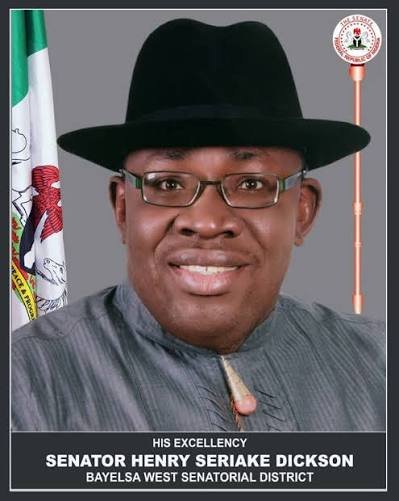
Dickson Set to Leave PDP for Newly Registered NDC

Published

on

Share

Senator Seriake Dickson, a former governor of Bayelsa State and serving lawmaker, is reportedly preparing to defect from the Peoples Democratic Party (PDP) to the newly registered Nigeria Democratic Congress (NDC), a development that could reshape political alignments ahead of the 2027 general elections.

Reports indicate that Dickson has concluded arrangements to join the new political platform following its recent registration and certification by the Independent National Electoral Commission (INEC).

Political observers believe the anticipated move could alter the political landscape, particularly in the South-South region, and may trigger a wave of defections by other politicians searching for alternative platforms ahead of the next electoral cycle.

The senator had earlier hinted at the impending announcement in a message posted on his social media pages.

“Major announcement is coming. Tomorrow, Thursday, March 5, 2026, at 2:00 p.m., I will be making an important statement at a press conference addressing the future of our people and our democracy. Stay tuned. Be ready. Be part of the moment,” he wrote.

The press conference scheduled for Thursday afternoon is expected to clarify his political future and outline reasons for his possible departure from the PDP, a party he has been associated with for several decades.

Dickson’s planned move comes shortly after the Nigeria Democratic Congress received its certificate of registration from INEC, ending a prolonged legal battle that began in 2017 when the group first applied for recognition as a political party.

The party’s Protem National Legal Adviser, Reuben Egwuaba, who received the certificate on behalf of the NDC, described the development as a victory for democracy.

See also  FORMER FIRST LADY DAME PATIENCE JONATHAN RULES OUT RETURN TO ASO ROCK VILLA, DECLARES SUPPORT FOR TINUBU

According to Egwuaba, the electoral body initially declined to register the party on the grounds that its logo resembled that of the All Progressives Congress (APC). However, a court later ruled that the NDC’s logo was distinct and ordered INEC to register the party.

Egwuaba commended the judiciary for upholding justice and also praised the current leadership of the electoral body for complying with the court order.

“With the presentation of this certificate, NDC joins the registered political parties in the contest for democratic leadership and power in ways that would make Nigerians at home and in the diaspora proud,” he said.

He added that the party aims to position itself as an alternative platform for Nigerians dissatisfied with both the ruling party and the existing opposition.

Continue Reading
Click to comment

Leave a Reply

Your email address will not be published. Required fields are marked *

Politics

IPAC Threatens Boycott of 2027 Elections Over Electoral Act 2026 Provisions

Published

on

Share


The Inter-Party Advisory Council (IPAC) has raised serious concerns over certain provisions of the Electoral Act 2026, warning that political parties may boycott the 2027 general elections if the National Assembly fails to amend what it described as problematic sections of the law.

The warning was contained in a communiqué issued at the end of the IPAC General Assembly meeting held on February 26 at the council’s national secretariat in Abuja.

In the statement jointly signed by IPAC National Chairman, Dr. Yusuf M. Dantalle, and National Secretary, Barr. Maxwell Mgbudem, the council acknowledged the efforts made in enacting the Electoral Act 2026, which was intended to address shortcomings observed in the Electoral Act 2022. However, it expressed concern that some provisions in the new law could undermine the development of political parties and weaken Nigeria’s multiparty democracy.

According to IPAC, certain sections of the Act are inconsistent with its guiding objective of deepening democracy in Nigeria and may limit the constitutional rights of political parties to manage their internal affairs.

One of the council’s major objections is the exclusion of indirect primaries under Section 84(2) of the Act. IPAC argued that the removal of indirect primaries infringes on the constitutional right of political parties to determine how they select candidates for elections.

The council stressed that judicial precedents in Nigeria have consistently affirmed the autonomy of political parties in administering their internal affairs, including the process of nominating candidates.

IPAC also recalled its role in safeguarding Nigeria’s democratic process during the tense period surrounding the collation of results in the 2023 presidential election, when it said the council resisted attempts by some actors to disrupt the democratic order.

See also  DALORI TAKES OVER AS APC ACTING NATIONAL CHAIRMAN, WARNS AGAINST DIVISION

Given the current situation, IPAC said it would draw the attention of Nigerians and the international community—including the United Nations, the European Union, the Economic Community of West African States (ECOWAS), and diplomatic missions such as the United States and United Kingdom embassies—to its concerns.

The council maintained that urgent amendments to the Electoral Act are necessary to ensure that the 2027 general elections are free, fair, credible, and inclusive. It also stated that it reserves the right to challenge some provisions of the Act in court.

IPAC warned that if the National Assembly fails to address the identified issues, political parties under its umbrella may boycott the 2027 general elections and reject the outcome as illegitimate.

Among the key areas IPAC wants amended is the restoration of indirect primaries, which it said should remain an option for political parties in selecting candidates.

The council also called for the removal of the requirement for party members to provide their National Identification Number (NIN), arguing that the provision could disenfranchise many Nigerians who do not yet possess the identification number.

It further demanded the expungement of Sections 77(4), (5), (6), and (7) of the Act, stating that the provisions infringe on citizens’ constitutional right to freedom of association.

Another major demand is the restoration of mandatory electronic transmission of election results after their announcement at polling units. IPAC noted that the absence of this provision was a major flaw during the 2023 presidential election and should not be repeated.

The council also advocated stronger penalties for vote buying, describing it as one of the most serious electoral malpractices that undermine the credibility of elections.

See also  GOVERNOR FINTIRI DEFECTS TO APC, ONANUGA TAKES SWIPE AT ATIKU

In addition, IPAC called for the restoration of the presentation of forged certificates as grounds for election petitions. According to the council, removing this provision creates an opportunity for individuals with questionable credentials to hold public office and undermines the integrity of the democratic process.

It urged the National Assembly to align the Electoral Act with constitutional provisions that disqualify individuals with forged credentials from holding elective offices, warning that failure to do so could lead to avoidable legal disputes and damage Nigeria’s democratic image.

Continue Reading

International

Polls Close In Nepal’s General Election Amid Calls For Political Change

Published

on

Share


Polling stations across Nepal closed on Thursday as the Himalayan nation concluded voting in a crucial general election expected to determine the country’s political direction following months of unrest and the resignation of former Prime Minister K. P. Sharma Oli.

Vote counting is expected to begin shortly after the polls closed at 5 p.m. local time, with early trends likely to emerge by Friday, according to the Election Commission of Nepal. However, officials said final results could take up to a week to be fully compiled.

At least half of the country’s 19 million eligible voters had cast their ballots by mid-afternoon, election authorities said, with turnout expected to approach the 61 percent recorded in the 2022 election.

The election comes nearly six months after violent youth-led protests that resulted in the deaths of 77 people during a security crackdown. The unrest forced the resignation of then prime minister K. P. Sharma Oli and triggered calls for sweeping political reforms.

Nepal, a nation of about 30 million people located between China and India, has struggled with decades of political instability, high unemployment, and widespread corruption—issues that dominated this year’s election campaign.

Voters turned out early at polling units set up in schools, temples and historic courtyards across the country, including in the capital Kathmandu. Authorities deployed more than 300,000 security personnel, including members of the military, to maintain order at over 23,000 polling stations nationwide.

“This election has to reinstate democracy in the country. Political anarchy, lawlessness and violence need to be controlled,” K. P. Sharma Oli told reporters after casting his vote in Balkot, Bhaktapur.

See also  OUATTARA RE-ELECTED IN IVORY COAST AMID OPPOSITION BOYCOTT

Oli, who leads the Communist Party of Nepal (Unified Marxist–Leninist), is among more than 3,400 candidates contesting seats in the 275-member parliament across 65 political parties.

Other key contenders include the Nepali Congress led by Gagan Thapa and the Nepal Communist Party, which includes former Maoist insurgents who later joined mainstream politics.

However, much of the public attention has been focused on the rising influence of the three-year-old Rastriya Swatantra Party, whose prime ministerial candidate Balendra Shah has gained strong backing from young voters.

The 35-year-old rapper-turned-politician and former mayor of Kathmandu has attracted large crowds both online and at campaign rallies, presenting himself as a reformist alternative to Nepal’s traditional political establishment.

Nepal’s political landscape has been dominated for decades by a handful of parties, with the country witnessing 32 government changes in the past 35 years.

For many voters, economic hardship and unemployment remain the most pressing concerns.

In Jhapa district, 70-year-old voter Menuka Chauhan said she was worried about her son working abroad in Qatar as a security guard.

“I can’t sleep at night. I worry all the time. My son tells me bombs keep dropping there. I wish there were employment opportunities here,” she said.

Analysts say the election outcome will largely depend on whether political leaders can respond to demands raised during the youth protests last September.

“The election is critical to address the aspirations of the youths expressed during the Gen Z protests,” political analyst Puranjan Acharya said.

Under Nepal’s electoral system, voters elect 275 members of parliament through a mixed system comprising 165 seats decided through direct first-past-the-post voting and 110 seats allocated through proportional representation.

Continue Reading

Politics

Babagbemi Celebrates Ezzu, Others on Election as Kogi APC Executive

Published

on

Share


A chieftain of the All Progressives Congress (APC) in Kogi State and House of Representatives aspirant for Yagba Federal Constituency, Pastor Babagbemi Adejola, has congratulated Engr. Aliyu Momoh Ezzu on his emergence as the state party chairman.

Babagbemi, in a statement issued in Abuja on Wednesday, also felicitated other members of the newly elected state executive committee of the party.

He described Ezzu’s victory as deserved, expressing optimism that the new chairman would help reposition the party for stronger performance and greater unity in Kogi State.

According to him, Ezzu’s experience and commitment to party principles would help deepen internal democracy and strengthen grassroots engagement within the party structure.

He urged the newly elected officials to see their election as an opportunity to serve the people and work collaboratively to advance the fortunes of the APC in the state.

Babagbemi said the party remains a strong political platform in Kogi State and encouraged members to support the new leadership to sustain progress and development.

He reaffirmed his commitment to initiatives that promote harmony and collective success within the party.

The party stalwart prayed for wisdom, guidance, and successful tenure for Ezzu and the entire executive council.


See also  BAYELSA GOVERNOR, SENATOR DIRI, AND PREDECESSOR, SENATOR DICKSON, CALL FOR UNITY AMONG POLITICIANS
Continue Reading