Connect with us

International

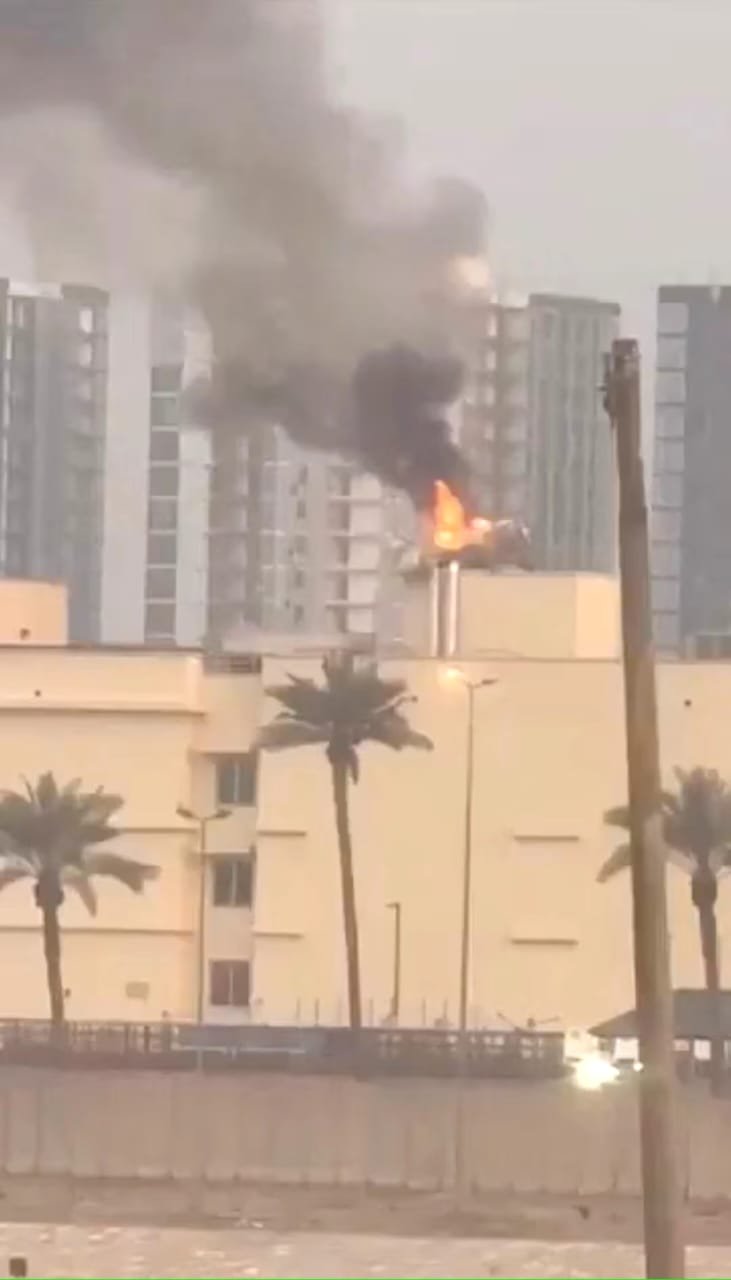
Security Sources: Missile Hits U.S. Embassy in Baghdad

Published

on

Share


The United States embassy in Baghdad has been struck in a missile attack, according to Iraqi security sources, raising fresh concerns about escalating tensions in the region.


 

Sources said a missile hit inside the embassy compound located in the heavily fortified Green Zone, an area that houses government buildings and foreign diplomatic missions. Smoke was reportedly seen rising from the facility following the strike.


Initial reports indicate that the projectile struck a helipad within the embassy complex, causing damage but with no immediate confirmation of casualties. Security officials said investigations were ongoing to determine the origin of the attack.


The attack comes amid heightened tensions across the Middle East, with diplomatic facilities and military installations increasingly targeted as regional hostilities escalate.


The U.S. embassy compound in Baghdad, one of the largest American diplomatic missions in the world, has been targeted multiple times in the past by rockets and drones fired by armed groups operating in Iraq.


Authorities have yet to confirm who was responsible for the latest strike, and no group has immediately claimed responsibility. Iraqi security forces have reportedly begun an investigation while monitoring the situation in the capital.


Further details on the extent of the damage and possible casualties were not immediately available.

See also  UK Strengthens Security, Youth and Women Empowerment Partnership with Bayelsa
Continue Reading
Click to comment

Leave a Reply

Your email address will not be published. Required fields are marked *

International

CENTCOM: US Forces Destroy 90+ Iranian Military Sites in Kharg Island Attack

Published

on

Share


United States forces have carried out a large-scale precision strike targeting more than 90 Iranian military sites on Kharg Island, according to a statement released by the U.S. Central Command (CENTCOM).

The overnight operation reportedly targeted facilities including naval mine storage sites, missile bunkers, and other military infrastructure located on the strategically important island in the Persian Gulf. U.S. officials said the strikes were designed to degrade Iran’s military capabilities while deliberately avoiding damage to the island’s oil export infrastructure.

Kharg Island is considered a critical hub for Iran’s oil industry, handling a significant portion of the country’s crude exports. Despite the island’s strategic importance to global energy markets, U.S. officials emphasized that the strikes focused solely on military targets rather than energy facilities.

According to CENTCOM, the operation destroyed several military compounds and weapons storage facilities believed to be linked to Iran’s defensive and offensive capabilities in the region. U.S. authorities described the mission as a “large-scale precision strike,” indicating that the attacks were carefully planned to limit broader economic disruption.

The strikes come amid escalating tensions between Washington and Tehran, with both sides trading warnings over military activities in the Gulf region. Iran has previously threatened retaliation against the U.S. assets and allies in the Middle East if its territory or strategic infrastructure is targeted.

Security analysts warn the latest escalation could further destabilize the region and raise concerns about potential disruptions to global oil supply routes, particularly through the Strait of Hormuz.

As of the time of reporting, Iranian authorities have not issued a detailed official statement on the extent of the damage or possible casualties resulting from the strikes.

See also  Iran Tightens Grip on Strait of Hormuz, Offers Conditional Passage to Europe and Arab States
Continue Reading

Education

Venezuelan Students Return to Streets After Years of Political Repression

Published

on

Share


University students across Venezuela have begun returning to the streets in renewed demonstrations, marking a significant shift after years of political repression and fear under the country’s former leadership.


In recent weeks, hundreds of students from the Central University of Venezuela in the capital, Caracas, staged marches that moved beyond university campuses into public streets, an action that had long been considered dangerous due to the risk of arrests, violence, or intimidation by security forces.


The protests reflect a resurgence of youth activism following the dramatic capture of former president Nicolás Maduro in early January, an event that many students say has created a rare opening for public dissent and demands for political reform.


Carrying national flags and chanting slogans for freedom, student demonstrators marched alongside relatives of political detainees, demanding the release of prisoners, institutional reforms, and credible democratic elections. Many protesters also called for improved conditions in the country’s struggling university system, including higher salaries for lecturers and better funding for campuses.


For many young activists, the moment represents a generational awakening. A large number of the protesters are in their early twenties and grew up entirely under the political system known as Chavismo, which began with former president Hugo Chávez in 1999 and continued under Maduro.


Student leaders say the renewed demonstrations show that fear is gradually giving way to hope. While many celebrate the political changes that have occurred in recent months, they remain cautious about the country’s future and stress the need for a democratic transition led by Venezuelans themselves.

See also  Iran Tightens Grip on Strait of Hormuz, Offers Conditional Passage to Europe and Arab States


Despite the renewed activism, human rights observers warn that Venezuela’s repressive security structures remain largely intact, meaning protesters could still face risks as demonstrations continue.

Continue Reading

International

Ukraine Launches Drone Attack on Russian Refinery and Port in Krasnodar

Published

on

Share


Ukrainian drones struck an oil refinery and a major port facility in Russia’s southern Krasnodar region overnight, Russian authorities said on Saturday, in one of the latest cross-border attacks targeting energy infrastructure.


According to officials in the region, the attack triggered a fire at the Afipsky oil refinery after a drone hit the facility. Emergency services were deployed to the site to contain the blaze and assess the extent of the damage.


In a separate incident, drones also struck Port Kavkaz, an important shipping hub located on the Kerch Strait opposite Crimea. Regional authorities said a service vessel and part of the pier complex were damaged during the strike. Three people were reported injured in the attack.


Russia’s Defence Ministry said its air defence systems intercepted dozens of Ukrainian drones during the overnight assault. Officials claimed that 87 drones were shot down across several areas, including the Sea of Azov and the Krasnodar region.


The Afipsky refinery is one of the largest oil processing facilities in southern Russia and produces gasoline, diesel fuel, and other petroleum products used across the region.


The drone strikes come as the war between Russia and Ukraine continues to intensify, with both sides increasingly targeting energy infrastructure and logistics facilities deep inside each other’s territory.

See also  Iran Tightens Grip on Strait of Hormuz, Offers Conditional Passage to Europe and Arab States
Continue Reading