
World News
Missile Attack on Saudi Arabia Ends Years of Relative Calm in Yemen Conflict

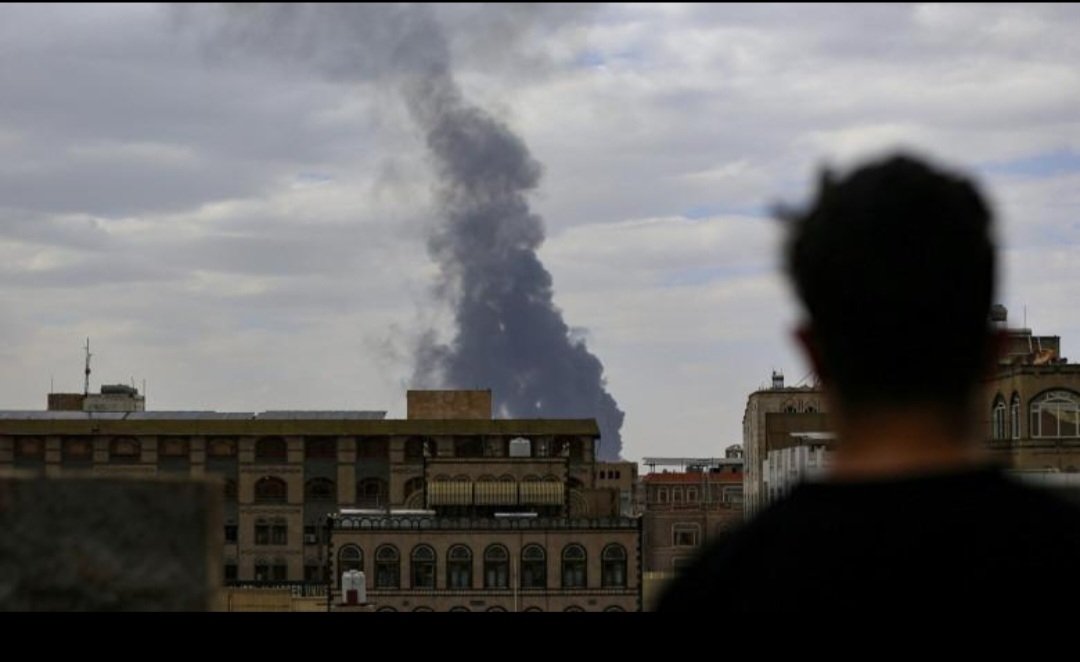
Yemen’s Houthi movement has launched missiles toward Saudi Arabia, ending nearly four years of relative calm along the Saudi-Yemeni border after accusing the kingdom of carrying out airstrikes on Sanaa International Airport, which is under Houthi control. The exchange marks one of the most serious escalations in the Yemen conflict since an informal truce took hold in 2022 and has heightened fears of a broader regional conflict amid rising tensions involving Iran and the United States.
According to Saudi military officials, the kingdom’s air defence systems intercepted ballistic missiles fired toward its southern region before they could reach their targets. The Saudi-led military coalition said the missiles were launched by what it described as the “terrorist Houthi militia,” and confirmed there were no immediate reports of casualties or significant damage.

The Houthis said the missile attack specifically targeted Abha International Airport in southern Saudi Arabia. Houthi military spokesperson Yahya Saree described the operation as retaliation for what the group called “blatant aggression” against Sanaa International Airport, warning that Saudi Arabia would bear responsibility for ending the period of de-escalation between the two sides.

The crisis began earlier on Monday when Yemen’s internationally recognised government announced that its forces had struck the runway at Sanaa International Airport to prevent an Iranian aircraft from landing. Government officials argued that the aircraft posed a threat to national sovereignty and accused Iran of using flights into Houthi-controlled territory to support the armed group. The Iranian plane was later redirected to Hodeidah, another port city under Houthi control.

The exchange has effectively shattered the informal truce that had largely held since March 2022, when cross-border attacks between Saudi Arabia and the Houthis significantly declined following years of devastating conflict. During the earlier stages of the war, the Houthis repeatedly targeted Saudi oil facilities, airports and other infrastructure using missiles and drones, prompting extensive Saudi-led military operations inside Yemen.

The renewed hostilities come against the backdrop of an increasingly volatile Middle East. The wider confrontation involving Iran, the United States and several Gulf countries has already disrupted maritime traffic through the Strait of Hormuz, while concerns are growing that additional regional actors could become involved in the conflict. Analysts warn that renewed fighting between Saudi Arabia and the Houthis could also threaten shipping routes through the Bab el-Mandeb Strait, another strategic maritime corridor linking the Red Sea with the Gulf of Aden.
The developments have also complicated humanitarian and diplomatic efforts in Yemen. Reports indicate that the Houthis have detained a plane belonging to the International Committee of the Red Cross at Sanaa Airport, while a planned prisoner exchange between the Houthis and the internationally recognised government has reportedly collapsed. Aid agencies fear that renewed fighting could worsen conditions in a country already suffering from one of the world’s worst humanitarian crises.
The United Nations has expressed concern over the latest escalation and urged all parties to exercise restraint and return to dialogue. Diplomatic observers warn that if cross-border attacks continue, the region could face another prolonged phase of conflict, with significant implications for regional security, global energy markets and international shipping.